

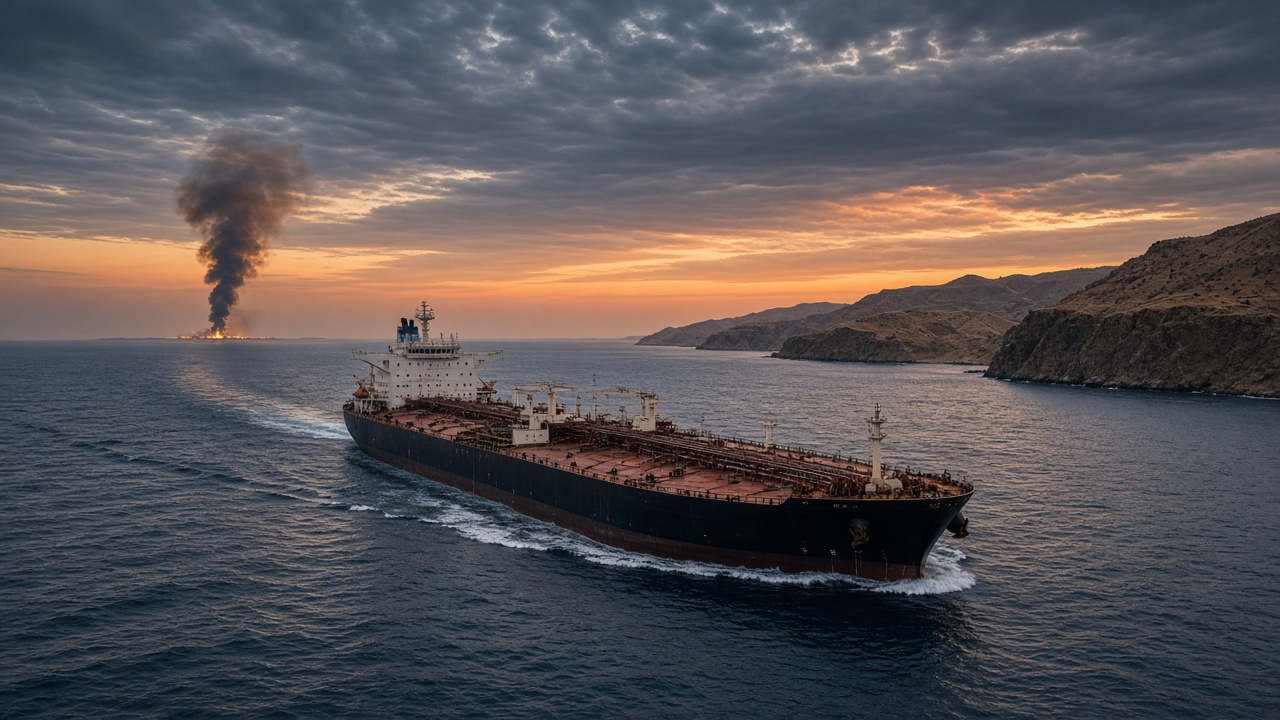
Oil prices just hit their highest level in six months, and Tehran wants you to blame Washington for it. On Friday, October 23, Brent crude briefly passed $117 a barrel after Iran’s Revolutionary Guard claimed it had damaged seven tankers in the Strait of Hormuz. Rising oil prices are exactly what Iran wants less than two weeks before Americans vote.
Conservatives should see this for what it is. Iran is using the gas pump as a weapon, and the target is the American voter.
How High Oil Prices Climbed on Friday
The numbers are ugly. Brent futures gained $4.01, or about 3.5%, to $117.18 a barrel by midday Eastern time, Reuters reported. The session high of $117.38 was the highest since the end of April. U.S. crude rose to about $103. Brent was on track for a 6.7% weekly gain, its third straight weekly rise.
For context, Brent traded near $72 a barrel in February, before the Iran war began, according to The Guardian. It touched $126 by the end of April. It started October below $97, so this month alone has added about $20 a barrel.
Wall Street felt it, too. The Dow fell about 550 points by late morning, and three of every four stocks in the S&P 500 were down, CBS News reported.
What Iran Claims It Did in Hormuz
Iran’s Revolutionary Guard said four tankers were hit and caught fire while transferring oil. It said three more were disabled after striking mines. It was the largest single-day toll Iran has claimed since the war began on February 28. Al Jazeera noted that the claims could not be independently verified, and Iran gave no details on casualties or the ships’ flags.
The U.S. pushed back hard. A Central Command spokesperson told Al Jazeera the mine claims were incorrect, said U.S. forces had cleared the international shipping lanes of mines, and said 95% of vessels are getting through. The spokesperson said the attacks show Tehran’s “desperation” under the U.S. blockade.
Then the threats got bigger. The Guard warned that “the conflict will extend to” U.S. bases in the region if America keeps helping tankers through the strait. Tehran also said it would hit Gulf oil facilities, undersea cables and data centers if a new U.S.-Israeli offensive begins.
The escalation follows a change on the water. The U.S. military has been escorting ships through the strait in growing numbers, and Iran has answered by stepping up attacks, Al Jazeera reported. Iran claims full control of the waterway, which carried about one-fifth of the world’s oil before the war.

Why Iran Wants Higher Oil Prices Before Election Day
Timing tells the story. President Trump said Thursday that Iran is “making up fake hits, mines, and everything else” to drive up oil prices before the midterms. Whether every claimed hit is real or not, the strategy is plain. Tehran cannot win a fight with the U.S. Navy, so it is trying to win one at your local gas station.
Not every attack is invented. October has been the worst month for attacks on commercial shipping in and around Hormuz, according to a Washington-based think tank that tracks maritime incidents, Reuters reported. “The market is concerned about these continued Iranian attacks on tankers that we’ve seen increase over the last week,” said Andrew Lipow of Lipow Oil Associates. “While there has been an increase in oil transiting out of the Strait of Hormuz, that could change at any minute.” The UAE also reported an oil spill off Umm Al Quwain on Friday, though it did not say what caused it.
That is why the response matters. If higher prices at the pump push America into backing off, Iran learns that terror on the water pays. Every hostile regime with a coastline will take note.
Still, the pain is real, and conservatives should not wave it away. Fuel costs hit farmers, truckers and working families first. A family budget does not care about grand strategy. That is why the home front matters as much as the strait.
Other Pressures on Supply
Hormuz is not the only problem. Susannah Streeter of Wealth Club told The Guardian that Houthi attacks on Saudi facilities “have intensified this week,” and that Ukraine’s strikes on Russian diesel refineries are adding to supply worries. In Libya, the head of the National Oil Corp. said a pipeline valve serving the Hamada and Tahara fields had been shut, cutting output at both, Reuters reported.
The politics are tightening too. Al Jazeera’s White House correspondent reported that polls show most Americans want relief from the war’s costs, and that the pressure on the president is coming from within the Republican Party as well as from Democrats.
The Answer to High Oil Prices Is American Energy
The best defense against a cartel of bad actors is more American supply. That is why we backed the move to draft American oil into national defense. It is also why permitting reform, new pipelines and refinery capacity are national security issues, not just business issues.
Our allies are adapting too. Saudi Aramco’s East-West pipeline, which bypasses Hormuz by carrying crude to the Red Sea port of Yanbu, has a capacity of about 7 million barrels a day, including roughly 2 million for domestic refineries. Chief Executive Amin Nasser said Aramco is working to raise that to 10 million, Dow Jones reported. He estimated the crisis has cost the world about 3 billion barrels of oil supply.
There is some good news in the data. Middle East oil flows through Hormuz and alternative routes averaged more than 24 million barrels a day in the week through October 18, above the prewar level of 23.3 million, according to Kpler. Even so, the region is far from calm. The Houthis forced Aramco to evacuate its headquarters this week.
Washington is also reaching for unusual supply. Ship tracking data on Friday showed the first Russian diesel bound for the U.S. under an export deal Trump announced this month was aboard a tanker heading for New York, Reuters reported. Relying on Moscow for diesel is a sign of how tight the market has become, and it is one more reason to build refining capacity here at home.
What Comes Next
Analysts quoted by The Guardian said markets fear U.S. and Israeli strikes on Iran’s energy sites after the November 3 election. “What many had considered would be a brief conflict is now in its eighth month,” said Richard Hunter of Interactive Investor. U.N. Ambassador Mike Waltz has said the war could last another year. In short, nobody should expect relief at the pump soon.
Here is the bottom line. Iran is betting that Americans will blame their own leaders for prices that Tehran is driving up on purpose. The smart response is to keep the sea lanes open, pump more at home and refuse to reward blackmail.
Update (November 2026)
Added November 2026. Attacks on tankers in the Gulf and the Strait of Hormuz ramped up sharply in October and have continued at the highest rate since the start of the war, according to figures from international maritime agencies, Reuters reported via NBC News on November 9. U.S.-Iran talks remained stalled.
- Trump’s Iran Deal: The Islamabad Memorandum — Win, Workaround, or Warning? (2026-07-02)
- ‘I’m the Boss’: What Really Happened at the G7 Évian Summit (2026-07-02)
- Trump Called Off the Iran Strike. Tehran Says He Is Lying About Why (2026-08-05)
- Mike Waltz Says the Iran War Could Last Another Year. Believe Him. (2026-10-23)
- Trump Just Put Another Iran Strike Back on the Table (2026-10-24)
- Iran Is Plotting to Kill Americans Abroad. Take It Seriously. (2026-10-24)
- Iran Strike After Midterms? US Tells Gulf to Brace for a Short War (2026-10-28)
- Bombs on a Tanker Hull in Hormuz. Now Trump Has to Decide. (2026-10-30)
- Iran Says It Can Reopen Hormuz in Two Days. Read the Fine Print. (2026-11-02)
- Netanyahu Wants More Iran Strikes. America Sets the Clock. (2026-11-02)
- Iran Fired at U.S. Forces. The Qeshm Island Strikes Were the Right Answer. (2026-11-03)
- Hegseth Impeachment Aims at the Wrong Man. Congress Owns This War. (2026-11-09)
Sources
- Reuters via Baird Maritime: Oil prices rise to highest since late April on Middle East fears
- The Guardian: Oil price rises above $117 a barrel amid fears US will renew strikes on Iran
- CBS News: Iran war live updates
- Al Jazeera: Iran says seven ships hit in Hormuz Strait, warns US of wider response
- Dow Jones via MarketScreener: Aramco CEO says East-West pipeline capacity could reach 10 million barrels a day
- NBC News/Reuters: U.S. signals breakthrough in Iran talks unlikely


