

The war that was supposed to take weeks may run another full year. That is the message from Mike Waltz on the Iran war, and it landed Friday morning, October 23, as oil prices sat at their highest level since May.
Waltz, President Trump’s ambassador to the United Nations, made the comments in a new interview with the Financial Times. His point was simple: the United States is ready to wait Iran out. For American families watching gas prices, that is sobering news. Still, it may also be the most honest thing Washington has said about this conflict in months.
What Mike Waltz Said About the Iran War
According to CBS News, Waltz told the FT that the U.S. could still be fighting a year from now. That is a long way from the “four to five weeks” Trump first predicted. Asked about another year of war, Waltz said, “I’m not going to put out hypotheticals. One would hope that they’ll come to the table in a meaningful way before that.”
He also set a clear finish line. The U.S. will not consider its key goals met until Iran disposes of its highly enriched uranium and accepts “a meaningful agreement on their domestic enrichment,” CBS reported.
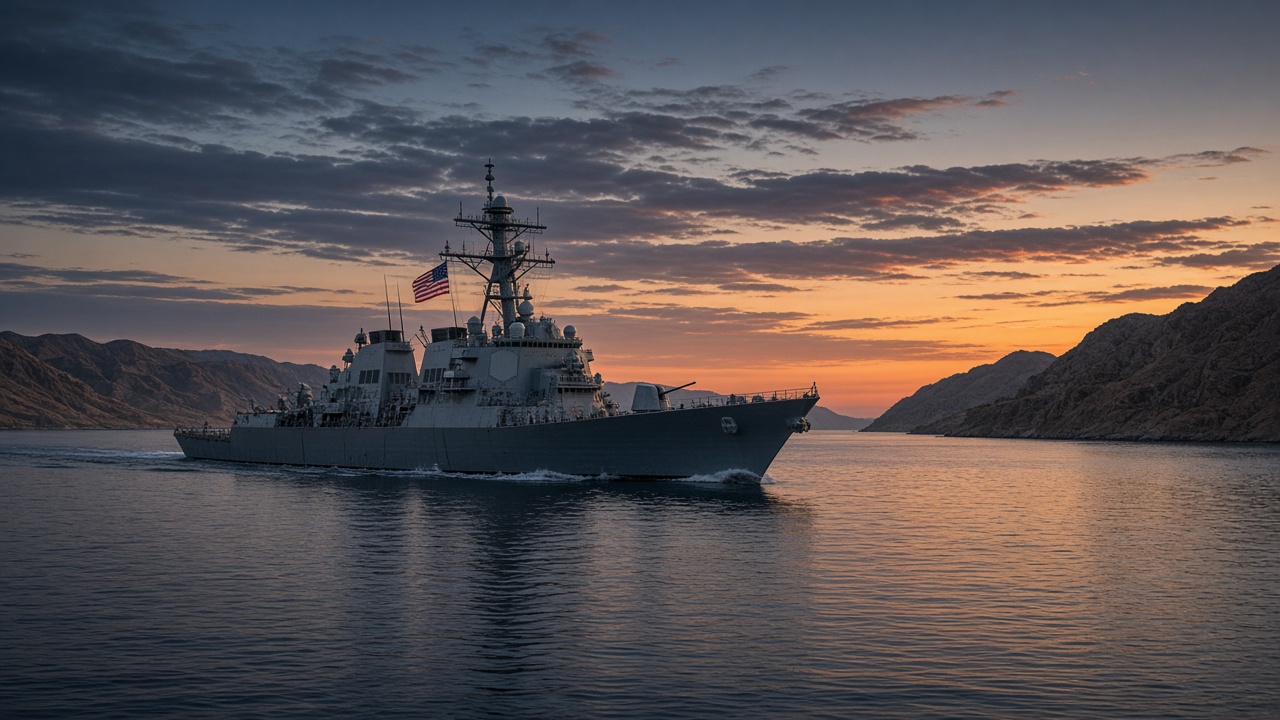
Meanwhile, Waltz said the blockade on Iranian ports can hold. “The president and the US Navy can maintain this blockade for the foreseeable future,” he said, as quoted by Iran International. He added that the administration is still tightening its economic pressure on Tehran, and he acknowledged the standoff could continue without a deal or a return to prewar shipping through the Strait of Hormuz.
Oil Climbs as Gulf Tensions Rise
The timing matters. On Thursday, President Trump accused Iran of lying about attacks on tankers. “Iran is doing everything they can to drive up the price of Oil prior to the U.S. Midterm Election,” he wrote on Truth Social. “They are even making up fake hits, mines, and everything else.” Iran claimed it struck four vessels after they used a U.S.-endorsed route through the strait and said three more hit sea mines. Those claims could not be confirmed, CBS reported.
Brent crude settled 4% higher on Thursday at just above $113 a barrel and kept climbing early Friday. ING analysts said their forecast of an $80 Brent average for the fourth quarter “is looking unattainable,” and that even without new escalation, “the mere possibility is likely to keep a sizeable geopolitical risk premium embedded in prices,” as summarized by FXStreet.
Several things are driving the jump. Houthi attacks on Saudi Arabia keep rattling traders, as we covered in our report on the Aramco evacuation. Reports that the U.S. and Israel may strike Iran again after the election are adding to the worry, Investing.com noted. ING also pointed to reports of a second U.S. aircraft carrier heading to the region.

The Pressure Is Real
Waltz’s confidence rests on numbers. CENTCOM commander Adm. Brad Cooper said Thursday that the blockade has kept at least $25 billion in Iranian crude off the market over 100 days, Iran International reported. Iran’s floating reserves, oil that left the strait before the blockade and sat on tankers at sea, were used up by mid-October, The Wall Street Journal reported, citing Kpler. “There’s no more oil to discharge to China anymore,” a Kpler analyst said. That matters because China has been Iran’s main economic lifeline under sanctions, buying nearly all of its exported oil, according to Iran International.
Iran’s own leaders admit the pain. Mohsen Rezaei, a senior Iranian security official, told Drop Site that a long blockade would hurt. “Families will pay the price, investment will suffer,” he said, while insisting that economic pain is not strategic defeat. President Masoud Pezeshkian has said the blockade halted trade through southern sea routes that carried 75% to 80% of Iran’s trade.
Regional powers are also stepping up. Turkey, Saudi Arabia, Egypt and Pakistan were set to meet Britain, France and Germany in Istanbul for the first security-focused talks of that kind, with containing the Iran-backed Houthis high on the agenda, according to Iran International.
Closing the Land Routes
The squeeze is moving to land. Agence France-Presse reported that the United States is pressing Iran’s neighbors to close border crossings, Iran International noted. Pakistan closed two crossings this week, citing security and smuggling, and Iraq shut the Chazabeh crossing on the prime minister’s orders. At the Turkish border, Iranian media have reported truck delays of up to 20 days. None of that amounts to a declared land blockade, but every closed gate makes the sea blockade bite harder.
Diplomacy Has Not Stopped
Talks are still alive, at least on paper. Iranian Foreign Minister Abbas Araghchi said a seven-day proposal for restoring normal shipping through Hormuz had been passed through Qatar, with conditions attached. He has also offered to mediate between Saudi Arabia and the Houthis, while denying that the Houthis take orders from Tehran.
At the same time, both Trump and Israeli Prime Minister Benjamin Netanyahu have renewed threats of new strikes on Iran after the November 3 midterms, CBS reported. The war’s costs are spreading across the region, too. Saudi Arabia has pushed its Future Investment Initiative, the conference known as “Davos in the Desert,” and a U.N. data forum in Riyadh back to 2027.
That is the backdrop for Waltz’s warning. Pressure, talks and threats are all running at once, and nobody in Washington or Tehran is promising a quick end.
The Conservative Take on Mike Waltz and the Iran War
First, credit Waltz for candor. Politicians love to promise short, clean wars. They rarely deliver them. Telling voters the truth less than two weeks before an election takes some nerve, and it treats Americans like adults.
Second, the pressure campaign is working. A regime that has lost tens of billions in oil sales and whose own officials say families will suffer is a regime under real strain. Patience is the strategy here, and walking away now would hand Tehran the win.
Third, patience has a price at the pump. That is exactly why the administration must keep pushing American energy. The Defense Production Act oil order was a start. More domestic drilling, refining and pipelines are the best answer to a regime that uses the Strait of Hormuz as a weapon.
Finally, a long war has to be paid for honestly. Washington already spends more on interest on the national debt than on defense. If this effort lasts another year, Congress should fund it openly and cut elsewhere, not just borrow more. Strength abroad starts with discipline at home. For more, follow our Trump Administration coverage.
Update (November 2026)
Added November 2026. Later on October 23, Brent settled at $116.72 a barrel, The Wall Street Journal reported. Asked about Waltz’s comments that day, Trump said, “We could end it very quickly,” and asked whether the U.S. wants “to finish it off or do we just want to let it wither,” CBS reported. As of November 9, the war had passed eight months with no deal, and Secretary of State Marco Rubio called Iran’s latest conditions “outrageous and ridiculous,” Reuters reported via NBC News.
- Trump’s Iran Deal: The Islamabad Memorandum — Win, Workaround, or Warning? (2026-07-02)
- ‘I’m the Boss’: What Really Happened at the G7 Évian Summit (2026-07-02)
- Trump Called Off the Iran Strike. Tehran Says He Is Lying About Why (2026-08-05)
- Oil Just Hit $117. Iran Is Betting You’ll Blame Washington. (2026-10-23)
- Trump Just Put Another Iran Strike Back on the Table (2026-10-24)
- Iran Is Plotting to Kill Americans Abroad. Take It Seriously. (2026-10-24)
- Iran Strike After Midterms? US Tells Gulf to Brace for a Short War (2026-10-28)
- Bombs on a Tanker Hull in Hormuz. Now Trump Has to Decide. (2026-10-30)
- Iran Says It Can Reopen Hormuz in Two Days. Read the Fine Print. (2026-11-02)
- Netanyahu Wants More Iran Strikes. America Sets the Clock. (2026-11-02)
- Iran Fired at U.S. Forces. The Qeshm Island Strikes Were the Right Answer. (2026-11-03)
- Hegseth Impeachment Aims at the Wrong Man. Congress Owns This War. (2026-11-09)
Sources
- CBS News: Iran war live updates (Waltz FT interview; Trump on “fake hits”)
- Iran International: US prepared for prolonged Iran standoff, Trump envoy says
- The Wall Street Journal: Oil prices rise as Middle East risks persist
- Investing.com: Oil prices cool from 5-month highs as Trump invokes Defense Production Act
- FXStreet: Brent: Geopolitical risk premium builds (ING)
- NBC News/Reuters: U.S. signals breakthrough in Iran talks unlikely


