

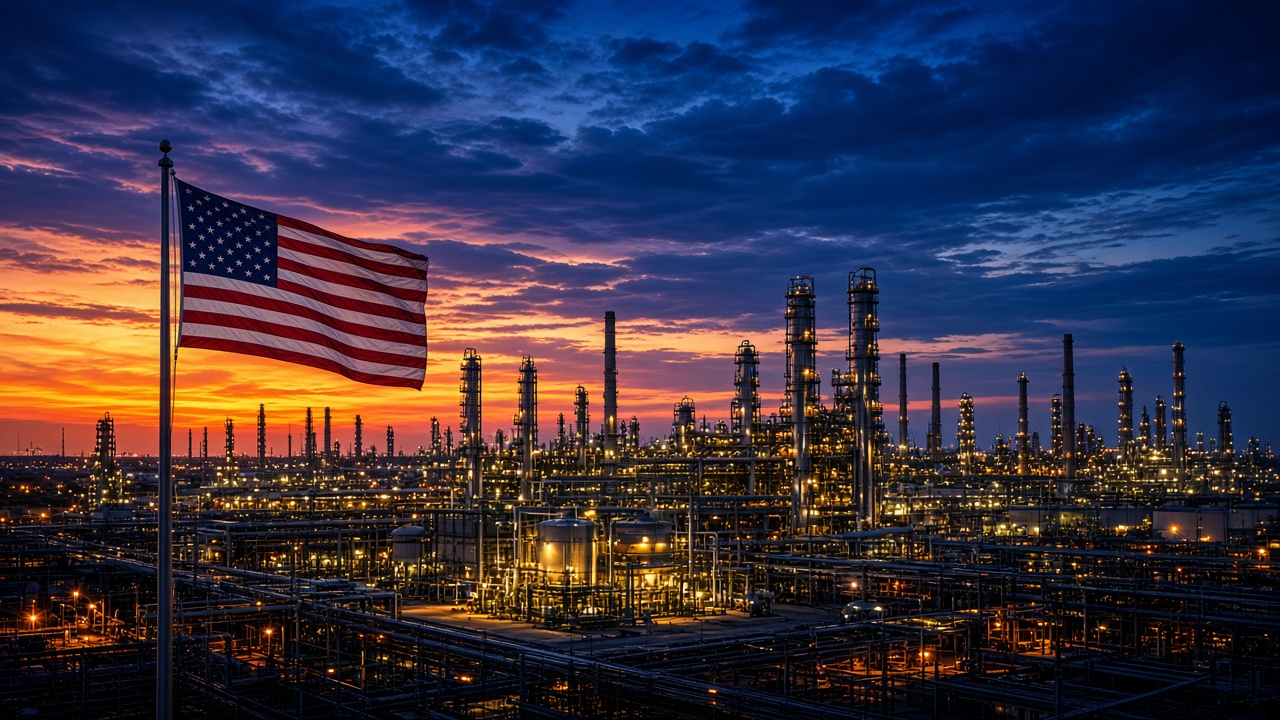
President Trump just made American oil a matter of national defense. On Thursday, he signed a memo that puts the Defense Production Act oil push into motion, declaring domestic petroleum production, refining, pipelines, storage and marine terminals “essential to the national defense.”
That is a big deal. The Cold War-era law lets Washington spend money and make deals to grow industries it considers vital. Now oil and gas are on that list, and the Energy Department has already put a first dollar figure on it. Here is what the order does, where the money comes from, and why conservatives should cheer the goal while keeping an eye on the checkbook.
What the Defense Production Act Oil Memo Actually Says
The memo is short. It is addressed to the Secretary of War and builds on the national energy emergency Trump declared on Jan. 20, 2025, in Executive Order 14156, according to the text released by the White House. In it, Trump finds that “petroleum fuels the Nation’s Armed Forces, industrial base, and crucial infrastructure.” He adds that “without immediate Federal action, United States defense capabilities will remain vulnerable to disruption.”
The memo makes three findings under Section 303 of the law. First, petroleum production, refining and logistics, from exploration to pipelines to marine terminals, are essential to national defense. Second, private industry cannot build enough capacity “in a timely manner due to constrained financing, long lead times, permitting and infrastructure bottlenecks, and supply chain limitations.” Third, federal “purchases, purchase commitments, financial support” and similar tools are the most practical fix.
Trump also waived several of the law’s usual Section 303 requirements for this purpose. In plain English, that clears away some of the normal paperwork before the government can commit money.
However, the memo did not name any specific projects that could get funding, CNBC reported. So the details of who gets what are still unknown.
Not the First Oil Determination This Year
This is not a brand-new idea. A trade group for heating fuel dealers, NEFI, noted that Thursday’s order reissues a similar finding made in April. The key difference is who carries it out. The April determination was directed to the Secretary of Energy, while this one goes to the Secretary of War.
Where the Money Comes From
The same day, the Energy Department announced plans to provide up to $150 million in Defense Production Act Title III funding. The money is meant to expand petroleum production, storage and logistics at refineries across the country, including the restart of an idled refinery. DOE says it expects the funding to “increase U.S. refining output by millions of gallons per day.”
Energy Secretary Chris Wright blamed “17 years of Democrat leaders enacting energy subtraction policies” for refinery closures and higher prices. DOE said the selection process is ongoing and that winners will be announced “in the near future.”
The larger pot comes from Congress. Trump signed a law last year that included $1 billion in Defense Production Act funding for energy projects tied to national security, according to CNBC. DOE says that money came through the Working Families Tax Cuts law.
A Short History of the Defense Production Act
Congress passed the Defense Production Act on Sept. 8, 1950, as the Korean War began, according to the Congressional Research Service. It was modeled on the War Powers Acts of World War II and originally let the president do everything from prioritizing defense orders to setting wage and price ceilings.
Many of those sweeping powers have since lapsed. What remains, especially Title III, lets the government use purchases, loans and other incentives to expand production of things it deems vital to national defense.
Both parties have stretched the definition of “national defense.” In June 2022, President Biden invoked the law to boost domestic production of solar panels, heat pumps, insulation, grid parts and electrolyzers, according to the Energy Department. Conservatives criticized that as using a defense law for a climate agenda. Now the same tool points at oil. The precedent cuts both ways, and that is worth remembering.
Why Now
Fuel prices are the reason. Crude oil and diesel prices have surged since the U.S. and Israel struck Iran at the end of February, CNBC reported. The conflict has limited energy shipments around the world, and Ukrainian attacks on Russian refineries have made fuel shortages worse. Meanwhile, Houthi strikes keep hitting Saudi targets, as we covered when Aramco evacuated its headquarters.
Politics matter here too. A Reuters/Ipsos poll that closed Monday showed just 36% of Americans approve of Trump’s handling of the economy, according to CNBC. The midterms are Nov. 3.

The Defense Production Act Oil Plan Has Already Started in Texas
Thursday’s memo is not the first move. On Oct. 13, Vice President JD Vance said the administration would use the Defense Production Act to expand a Delek US Holdings refinery in Tyler, Texas, Reuters reported. That plant processes about 74,000 barrels a day.
“We want millions of gallons of commercial grade and military-spec fuel to come out of this refinery in addition to what it’s already producing,” Vance said. He added that it would mean “lower costs to drive your car into work every single day.”
Still, Reuters noted that the White House and Delek did not say how much money was involved or how much capacity would be added. Reuters also noted that refinery expansions usually take many months, if not years.
The Conservative Take
First, the goal is right. America produced about 13.6 million barrels of crude a day in 2025, the most of any country, CNBC reported. Yet a nation that leads the world in oil should not be at the mercy of Tehran, the Houthis or Moscow every time a tanker gets hit. Energy is security. Treating it that way is overdue.
Second, the memo itself names the real problem. It blames “permitting and infrastructure bottlenecks” for slow building. That is exactly why Congress should pass lasting fixes, like the Senate permitting reform bill we wrote about today. An emergency memo can be undone by the next president. A law is much harder to reverse.
Third, watch the money. Fiscal conservatives should want every one of those billion dollars tracked. Government picking winners is how we got Solyndra. Therefore, the best use of this power is clearing roadblocks, not writing blank checks.
Fourth, be consistent. If conservatives objected when Biden used this law for heat pumps, we should hold this administration to clear standards too: named projects, published dollar amounts and measurable results.
What to Watch Next
- The project list. Which refineries DOE picks for the $150 million, and whether the idled refinery it mentioned actually restarts.
- The Pentagon’s role. How the Department of War uses its new authority, and whether it publishes an application process.
- Tyler, Texas. Whether Delek and the White House ever put a dollar figure and a capacity number on the promised expansion.
- Prices. Whether diesel and gasoline prices move at all before voters head to the polls.
In the end, cheaper gas comes from more supply, and more supply comes from letting Americans build. If this order does that without turning into another subsidy machine, it is a win. For more, follow our Trump Administration coverage.
Update (November 2026)
Added November 2026. On a Nov. 6 earnings call, Delek CEO Avigal Soreq said the Tyler refinery “is going to stay at 75,000 barrels a day” of crude, Bloomberg Law reported. He told investors there was “no material capex” to disclose and described the change as shifting between kinds of products, KLTV reported. That is a far cry from the expansion announced at the October rally. As of this update, DOE had not yet named the refineries receiving its $150 million.
Sources
- The White House: Presidential Determination Pursuant to Section 303 of the Defense Production Act on Domestic Petroleum Production, Refining, and Logistics Capacity
- CNBC: Trump invokes Cold War-era Defense Production Act for oil production, refining
- Reuters via Investing.com: Trump administration to expand a Delek Texas refinery using Defense Production Act
- U.S. Department of Energy: Energy Department to use Defense Production Act funding to restart American refinery and expand refining capacity
- NEFI: Defense Production Act extended to petroleum infrastructure
- Congressional Research Service: The Defense Production Act of 1950: History, Authorities, and Considerations for Congress
- U.S. Department of Energy: President Biden invokes Defense Production Act to accelerate domestic manufacturing of clean energy (2022)
- Bloomberg Law: Delek CEO downplays White House refinery expansion announcement
- KLTV: Tyler refinery output won’t exceed 75K barrels per day following Vance announcement


