

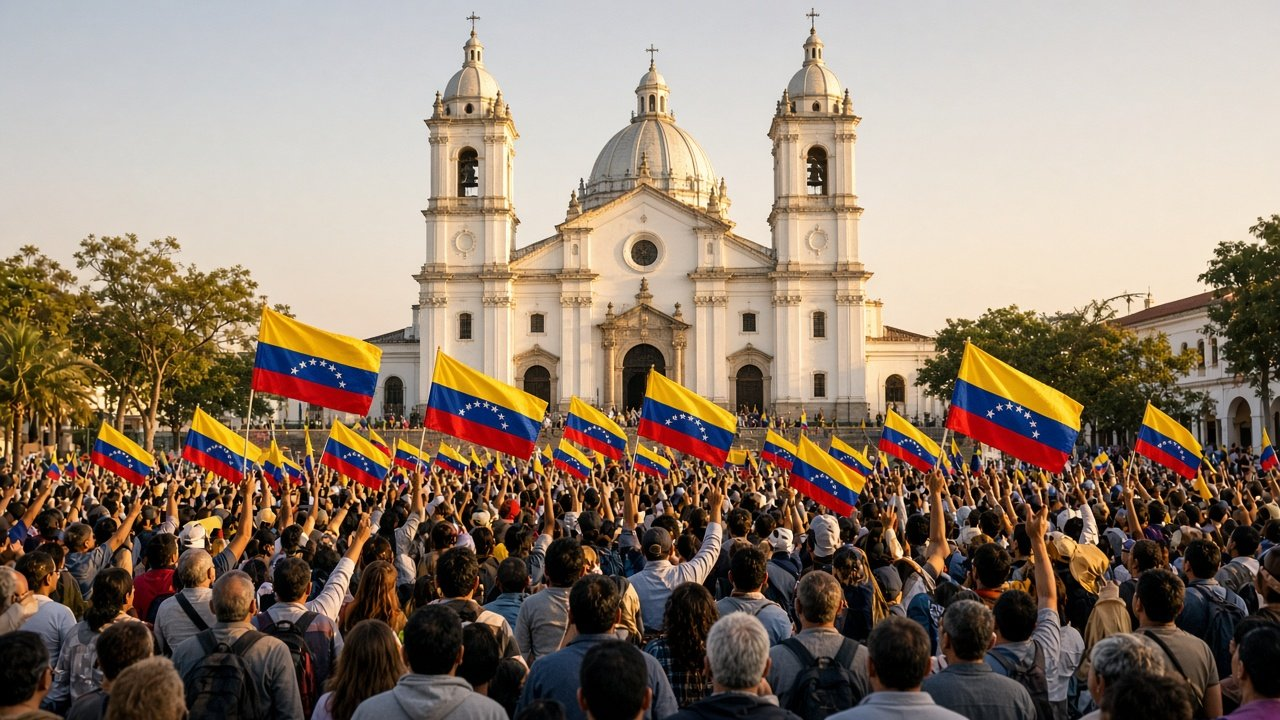
Four words on X changed the mood in Caracas on Sunday. “I’m here. With you.” With that post, Nobel laureate María Corina Machado told the world she was home. After nearly 10 months in exile, Machado returns to Venezuela at a moment when nobody can say when Venezuelans will vote again.
Her ally Edmundo González confirmed it within minutes. “Venezuela! I am thrilled to announce to you that our leader, my dear María Corina, is on Venezuelan soil,” he wrote, according to the Guardian. He added that he will return soon too.
Key Takeaways
- Machado appeared Sunday at a church in Barquisimeto, about 220 miles west of Caracas.
- She left Venezuela last December to accept the Nobel Peace Prize.
- She made more than half a dozen failed attempts to get back in recent months.
- Interim President Delcy Rodríguez has no election on the calendar.
How Machado Returns to Venezuela After Months of Failed Tries
First, the setting. Footage showed Machado surrounded by supporters at the Sanctuary of the Divine Shepherdess in Barquisimeto, the capital of Lara state. Her team said she went there to give thanks for her return. That is a fitting first stop for a woman who has risked everything for her country.
Getting there was not easy. El País reported at least seven attempts in three months, by boat, by plane, and over land. Each one fell apart at the last minute. It is still not fully clear how she got in this time.
The reporting on Washington’s role is mixed. The Guardian says the Trump administration had reportedly opposed her return. Meanwhile, Spain’s ABC reported that several countries worked on the trip and the White House did not stand in the way. Either way, she is now on Venezuelan soil, and that matters.

Why It Matters That Machado Returns to Venezuela Now
Here is the backdrop. In January, the U.S. military removed dictator Nicolás Maduro. Conservatives were right to cheer. Maduro stole the 2024 election, and most observers believe Machado’s movement won it.
After Maduro fell, many expected President Trump to back Machado. Instead, he embraced Rodríguez, the Guardian notes. Critics now call Venezuela a U.S. protectorate. That label should bother anyone who believes in self-government.
However, Maduro’s vice president, Delcy Rodríguez, now runs the country. The Associated Press reports that she has stayed past the time she was authorized to serve. In addition, there is still no election on the calendar. In other words, the dictator is gone, but the people still have not had their say.
Stability Is Not the Same as Freedom
Some in Washington seem to prefer a quiet deal with Rodríguez over a messy democracy. That is a mistake. A government that answers to Washington instead of its own voters is not a win for liberty. It is a lease.
America has real interests here, too. Oil just spiked past $116 a barrel on Middle East supply fears, and a free, stable Venezuela could help. Likewise, the region is watching how we handle Havana. Our credibility depends on standing with people who fight for freedom, not just with whoever holds the keys.
What Comes Next
So what should happen now? First, Rodríguez must guarantee Machado’s safety. Second, Washington should press for a firm election date with real observers. Finally, the opposition must stay united, as González prepares to come home as well.
Why should an American family care? Because a free Venezuela means fewer people fleeing north, fewer favors for Russia and China in our hemisphere, and a stronger partner on energy. Freedom next door is good business for us too.
Machado has earned her place. Now Venezuelans deserve the vote they were promised. Should the U.S. demand an election date from Rodríguez, or keep the deal quiet?
Follow World of Payne for More
For more conservative commentary on world events, visit the World of Payne homepage. Then follow the show on X, Facebook, and Instagram.