

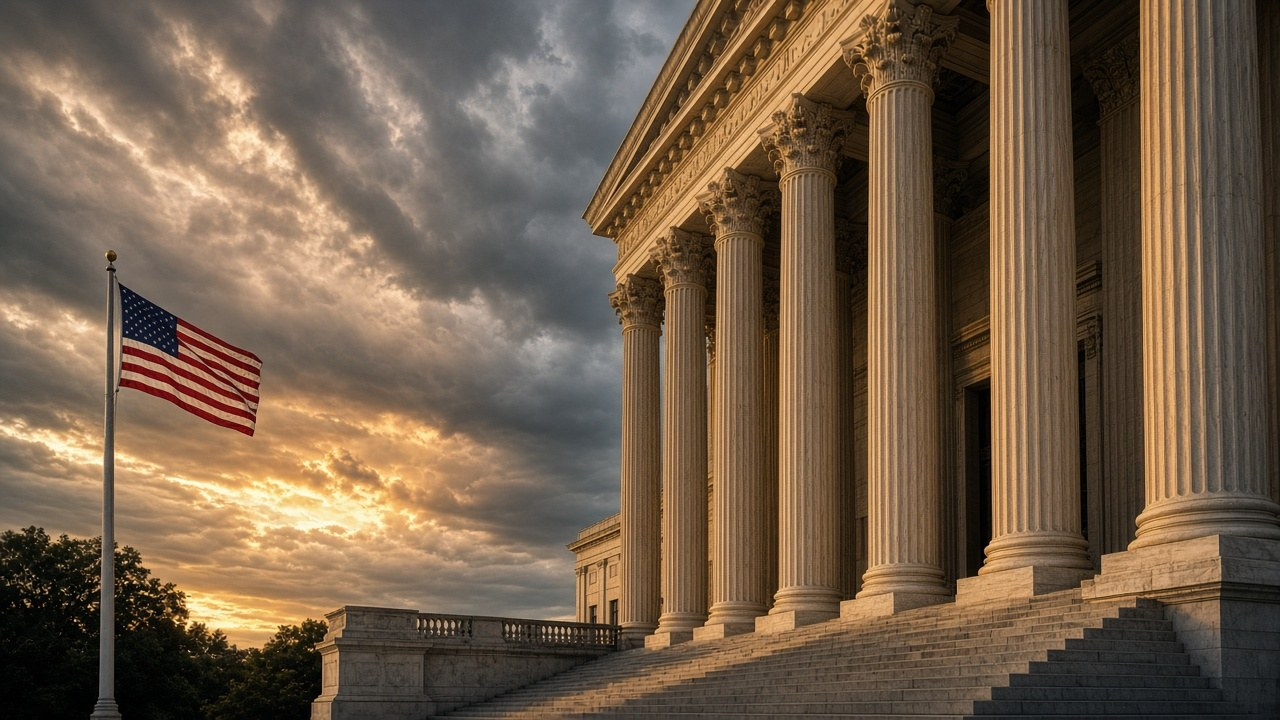
The Supreme Court just shut a quiet back door in America’s immigration courts. On Tuesday, the justices refused to revive administrative closure, a Biden-era rule that let immigration judges set deportation cases aside. The order was one sentence long, and no justice publicly dissented.
As a result, the administrative closure rule stays dead, and so does the Trump-Texas deal that killed it. Three cities and an immigrant legal services group had asked the Court to pause that deal. They lost, at least for now, while their appeal continues.
Key Takeaways
- The Supreme Court denied an emergency request to restore the 2024 administrative closure rule, with no noted dissents.
- Baltimore, New Haven, Columbus and an immigrant legal group challenged the Texas and DOJ deal that killed it.
- A federal judge in Wichita Falls, Texas, approved that agreement on June 22, the same day Texas filed suit.
- Texas argued the rule let judges “effectively grant indefinite amnesty” to people in the country illegally.
- The challengers call the deal collusion, and their appeal at the 5th Circuit is still pending.
What Administrative Closure Actually Did
Administrative closure lets an immigration judge pull a case off the active docket without deciding it. According to Reuters, via HuffPost, judges used the practice for decades. Over the years, judges applied it in hundreds of thousands of deportation cases. Often, a separate visa petition or criminal appeal was still pending.
The Biden administration formally wrote the practice into a regulation in 2024. That rule replaced a 2020 Trump rule that courts had blocked. Supporters said it helped judges manage crowded dockets. For example, SCOTUSblog notes it let a crime victim or witness seek relief from a separate agency.
However, critics saw something else. After all, a closed case is not a decided case. Meanwhile, the person stays in the country, sometimes for years. Texas called the rule “one part of the Biden-Harris Administration’s campaign to undermine our immigration laws.”
Why Administrative Closure Became Amnesty by Delay
The law is fairly plain here. Specifically, Texas pointed out that federal law requires an immigration judge to “decide whether an alien is removable from the United States.” Putting a case on a shelf indefinitely does not do that. Instead, it creates a limbo where nobody wins and nobody leaves. That is not mercy. It is a policy choice Congress never made.
Conservatives, in fact, have argued this for years. Immigration law should be enforced as written, and changes should come from Congress. We made a similar point when 300,000 visas were revoked: a visa, like a pause button, was never a right.

The Collusion Charge Deserves an Answer
Still, the way the administrative closure rule died deserves a hard look. Texas sued in Wichita Falls, where Chief U.S. District Judge Reed O’Connor is the only federal judge. Just hours later, the Justice Department joined Texas in asking for a final judgment. O’Connor granted it the same day. He also barred the agency from adopting a similar rule in the future.
The challengers called that “egregious collusion.” In fact, their lawyer warned that any agency could use the same trick to dodge the normal rulemaking process. On the other hand, Solicitor General D. John Sauer said the challengers wanted to turn a narrow standing fight into “a far-reaching attack” on the merits, SCOTUSblog reported.
Here is the uncomfortable truth for conservatives. For years, our side attacked “sue and settle” deals. In those, friendly groups sued Democratic administrations to lock in policies without public comment. Bloomberg Law reports that opponents now use that same word, collusive, for this settlement. If it is wrong when the left does it, it is risky when we do it too.
What Comes Next for Administrative Closure
This was an emergency order, not a final ruling. Therefore, the fight continues at the 5th Circuit, and the cities may try again. In addition, a future administration could try to write a new rule, although O’Connor’s order stands in the way.
The durable fix is the same one we pointed to after the Court’s New Hampshire voter ID decision: write it into law. Congress should spell out when immigration judges may pause a case and when they must decide it. That way, no judge, no agency, and no friendly lawsuit can quietly change the rules again.
Bottom line: ending deportation limbo is the right result. Next time, win it through the front door. For more conservative commentary on immigration, visit the World of Payne homepage. Also, follow the show on X, Facebook, and Instagram.