

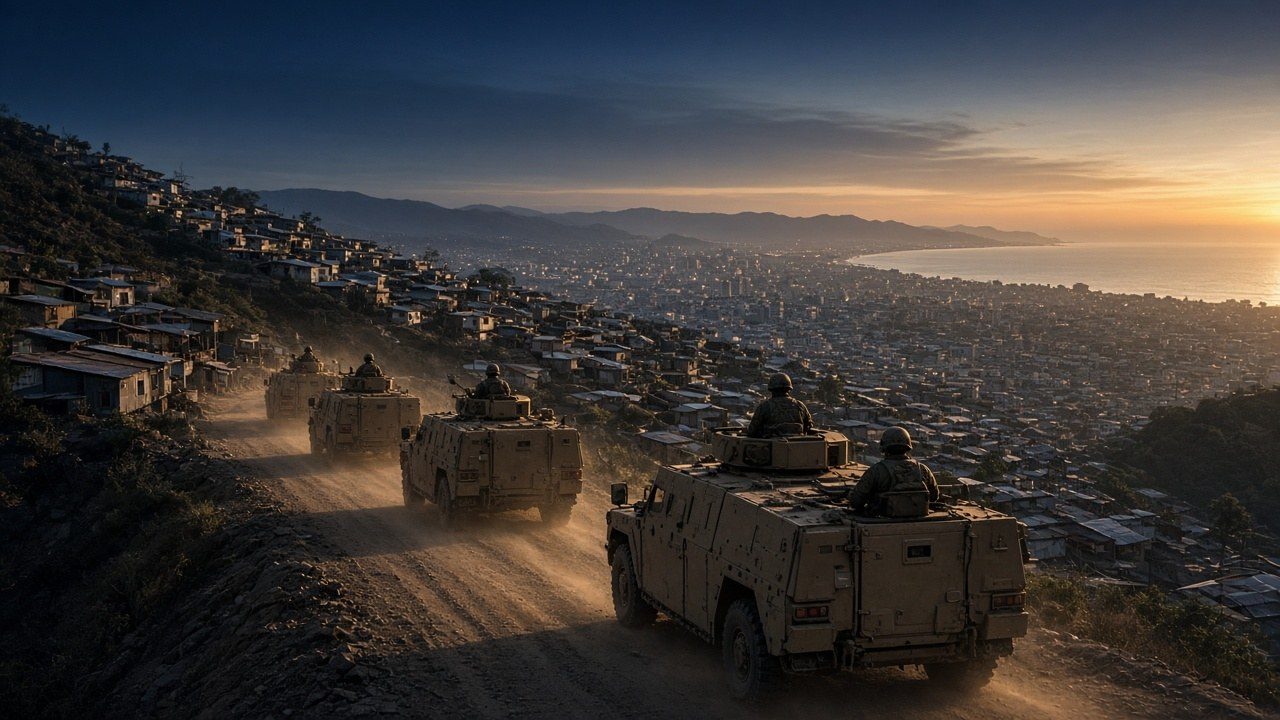
More than 2,000 Salvadoran troops in Haiti are now hunting the gangs that ambushed four of their own. And according to an Axios scoop, President Nayib Bukele cleared it with President Trump first. Bukele called Trump on Tuesday. “Do what you have to do,” Trump told him, according to sources briefed on the call.
Haiti’s government has signed off. So the toughest anti-gang leader in the hemisphere is now taking on the worst gang crisis in the hemisphere. Notably, he is doing it without American soldiers.
Key Takeaways
- El Salvador says it is deploying more than 2,000 soldiers to Haiti. Sources told Axios the number could double or triple.
- The goal is to rescue four Salvadoran aviation technicians missing since an October 18 ambush and to fight the gangs.
- Bukele told Haitians in Creole that this is not an invasion and that El Salvador is paying 90% of the costs.
- Haiti approved a bilateral agreement on Wednesday, Axios reports, but critics question the mission’s scope and command.
- Haiti sits about 700 miles from Florida. Gang violence there has killed more than 5,700 people this year, the UN says.
Why Salvadoran Troops in Haiti Now
The trigger was personal. On October 18, four Salvadoran aviation technicians were ambushed in Croix-des-Bouquets, a gang-held area east of Port-au-Prince. They served with the UN-backed Gang Suppression Force in a noncombat role. According to the Miami Herald, they were heading back to camp after a supermarket trip when their armored vehicle came under fire. They have not been found.
Bukele did not wait. First, he sent 100 special forces. Then he kept sending more. By Thursday, the Herald reported at least 2,000 Salvadoran troops on the ground, including special forces, marines and infantry. Meanwhile, four bodies were handed over as those of the missing men. However, Bukele said they did not match, and that one was a child, the BBC reported.

Not an Invasion, Bukele Says
On Thursday, Bukele tried to calm fears about the Salvadoran troops in Haiti. He wrote on X in Haitian Creole. “This is not an operation against the Haitian people, nor an invasion of the country of Haiti,” he said, in the Miami Herald’s translation. He added that El Salvador is covering 90% of the costs with its own funds.
He also made a promise. “And when our mission is finished, we’ll return home,” he wrote. In other words, he wants to go in, finish the job and leave. Unfortunately, Haitians have heard promises like that before.
The Conservative Case for Salvadoran Troops in Haiti
Start with the record. Bukele took El Salvador from a murder capital to what Axios calls one of the hemisphere’s safest countries. He did it by treating gangs as enemies, not clients. That is the mindset Haiti has lacked.
Next, look at the map. Haiti is roughly 700 miles from Florida. A country run by gangs does not keep its chaos at home. Instead, it pushes people onto boats and gives smugglers room to work. As a result, a stable Haiti is an American security interest, not charity.
Finally, look at who is paying. The earlier Kenya-led mission cost about $1 billion, House Foreign Affairs Chairman Brian Mast told Axios. “We spent the equivalent of $1 million per Kenyan and the situation was worse at the end,” he said. This time, an ally is carrying the load. That is the burden-sharing conservatives have demanded for decades. We made a similar case about the region in our take on Machado returning to Venezuela.
The Fair Caveats
Still, cheering is not a plan, and the Salvadoran troops in Haiti face hard questions. First, sovereignty matters. The Herald reports the troops began arriving before any signed agreement, as both governments stayed silent for days. Second, the rules of engagement are unclear. CNN reports that the force’s command structure has not been set. Bill O’Neill, the UN’s human rights expert for Haiti, warned that “innocent people” could be harmed.
Third, the UN force’s track record is weak. Before this surge, the whole UN-authorized force was about the size of Bukele’s deployment. Even so, it struggled to reach gang strongholds. Critics also point to mass incarceration and abuse claims in Bukele’s crackdown at home. Those concerns deserve real answers, not a wink.
And American taxpayers are not entirely off the hook. The Herald reported that at least one airlift used a US military aircraft. Axios, meanwhile, says Washington officially denied Bukele’s request for drones and transport planes.
What Comes Next
The test for Salvadoran troops in Haiti is simple. Bring the four men home, break the gangs and then leave, as Bukele promised. If he pulls that off, he will have done what years of UN missions could not. A steadier Haiti could also take back its citizens who lost protected status here, which Axios says is Trump’s main Haiti focus. We covered the broader deportation fight in our deportation limbo breakdown.
Should Washington back Bukele with more than words? For more conservative takes on national security and the hemisphere, visit World of Payne and follow the show on X, Facebook and Instagram.