Tag: Federal Reserve
-

How Does the Fed Raise Interest Rates? It Doesn’t Set Yours.
How does the Fed raise interest rates? It sets a 3.75%-4% target range and four overnight rates for banks, then markets carry the move to your mortgage, credit card and savings. Here is how the machinery works, what Volcker and the 2022-23 cycle taught us, and why Washington’s borrowing makes the Fed’s job harder.
-

Week in Review: 5% Yields, a $409 Billion Deficit and a Dodged Vote
Hot consumer and wholesale prices pushed the 10-year Treasury yield past 5%, the fiscal year opened with a $409 billion October deficit, and Congress ducked hard votes. Our Week in Review connects the dots.
-

Bessent Blames an Energy Shock. Wholesale Prices Say Otherwise.
The producer price index rose 0.3% in October and 6.5% over the past year, the fastest since 2022. Treasury Secretary Bessent says it’s a fading energy shock and the Fed shouldn’t hike. But energy fell in October, while core wholesale prices rose 0.5% and are up 4.9% from a year ago.
-
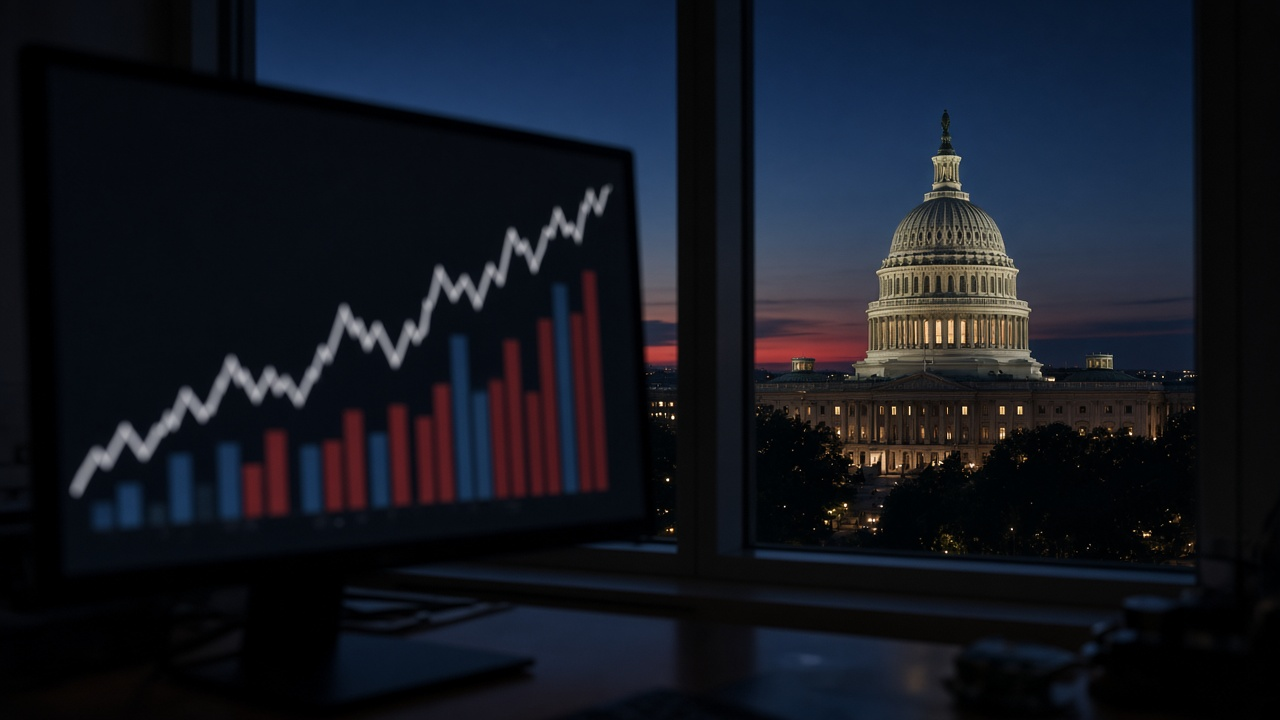
Treasury Yields Hit 5%. Washington’s Borrowing Makes It Hurt.
Treasury yields jumped after October’s hot inflation report, and the 10-year is back above 5%. The Fed should keep hiking until inflation breaks. But with the government refinancing debt that averages 3.57% at rates near 5%, Washington’s borrowing is what makes higher rates so expensive for taxpayers.
-

October CPI Has No Yearly Rate. The Monthly Math Is Still Hot.
The October CPI rose 0.4%, with core prices up 0.3% for a third straight month, and both beat forecasts. BLS skipped the yearly rate because of last year’s shutdown, but the index levels show prices up 3.9% over 13 months and running near a 5.7% annualized pace over three. The Fed’s December choice is now…
-

Consumer Credit Jumped $27.8 Billion. That Isn’t Strength.
Americans added $27.8 billion in consumer credit in September, more than double the $11.5 billion forecast. Revolving balances, mainly credit cards, supplied about $16.3 billion of it and grew at a 14.5% annual rate, while accounts charged interest averaged 22.36%. With wages up 3.1% against 3.7% inflation, that is households stretching, not proof of strength.
-
Unit Labor Costs Fell. Stop Blaming Paychecks for Inflation.
Nonfarm unit labor costs fell 0.7% in Q3 2026 as labor productivity surged 3.6%. Hourly compensation rose 2.9%. Energy drove roughly 40% of the 3.7% CPI rise. Stop blaming paychecks for inflation the BLS tables do not support.
-

165,000 Jobs. Your Paycheck Still Feels the Squeeze.
The October jobs report beat Wall Street with 165,000 payrolls and a 4.1% unemployment rate. Wages rose 3.1% over the year, but involuntary part-time work jumped and December Fed hike odds climbed. Here’s why a strong print still leaves family budgets feeling squeezed.
-

Factories Had Their Best Month Since 2021. Prices Are Still the Problem.
The ISM manufacturing PMI rose to 55.5% in October, and factory production hit its fastest pace since November 2021. But input prices rose for a 25th straight month, and most survey comments were negative. Here’s what Washington should learn.
-

Home Prices Finally Fell. Your Mortgage Payment Didn’t.
Home prices just dipped for the first time in three years, yet the typical mortgage payment is up 10.7% to near a record. Here’s why rates matter more than price tags, why another subsidy won’t help, and what buyers can do right now.
Latest News