

European gas prices just hit their highest level since 2022. On Monday, Oct. 26, the Dutch benchmark contract topped €97 a megawatt-hour as colder weather set in and the Iran war kept squeezing supply. Meanwhile, Europe’s storage tanks sit at about 75% full heading into winter.
Here in America, the picture looks very different. Our storage is above its five-year average, and our futures price fell last week. So why is one side of the Atlantic bracing for a hard winter while the other is shipping gas to it? The answer is policy, and it is a lesson Washington should not forget.
Key Takeaways
- Europe’s benchmark gas price passed €97 per megawatt-hour on Oct. 26, the highest since December 2022.
- EU gas storage stood at 75% on Oct. 21, the EU energy regulator ACER says, below historical levels after a slow summer refill.
- US LNG now supplies around 30% of all EU gas, according to ACER, as Qatari and Russian supplies fall.
- US storage was 35 billion cubic feet above its five-year average in the Oct. 22 government report.
- British households face a predicted 16% jump in energy bills in January, the Guardian reports.
Why European Gas Prices Are Surging Now
First, the numbers. The Dutch front-month contract, Europe’s benchmark, rose as high as €97.39 per megawatt-hour on Monday morning, Gas Processing & LNG reported. Britain’s contract climbed to 240.74 pence per therm. Both were the highest since December 2022.
Three forces are driving the jump. To begin with, attacks on ships in and near the Strait of Hormuz have choked off LNG cargoes from the Gulf. In fact, October has been the worst month yet for attacks on commercial shipping in those waters, according to maritime tracking data cited in that report. In addition, forecasts turned colder over the weekend. Finally, storage is thin, so buyers have little cushion if winter bites.
Also, the war risk has not faded. The Guardian reported that fears of more supply disruption grew amid reports that the US and Israel have drawn up plans for renewed strikes on Iran after the midterms. Those reports helped push Brent crude as high as $117 a barrel on Friday, a story we covered when oil first hit $117.
Europe Is Short on Stored Gas
Storage is the real driver of European gas prices. According to ACER, the EU energy regulator, European storage fell to just 28% of capacity at the end of last winter. Then the summer refill ran slow and expensive. By Oct. 21, stocks reached 75%.
Moreover, ACER estimates the Middle East conflict added €18 billion to €33 billion to Europe’s gas import bill for the same amount of gas. Those costs land on households and factories, and they push up electricity prices too. Separately, analysts at Rystad Energy expect Europe’s LNG bill to rise by at least $12 billion this year, even as demand falls.
What European Gas Prices Mean for Families Over There
For ordinary people, this is not an abstract market story. In Britain, the typical annual household energy bill is predicted to rise 16% in January, to the equivalent of about £2,000, the Guardian reported. Regulators there expect the country to pay some of the highest energy costs in Europe this winter.
Even more telling, Britain paid a record £4 billion for imported power in the year ending in August. At the same time, it made near-record payments to fire up gas plants while wind and solar farms were paid to switch off because of grid bottlenecks. That is what happens when a country plans its energy around slogans instead of supply.
Likewise, the continent made big bets that are now coming due. Germany shut down its last nuclear plants in 2023. Europe also leaned for years on Russian pipeline gas, then on Qatar. Now, with Qatari cargoes stuck behind Hormuz, it is scrambling for whatever ships it can find.

America Is the Backstop Europe Needs
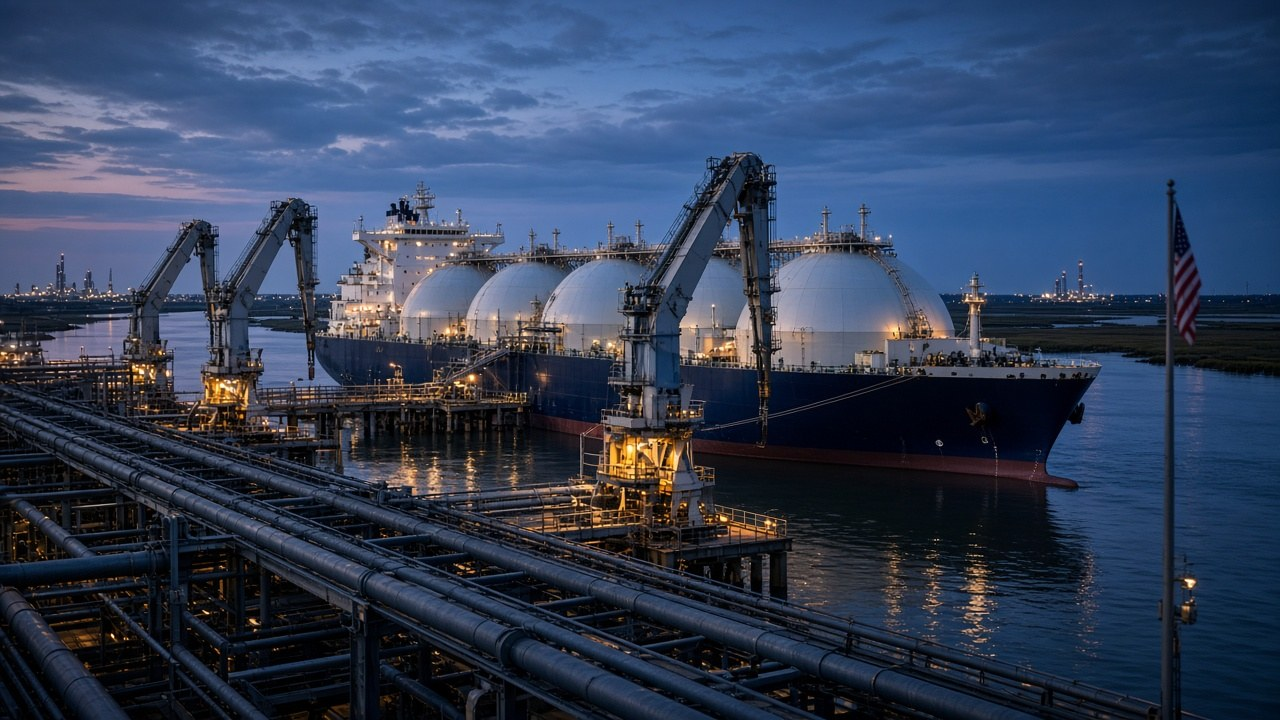
So who is filling the gap as European gas prices climb? Increasingly, it is us. US LNG now accounts for around 30% of total EU gas supply, ACER says, while all Russian gas makes up about 11%. Notably, no significant volumes of Qatari LNG reached the EU this summer. ACER also expects extra imports this winter to come mainly from the United States.
Back home, supply is solid. The US Energy Information Administration reported on Oct. 22 that working gas in storage reached 3,644 billion cubic feet. That was 35 billion cubic feet above the five-year average, though 152 billion below a year earlier. Meanwhile, the November futures contract closed near $2.80 per million Btu that week.
That is no accident. American drillers, pipeline builders and export terminals in places like Louisiana did the hard work. As a result, the US can heat its own homes and still help allies stay warm. In other words, energy production is national security.
The Fair Question About Exports
To be fair, exports are not free. When more US gas goes overseas, it can tighten supply at home and nudge our prices up. That concern is real, and it is worth watching closely this winter.
Still, the answer is to produce and build more, not less. More pipelines and more terminals mean more supply for everyone. That is why we backed the Senate permitting reform bill, and why we warned that data center electricity bills should not fall on families. Supply solves problems that rationing never will.
The Lesson for Washington
Europe did not stumble into this winter by bad luck alone. Yes, the Iran war is a shock nobody fully controls. However, a continent with more of its own production, more nuclear power and fuller storage would be far less exposed today.
Therefore, American leaders should treat high European gas prices as a warning, not just a headline. Keep approving export terminals. Keep permits moving. Keep our own production strong. And never trade reliable power for promises. Because when the next crisis comes, the country with the gas sets the terms.
FAQ
Why are European gas prices so high right now?
Three things are driving them. Attacks near the Strait of Hormuz have disrupted Gulf LNG cargoes, colder weather is lifting heating demand, and EU storage is low. On Oct. 26, the Dutch benchmark passed €97 per megawatt-hour, the highest since December 2022.
How much of Europe’s gas comes from the United States?
According to ACER, the EU energy regulator, US LNG now accounts for around 30% of total EU gas supply. Russian gas makes up about 11%. ACER expects extra imports this winter to come mainly from the US.
Will European gas prices raise my heating bill in the US?
Not directly. US storage was above its five-year average in the Oct. 22 government report, and futures fell that week. Still, higher exports can tighten supply at home over time. So more domestic production and infrastructure is the best protection.
Want more straight talk on energy, your wallet and the decisions coming out of Washington? Read more at World of Payne, and follow the World of Payne show on X, Facebook and Instagram for new episodes and daily commentary.