

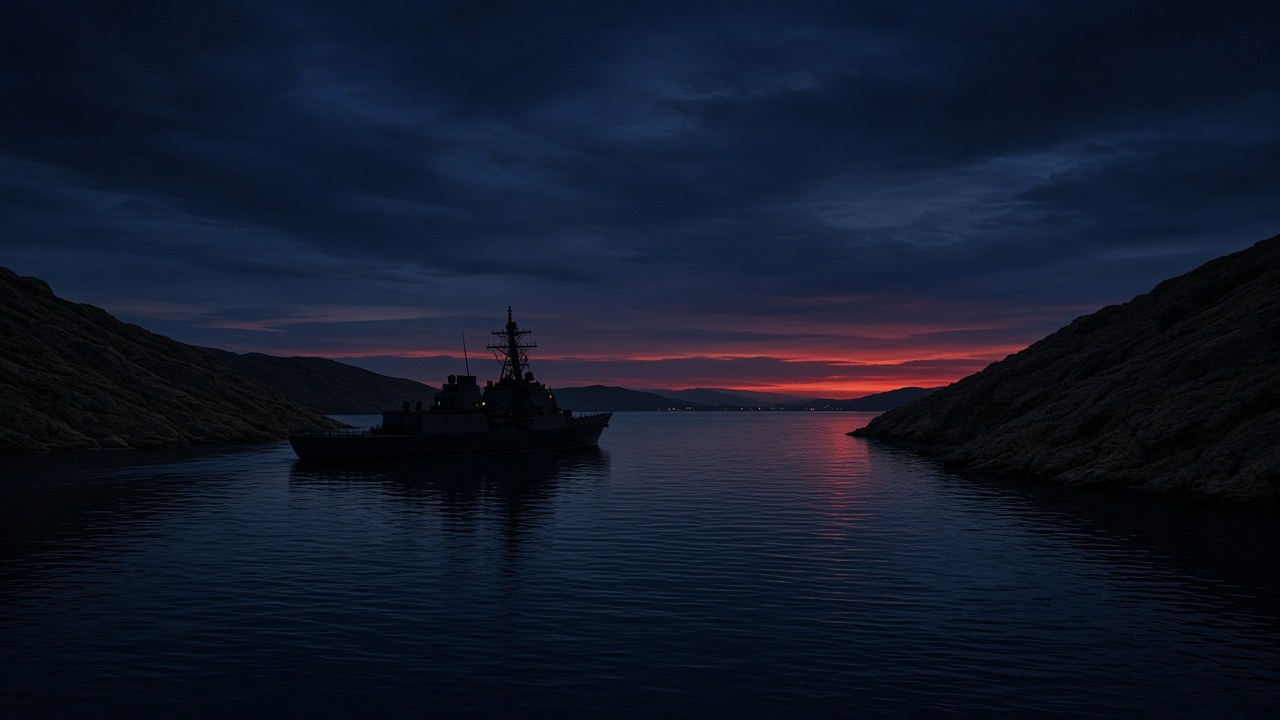
The Qeshm Island strikes came on the eve of Election Day. On Monday night, U.S. forces hit Iranian targets on Qeshm Island in the Strait of Hormuz, a U.S. official told the Associated Press. Officials called the strikes defensive. The Wall Street Journal first reported them.
This follows our earlier post on Netanyahu’s push for more Iran strikes. Our view is simple. When Iran fires at American forces, America should answer. At the same time, Americans deserve a clear account of what our military is doing in their name.
Key Takeaways
- U.S. officials described the Qeshm Island strikes as limited and defensive, not a return to full-scale war.
- One official said the strikes targeted Iranians using surface-to-air missiles against U.S. assets.
- Iran’s Revolutionary Guard claimed it shot down two U.S. drones near the island, and a U.S. official called that claim false.
- Officials told the Journal that smaller, unannounced strikes have gone on for weeks.
What We Know About the Qeshm Island Strikes
The official who spoke to the AP was not authorized to comment publicly. That person said the targets were “Iranians using surface to air missiles against U.S. assets.” Meanwhile, Iranian state television reported explosions on the island.
Two U.S. officials also spoke to ABC News. They said the strikes were limited in scope. According to one of them, the strikes answered an Iranian attack on a U.S. aircraft. In addition, U.S. officials told CBS, the BBC’s U.S. partner, that the Revolutionary Guard had fired on an American aircraft.
Earlier Monday, the Revolutionary Guard claimed it downed two U.S. drones south of Qeshm, USA Today reported, citing the Tasnim news agency. However, that remains an Iranian claim. A U.S. official told ABC News it was false.
Why Qeshm Island Matters
Qeshm sits at the mouth of the Strait of Hormuz, a key route for the world’s oil. According to the Journal, as cited by Radio Free Europe/Radio Liberty, the island holds a large underground missile site and a naval base. So a missile crew there can threaten ships and aircraft across the strait.
The danger to shipping is real, too. On Monday, the head of the International Maritime Organization would not confirm that mines had been cleared from the strait, Xinhua reported. He repeated the group’s advice against sailing through it.

Peace Through Strength Works
Conservatives have long believed in peace through strength. Our pilots and sailors should never have to wait while an enemy lines up a shot. Striking a missile site that fires at U.S. forces is self-defense, and it is the job of the commander in chief.
Strength also helps at the bargaining table. Vice President JD Vance said Monday that “we’ve certainly made some progress” in talks with Iran, Anadolu reported. He added that the president “retains kinetic options.” For his part, Iranian Foreign Minister Abbas Araghchi called the indirect talks “very intensive,” the BBC reported.
Tehran now says it could reopen the strait in two days if its demands are met. We looked at that offer in our post on Iran’s two-day Hormuz plan. Clearly, Iran talks peace while, U.S. officials say, its crews fire missiles at American assets. Firm answers to that fire make a real deal more likely, not less.
The Qeshm Island Strikes Need a Clear Public Account
Still, one part of this story should bother every voter. U.S. officials told the Journal that smaller strikes have gone on for weeks without public notice. According to ABC News, officials kept them quiet so Iran would not read them as a return to major combat.
Similarly, USA Today noted that Central Command had not publicly disclosed a strike on Iranian military targets since Sept. 1. On Monday, the Pentagon sent questions to Central Command, which did not respond right away. Meanwhile, the president told Axios he was in “no rush” to escalate, according to the BBC.
Quiet defense has its uses, but secrecy should not become the habit. The Constitution gives Congress a real role in matters of war. Therefore, lawmakers should get full briefings, and the public should get the basic facts. Clear facts build trust, and trust keeps public support strong.
The Bottom Line
Defending our forces is right, and Iran should know that every shot at Americans has a price. Even so, peace through strength works best with clear goals and honest updates. As voters head to the polls, Washington owes them both.
What do you think? Should the Pentagon announce every strike on Iran, or is some quiet defense smart strategy? Tell us in the comments.
Follow World of Payne for More
For more conservative commentary, visit the World of Payne homepage, then follow World of Payne on X, Facebook and Instagram.