

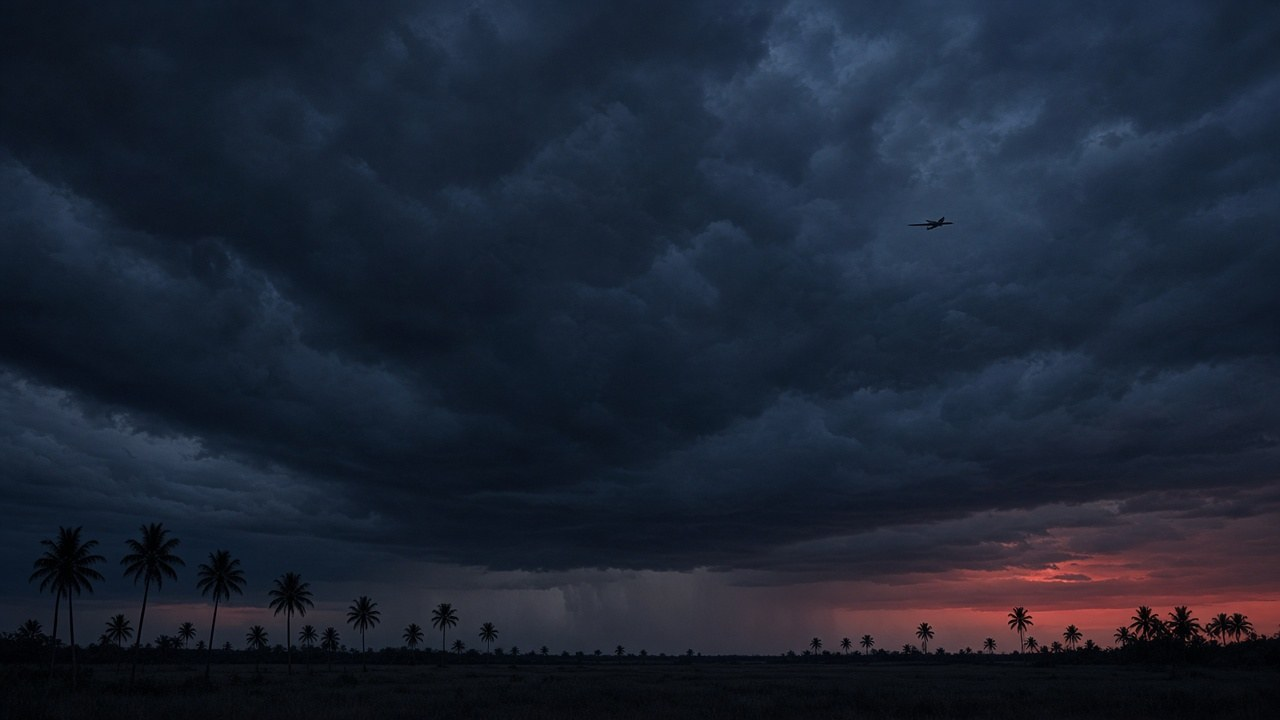
The Florida plane crash on Sunday took nine lives in a matter of minutes. A Learjet 60 bound for the Bahamas fell out of the sky over Palm Beach County and slammed into a road near a neighborhood of mobile homes. Two of the people on board were children, ages 4 and 2.
Before anything else, that deserves a pause. Families lost parents, children, a caregiver and a 20-year-old co-pilot chasing her dream. Then comes the hard part: finding out what happened. That job belongs to the National Transportation Safety Board, and the rest of us should let it work.
Key Takeaways
- A Learjet 60 flying from Austin, Texas, to North Eleuthera in the Bahamas crashed near Greenacres, Florida, around 12:50 p.m. ET on Sunday, Nov. 1. All nine people aboard died.
- The crew reported light clear icing, moderate turbulence and precipitation, asked to climb, and then declared an emergency in a rapid descent.
- The NTSB says it has some evidence the jet began breaking apart before impact, but the cause is not determined.
- About 600 nearby residents were displaced, including people from about 77 mobile homes near the wreckage.
- The flight operated under Part 135, the FAA rules for charter and on-demand flights.
What We Know About the Florida Plane Crash
The facts so far come from the NTSB’s first briefing on Monday. According to WFLX in West Palm Beach, the jet left Austin-Bergstrom International Airport at about 10:37 a.m. ET. It carried two pilots and seven passengers.
At about 12:47 p.m., the crew told air traffic control they were picking up light clear ice that they called manageable. They also reported moderate turbulence. At 35,000 feet, the jet was drifting about 700 feet up and down. Soon after, the crew reported precipitation and asked to climb to 37,000 feet. Controllers approved it.
Then things went wrong fast. “Less than 30 seconds later, a transmission from the airplane announced a descent, followed by a mayday call,” NTSB member Tom Chapman said, as NBC News reported. Around 12:48 p.m., the crew radioed that the airplane was “in an over-speed condition, descending.” The jet hit the ground at about 12:51 p.m.
Chapman also said, “We do have some evidence that there was some breakup of the aircraft before impact. We’re still seeking to determine that.” According to AVweb, the debris field runs roughly half a mile by four-tenths of a mile. Pieces landed near homes, businesses and ball fields. However, investigators have not yet said which parts may have come off in flight.
Nine Lives, Not Just a Headline
It’s easy to talk about a crash like this in terms of altitudes and debris fields. Still, these were people. The families identified the passengers on Monday as Adam Robinson and Helen Sharp and their children, Emma and Charlie, along with Rachael Reed, Charmi Fehr and Anita Maria Cetina. Cetina cared for the two children, and the families said she “was truly part of the family.”
The co-pilot, Nathalia Filgueiras, was 20. Her sister said she learned to fly from their father, a pilot, and that flying was her biggest passion. That detail hits hard. Young people who choose demanding, skilled work like aviation are exactly the kind of Americans this country needs more of.
On the ground, the damage spread far beyond the crater. Palm Beach County Commissioner Joel Flores said about 600 people were displaced. It is still unclear when they can go home. Gov. Ron DeSantis said the jet “looked like a missile going down.” Like we said about Sen. Chris Murphy this weekend, some moments call for prayer before politics. This is one of them.

Why the Rush to Blame Can Wait
Within hours, social media had a theory for everything. Some blamed the weather. Others blamed the pilots, the jet’s age or the operator. A few jumped straight to demands for new federal rules. Every one of those people is guessing.
Here’s the truth: nobody outside the investigation knows the cause yet. The NTSB has said weather will be a major focus. It has not confirmed whether the jet flew into an active thunderstorm. According to AVweb, it also has not confirmed whether a cockpit voice recorder was on board or can be recovered. Even so, the agency has been clear that its findings are preliminary.
Bombardier, the Learjet’s maker, said it could not comment on a cause until the investigation is complete, as NBC reported. The Associated Press reported the same early finding that parts likely broke off before impact. That is the right instinct, and it should apply to the rest of us too. Guessing out loud does not help grieving families. In fact, it can hurt them, and it can smear people who may have done nothing wrong.
The NTSB Is Government Doing Its Job
Conservatives are right to be skeptical of big government. Most agencies grow, overspend and wander past their mission. The NTSB is different, and it’s worth saying so. It has a narrow job: figure out why transportation accidents happen and recommend fixes. It doesn’t write regulations, and it doesn’t hand out fines. Its credibility comes from being careful, independent and slow when slow is necessary.
That model works because it follows the evidence. When we wrote about Spain’s deadly train crash last week, the point was simple. When something fails, the public deserves a straight answer about who was responsible. The answer has to be the real one, not the fastest one. In this case, it should come from the NTSB.
What Washington Should Do After the Florida Plane Crash
Washington’s first job is to stay out of the way and keep the investigators funded. A full report often takes many months. Politicians should resist the urge to hold press conferences demanding a bill before anyone knows what failed.
Second, the FAA should enforce the rules it already has. This flight ran under Part 135, the federal framework for charter and on-demand operators. If the investigation finds that an operator cut corners on training, maintenance or weather decisions, the answer is accountability under existing law. A new layer of paperwork for every small charter company in America would not fix that.
Third, if the NTSB finds a real design or weather-procedure problem, act on it quickly and narrowly. Good regulation targets the actual failure. Broad, rushed rules tend to punish the operators who were already doing it right, and they push costs onto small businesses and customers.
Finally, take care of the people on the ground. Hundreds of residents in Palm Beach County are out of their homes. Local officials are working to clear the scene so residents can get back to normal. Neighbors, churches and local charities will do much of the heavy lifting, and they are usually faster than any federal program.
FAQ
What caused the Florida plane crash?
The cause is not known yet. The NTSB says the crew reported icing, turbulence and precipitation before a rapid descent, and there is some evidence the jet began breaking apart before impact. Weather is a major focus of the investigation.
How many people died in the Florida plane crash?
All nine people aboard died: two crew members and seven passengers, including two young children. About 600 nearby residents were displaced from their homes.
When will the NTSB finish its Florida plane crash investigation?
The NTSB has not set a date. A preliminary report usually comes first, and a final report with a probable cause can take a year or more.
The Bottom Line
Nine people are gone, and their families deserve real answers, not internet theories. Let the NTSB do its work. Then hold anyone responsible to account under the rules already on the books. For more conservative, fact-based takes on the news, visit World of Payne and follow the World of Payne show wherever you listen.