

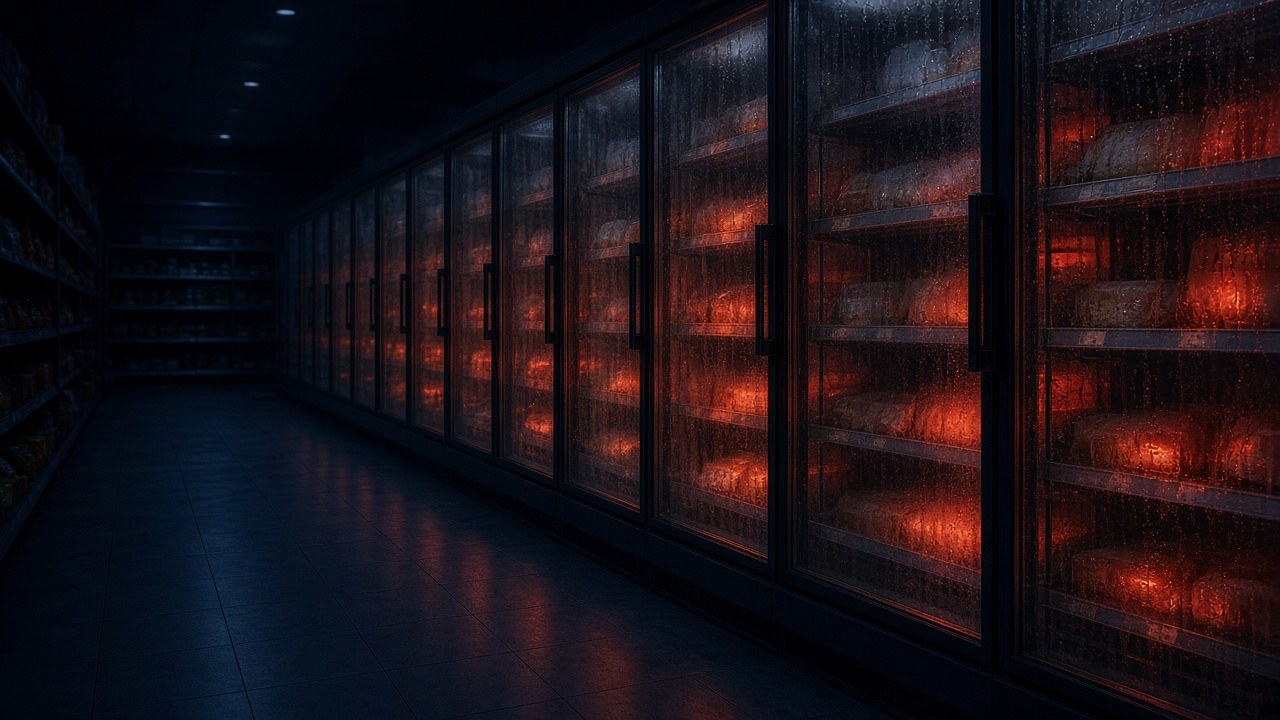
Overnight, hackers reached into grocery stores across Europe and turned up the heat. This supermarket cyberattack hit fridges and freezers in at least seven countries, the BBC reports. By Monday morning, workers were throwing out spoiled food.
Nobody fired a shot or broke a window. Instead, the attackers simply logged in. That should worry every American who buys groceries, and every business that keeps them cold.
Key Takeaways
- Stores in Belgium, Luxembourg, the Netherlands, Sweden, Ireland, Estonia and Finland reported fridge and freezer problems overnight into Monday.
- About 40 Delhaize stores were hit, along with Carrefour, Intermarché, Spar, IKEA in Mons, ICA, Coop and 13 SuperValu stores in Ireland.
- In some stores, freezers hit as high as 50C (122F).
- Danfoss says the hit Dutch systems still used default passwords, weeks after it warned customers to disconnect them.
- Belgium’s federal prosecutor has opened an investigation. No one has claimed responsibility.
- The Pentagon is treating August freezer failures at U.S. military commissaries as a suspected hack.
How the Supermarket Cyberattack Unfolded
The trouble hit overnight Sunday into Monday. In Belgium and Luxembourg, about 40 Delhaize supermarkets lost control of their cooling. Carrefour also said the problem hit 15 of its 700 Belgian stores. Colruyt reported five Spar shops, and IKEA said its store in Mons was hit too.
Yet the damage reached far beyond Belgium. In Sweden, the supermarket cyberattack hit several ICA and Coop stores. One ICA store in Sjöbo posted that its fridges and freezers had been set to 50 degrees. Meanwhile, Finland’s Kesko is investigating malfunctions at some of its K-stores.
Ireland also took a hit. Musgrave said the attack hit 13 SuperValu stores. In Estonia, a Selver supermarket was hit. In the Netherlands, Danfoss said hackers tampered with systems at 17 or more businesses, DutchNews reports.
Notably, the method was simple. According to Sabcobel CEO Stephan Moelans, whose firm runs Delhaize’s systems, the attackers switched the units’ evaporators to defrost mode. As a result, cases warmed up and food spoiled. One Delhaize store in Hoeilaart said it lost about €100,000 worth of produce.
Default Passwords Are Not a Security Plan
Here is the infuriating part. This is the second wave in a month. In mid-October, hackers cooked the freezers at hundreds of French supermarkets. Danfoss then told Dutch customers on Oct. 13 to disconnect their systems from the internet.
Some apparently never acted. The Dutch systems hit overnight were not on a secure network and still used a default password, a Danfoss spokesperson said. In other words, they left the key in the front door.
Moelans said the fix needs physical changes, not just a software update. Still, he called the simplest answer obvious: run the fridges over a secure connection. Most of his customers switched after the French attack. The ones still exposed paid for it.
Belgium’s federal prosecutor has opened an investigation, Euronews reports. However, nobody knows yet who did this. No verified claim of responsibility has surfaced, and officials have not named a suspect. Whoever it was, they walked through a door that owners left open.

Could a Supermarket Cyberattack Hit America?
Unfortunately, it may already have. The Pentagon is treating August freezer failures at military bases as a suspected hack, Reuters reports. The problems hit at least six commissaries. At Fort Huachuca in Arizona, the base said a freezer “went into defrost mode where it heated up all the food.” Investigators are also talking with French officials. So far, however, nobody has confirmed a link.
The warning signs are not new. Back in 2025, CISA, the federal cybersecurity agency, flagged flaws in a line of Danfoss refrigeration controllers. Its advice was plain: keep control systems off the open internet and use secure remote access.
So American grocers, farms, cold-storage warehouses and food processors should act now. Change every default password. Pull refrigeration controllers off the public internet. Update old firmware, and replace gear that no longer gets patches. Then test the alarms so a warm freezer wakes someone up.
Responsibility, Not a New Bureaucracy
Of course, Washington will want to answer with a new agency and a stack of mandates. That would be a mistake. The guidance already exists, and it is free. What was missing in Europe was basic responsibility, the same lesson we drew from the Binance hack: secure what you own.
First, owners should take that job seriously, because they are the ones who eat the losses. Second, vendors should ship gear with unique passwords and push fixes fast. Meanwhile, government should focus on finding and punishing the attackers, especially if a foreign state turns out to be behind this.
For shoppers, there are no reports of a U.S. supermarket cyberattack today. Still, food prices are already a sore spot, from Halloween candy to the grocery delivery fight. A string of spoiled stockrooms is one more cost nobody needs.
The Bottom Line
In the end, this supermarket cyberattack was not sophisticated. It worked because owners left the door open even after a clear warning. America has the warning now, too. Lock down the cold chain before someone tests ours.
What do you think? Should grocers and farms be responsible for securing their own equipment, or does Washington need to step in? Tell us in the comments.
Follow World of Payne for More
For more conservative commentary, visit the World of Payne homepage, then follow World of Payne on X, Facebook and Instagram.