

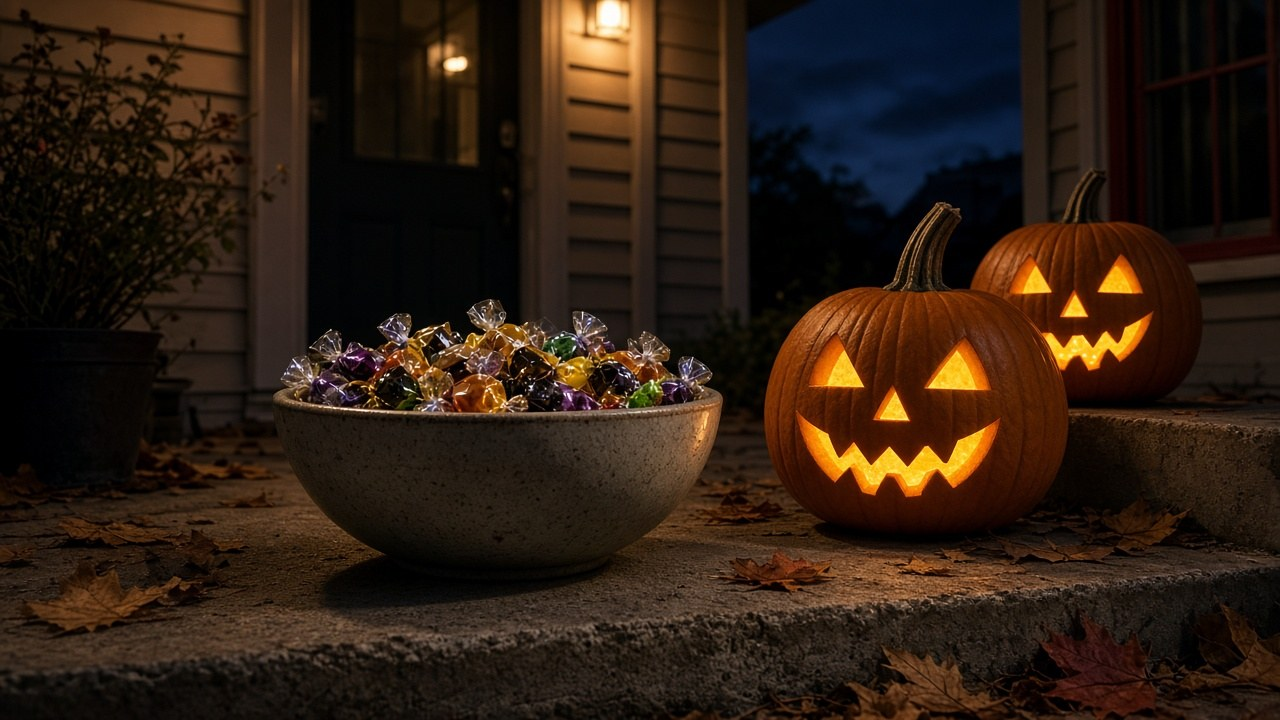
Tonight, millions of families will fill a bowl by the front door and wait for the doorbell. This year, that bowl cost more. Halloween candy prices have climbed 7.7% in one year and more than 18% in two years, NPR reported, citing the latest federal data. That beats the average rate of food inflation over the same stretch.
Here is the strange part. The main ingredient behind the spike, cocoa, has already gotten much cheaper. So why are Halloween candy prices still scary? The answer says a lot about how markets work, and about which kind of inflation Washington actually controls.
Key Takeaways
- Candy and gum prices rose 7.7% in the year through September, and chocolate is the biggest driver.
- Raw cocoa prices have fallen sharply from their early-2025 peak, but most chocolate on shelves was made with cocoa bought months earlier at high prices.
- Shoppers are pushing back with smaller packs and cheaper treats, and Hershey just trimmed its sales forecast.
- Higher prices cut demand and pulled in new supply, which helped turn a cocoa shortage into a small surplus without a government rescue.
- The inflation Washington controls, from spending to trade barriers, deserves more attention than a bag of candy bars.
Why Halloween Candy Prices Are So High
Start with the weather. Drought and heavy rain in West Africa hurt cocoa harvests in Ivory Coast and Ghana, the world’s top growers. As a result, global cocoa prices quadrupled from January 2023 to January 2025, according to International Monetary Fund data cited by NBC News.
Chocolate took the hardest hit. According to PwC, Halloween chocolate now averages $5.67 a package, up 15.5% from last year. Non-chocolate candy, by contrast, rose just 1.8%, to an average of $3.31.
Sugar did not help either. Wet weather disrupted Brazil’s sugarcane harvest, CNBC reported, and the broader sugar-and-sweets category rose 5.5% over the past year. Even the pumpkin on your porch costs more. The Agriculture Department put the average retail price at $5.36, up 11% from September 2020, after drought cut yields in parts of Texas.
Cocoa Got Cheaper. Your Candy Didn’t.
This is where most shoppers get confused. “Cocoa prices have since fallen by about half, but lower costs take time to reach the shelf and won’t show up on shelves this Halloween season,” PwC’s Ali Furman told NBC News.
The reason is simple timing. Chocolate makers buy cocoa months ahead, sometimes up to two years ahead. “The candy on the shelves right now, chocolate candy, that cocoa was purchased in 2025,” David Branch of the Wells Fargo Agri-Food Institute told NPR. And last year’s cocoa was expensive.
Also, the drop has not been a straight line. An Ohio State research brief found that the World Bank’s monthly cocoa benchmark fell 44.7% from January 2025 to August 2026. Still, that same benchmark climbed from $3.24 a kilogram in March to $5.95 in August. In other words, cocoa is cheaper than its peak, but not cheap. Until older inventory clears, Halloween candy prices will keep reflecting last year’s costs.
Don’t Blame Greed. Watch the Shoppers.
Whenever Halloween candy prices jump, someone blames corporate greed. The numbers tell a different story. Companies cannot simply charge whatever they want, because customers walk away.
And they are walking. Halloween candy, gum and mint sales were down 6.7% from a year earlier through mid-October, NielsenIQ data show. Meanwhile, small packs of nine ounces or less are up 24% in dollar terms, while every larger package size is shrinking. Families are still buying treats. They are just buying smarter.
Hershey is feeling it. On Thursday, the company lowered its 2026 organic sales growth forecast to 3%, and several analysts cut their price targets. CEO Kirk Tanner told analysts he sees “a consumer that’s under pressure,” so the company is leaning on promotions rather than “overall price decreases.” That is not a company in control of the market. It is a company answering to its customers.

The Market Is Already Fixing the Cocoa Shortage
Today’s Halloween candy prices are painful, but they carry a message. They tell buyers to use less and tell growers to plant more. That is exactly what happened with cocoa.
According to the Ohio State brief, global cocoa production rose 8.5% in the 2024-25 season, while grindings, a measure of demand, fell 3.3%. Together, those shifts turned a 492,000-ton deficit into a 37,000-ton surplus. Nobody passed a law to make that happen. Price signals did the work.
Candy makers adapted too. Companies are rolling out more gummy and sour candy, along with treats that use less chocolate. Wells Fargo expects baskets to hold more gummies, wafers and caramel. That is innovation, not a crisis.
Compare that with what happens when governments cap prices. Price controls tell producers to make less and buyers to want more, so shelves empty out. The cocoa market healed itself because nobody froze the price signal. To be fair, the surplus is still thin, and a possible El Niño could hurt the next crop. Even so, the market has a better track record than any bureaucrat.
What Halloween Candy Prices Teach Washington
Cocoa explains why chocolate outran other prices. However, it does not explain why everything else costs more too. Since January 2020, overall consumer prices have risen 28.9%, the Ohio State brief notes. That broad climb is not about weather in Ghana. Instead, it reflects years of heavy federal spending, easy money and costly energy.
That is the part Washington controls. Overall prices are up 3.4% over the past year, while wages rose just 3%, NBC reported. We saw the same squeeze when the economy grew but real incomes slipped in the third quarter. It is also why two Fed officials wanted a hike when the Fed held rates steady this week.
Trade barriers deserve an honest look as well. America grows almost none of the world’s cocoa. So a tariff on imported ingredients or packaging is a tax that lands on American businesses and families. One New Hampshire chocolate maker told NPR she faced a 50% tariff on some holiday packaging and ingredients from Canadian suppliers. Small businesses feel those costs first.
How to Beat Halloween Candy Prices Tonight
First, mix it up. Non-chocolate candy rose just 1.8% this year, compared with 15.5% for Halloween chocolate, so a bowl with more gummies and sour candy stretches further. Second, compare prices. Walmart and Target have run flash deals on candy and costumes this season, CNBC reported.
Finally, plan ahead. Some shoppers wait until after Halloween, when many stores slash prices, and stock up for next year. Either way, the doorbell will still ring, and the kids will still be thrilled.
Frequently Asked Questions
Why are Halloween candy prices so high in 2026?
Bad weather in West Africa caused a cocoa shortage, and cocoa prices quadrupled from early 2023 to early 2025. Chocolate on shelves now was made with cocoa bought at those high prices. Higher sugar costs added to the bill.
Will chocolate get cheaper next year?
Possibly, but not right away. Raw cocoa has fallen from its peak, and lower costs should reach stores over time. Still, cocoa prices rose again this spring and summer, and a possible El Niño could hurt the next harvest.
How much will Americans spend on Halloween this year?
The National Retail Federation expects a record $13.5 billion in total Halloween spending, or about $115 per person. That per-person budget barely moved from last year, so higher prices mean less candy for the same money.
What do you think? Did you cut back on candy this year, or is Halloween one treat your family won’t skimp on? Tell us in the comments.
Follow World of Payne for More
For more conservative commentary on money, markets and the stories hitting your family budget, visit the World of Payne homepage. Then follow the World of Payne show on X, Facebook and Instagram for new episodes and daily takes.