

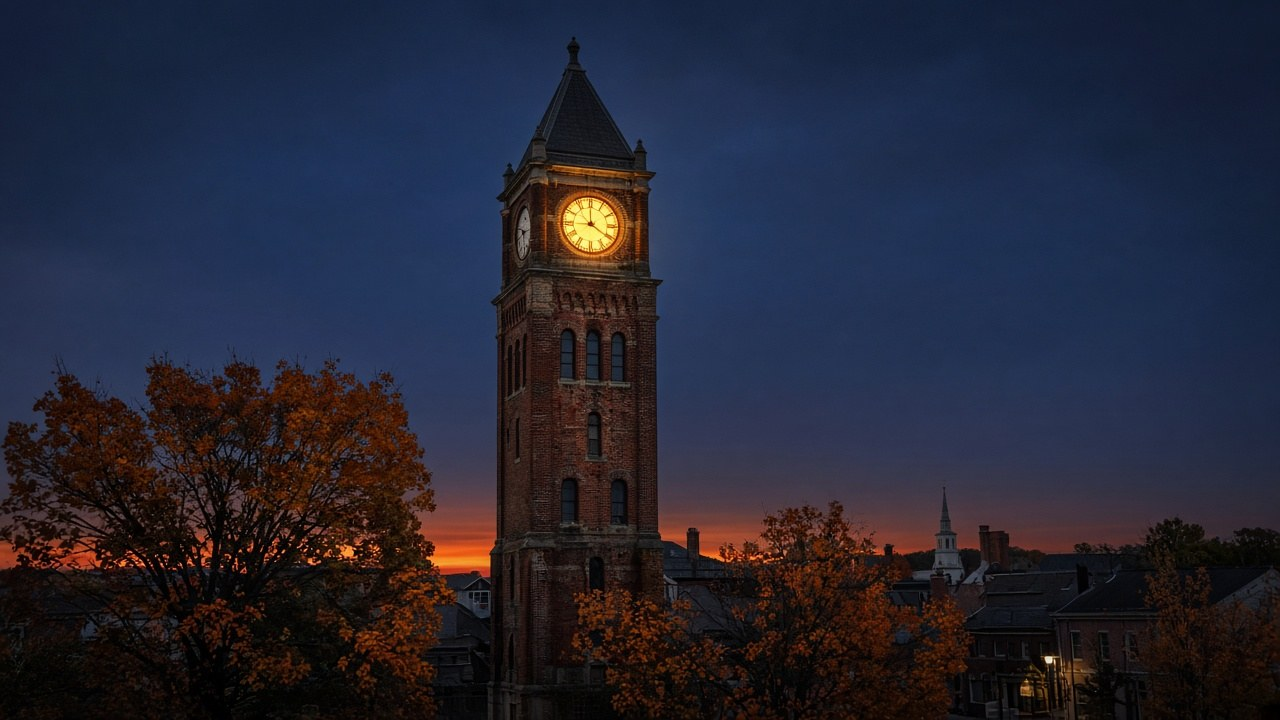
Set your clocks back before bed on Saturday night. Daylight saving time ends at 2 a.m. local time on Sunday, Nov. 1, CBS News reported on Oct. 30. Most of the country will fall back one hour, right after Halloween.
It didn’t have to go this way. In July, the House passed a bill to lock the clock. President Trump has pushed hard for it. Yet the Senate never held a vote. So the real question is simple: who should decide what time the sun rises in your town?
Key Takeaways
- Daylight saving time ends at 2 a.m. local time on Sunday, Nov. 1, so most Americans fall back one hour.
- The House passed the Sunshine Protection Act in July with more than 300 votes, but the Senate never voted.
- President Trump backs permanent daylight time, while Sen. Tom Cotton warns of pitch-dark winter mornings for kids.
- The bill dies in early January, when the new Congress takes office, unless the Senate acts first.
- The better fix is federalism: let each state pick its own year-round clock.
Why Daylight Saving Time Ends Again This Weekend
The short answer is that Congress has not changed the law. Since 2007, clocks have sprung forward on the second Sunday in March and fallen back on the first Sunday in November. As USA Today noted, only Congress can end that twice-a-year switch for good.
Lawmakers came close. The Sunshine Protection Act, sponsored by Florida Rep. Vern Buchanan, passed the House in July with more than 300 votes, according to ABC News. Then it stalled in the Senate. In fact, lawmakers left Washington for the campaign before taking it up. As a result, this weekend’s change goes ahead as usual.
Time is also running out. According to CBS News, every pending bill expires in early January, when the Congress elected on Tuesday takes office. If that happens, the House and Senate must start over from scratch. Voters are already casting ballots by the tens of millions, so the clock on this Congress is ticking too.
Trump vs. Cotton: A Republican Fight Over the Clock
President Trump has made this personal. In an Oct. 2 post, he said changing the clocks “costs our Country a fortune, is bad for Crime, stress on people, Sports, and just about everything else you can imagine.” He added that most people like “an hour of extra sunlight in the evening, rather than in the morning.”
The next day, he went further. Trump named Arkansas Sen. Tom Cotton as the holdout and, as NBC News reported, appeared to post the senator’s cellphone number. We won’t repeat it here. Cotton answered on X without backing down.
“No one likes changing the clock, me included, but Congress has enacted permanent Daylight Savings Time multiple times before and repealed it each time once Americans experienced absurdly late sunrises in the winter,” Cotton wrote. “Arkansans don’t want their kids going to school in the pitch dark, and I’ll always put Arkansas first.”
Cotton is not alone. Senate Majority Leader John Thune told Politico there is “no clear path forward” for the bill. Likewise, Sen. Roger Wicker of Mississippi raised safety concerns about children waiting for school buses in the dark in northern and rural states.

Cotton Has History on His Side
Here is the part supporters of permanent daylight saving time tend to skip. America has tried it before. During World War II and again during the 1970s energy crisis, Congress put the country on year-round daylight time. According to CBS, the 1970s experiment ended before it reached the 10-month mark. ABC adds that parents objected to sending their kids to school in the dark.
The math behind that backlash hasn’t changed. CBS gives a simple example from Boston. On Saturday, the sun rises there at 7:16 a.m. and sets at 5:39 p.m. On Sunday, back on standard time, sunrise moves to 6:17 a.m. and sunset to 4:37 p.m. Under permanent daylight time, that hour of morning light would shift to the evening all winter long.
Sleep experts lean the same way. “The high prevalence of permanent circadian misalignment that permanent daylight saving time would produce would be bad for sleep and health outcomes,” Christopher Barnes of the University of Washington told USA Today. Many researchers, he noted, see permanent standard time as the healthier choice.
What Americans Actually Want From Daylight Saving Time
Still, Trump is right about one thing. People are tired of changing the clocks. A 2023 YouGov survey found 62% of Americans favored ending the switch, according to USA Today. Similarly, a January 2025 Gallup poll put that number at 54%.
However, Americans split on the fix. Some want brighter evenings for ball games, yard work and barbecues. Others want light for the morning drive and the school bus stop. A farmer in Arkansas and a golf course in Florida simply don’t live on the same schedule. That is exactly why one national answer keeps failing.
The Conservative Answer: Let the States Choose
Federal law already lets a state stay on standard time all year. That is how Hawaii and most of Arizona avoid the switch. Yet a state cannot choose year-round daylight time on its own. That setup is backward. Washington lets states opt out in one direction but not the other.
To its credit, the Sunshine Protection Act would let states opt out of daylight time before the change takes effect, CBS reports. That is a step in the right direction. Even so, conservatives should push for the cleaner version: give every state a free choice between permanent standard time and permanent daylight time, and let neighbors coordinate.
The Senate also owes voters a recorded vote. Popular bills too often die quietly in that chamber, from the clock to permitting reform. Then again, posting a senator’s phone number is not how a bill becomes law. Regular order, open debate and a clear vote would settle this better than another social media fight.
How to Get Ready for Sunday
Most phones will update on their own overnight. Still, check the clocks on your stove, microwave and car. If you have young children, shift bedtime a little later this weekend to soften the change. Finally, expect darker evening commutes next week, so give yourself extra time on the road.
Frequently Asked Questions
When does daylight saving time end in 2026?
Daylight saving time ends at 2 a.m. local time on Sunday, Nov. 1, 2026, when clocks fall back to 1 a.m. It starts again on Sunday, March 14, 2027, according to CBS News.
Did Congress make daylight saving time permanent?
No. The House passed the Sunshine Protection Act in July, but the Senate has not voted on it. The bill expires in early January unless the Senate acts before the new Congress takes office.
Which states don’t change their clocks?
Hawaii and most of Arizona stay on standard time all year. The Navajo Nation in Arizona does change its clocks. Several U.S. territories, including Puerto Rico and Guam, also skip the switch.
Enjoy the extra hour of sleep this weekend. Then ask your senators a fair question: if most Americans want to stop changing the clocks, why won’t the Senate even vote? And which would you rather keep, brighter mornings or brighter evenings?
Follow World of Payne for More
For more conservative commentary on Congress, the midterms and the stories that shape your family’s life, visit the World of Payne homepage. Then follow the World of Payne show on X, Facebook and Instagram for new episodes and daily takes.