

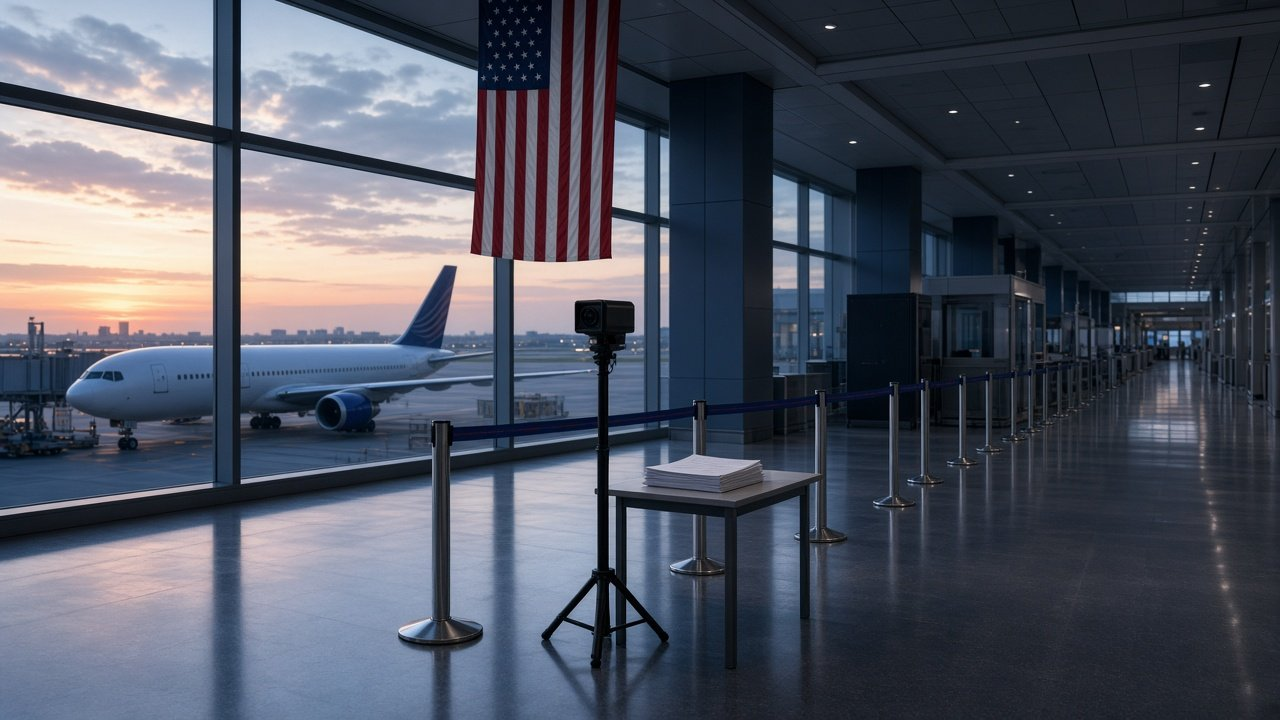
Starting Nov. 3, every person who boards a flight to the United States will have to sign a short statement. It says they haven’t been in the Democratic Republic of the Congo in the past 21 days. No signature, no seat. That is the newest of the CDC’s Ebola travel restrictions, and it covers every U.S.-bound flight, no matter where it takes off.
Naturally, some will call it heavy-handed. The World Health Organization already says countries shouldn’t restrict travel at all. But the numbers from Africa tell a different story. So let’s look at what the rule does, why it makes sense, and where Washington still needs to get it right.
Key Takeaways
- A new CDC order takes effect Nov. 3, 2026, at 11:59 p.m. Eastern. Every passenger on a U.S.-bound flight must attest that they haven’t been in the DRC in the prior 21 days.
- Airlines must block anyone who won’t sign. They also must keep each attestation for at least 42 days.
- The Bundibugyo strain behind this outbreak kills about half of those infected and has no approved treatment or vaccine, Reuters reports.
- The WHO counts 9,704 confirmed cases and 4,687 deaths in the DRC as of Oct. 20. Kenya and Nigeria have now reported imported cases.
- The CDC says no Ebola cases tied to this outbreak have been reported in the United States.
What the New Ebola Travel Restrictions Require
The CDC’s order is simple on paper. Before boarding, each passenger confirms they haven’t been in the DRC in the past three weeks. That includes a stop at a DRC airport, even if the traveler never left the plane. A parent can sign for a child.
The burden falls mostly on the airlines. They must confirm that every passenger has signed. They must refuse anyone who hasn’t. And they must hand over the records if the government asks. In addition, customs and Coast Guard officers will help enforce it.
This builds on rules already in place. According to Reuters, via NBC News, the CDC began barring passengers who had been in the DRC back in May. In July, it extended that bar to U.S. citizens. Since earlier this year, it has also barred foreign nationals who were recently in Uganda or South Sudan.
Why Ebola Travel Restrictions Cover Every Flight
So why apply the rule to a flight out of London or Dubai? Because viruses don’t fly direct. Travelers connect, and an outbreak follows them.
Kenya shows how it works. According to the WHO’s latest outbreak report, Kenya’s first patient traveled from the DRC to Uganda by road. Then he flew into Nairobi. He had been sick for about a month and had visited several hospitals in the DRC. He died on Oct. 5.
Since then, eight more people in Kenya have tested positive. All of them were his contacts, including four family members and four health and care workers. On Oct. 23, a 65-year-old relative became the country’s second death. Meanwhile, Nigeria confirmed its own imported case on Oct. 20, in a patient who had traveled from Uganda.
In other words, a rule that only screened direct flights from Kinshasa would miss the most likely path. A check at every boarding gate closes that gap.

This Outbreak Is Not a Small One
Of course, it is easy to tune out another headline about a faraway disease. However, this one deserves attention. The BBC reports that it is already the second deadliest Ebola outbreak on record.
The WHO says the outbreak spans 66 health zones in eight DRC provinces. On a single day, Oct. 20, the country confirmed 67 new cases. Worse, most recent deaths happened in communities rather than treatment centers. That means many sick people never reach care, and some are never tested.
Reuters adds that the Bundibugyo strain spread undetected for months before officials declared the outbreak in May. With no approved vaccine or treatment, prevention is the only real tool. That is exactly why Ebola travel restrictions matter now, before a case ever lands here.
The WHO Opposes Ebola Travel Restrictions. America Shouldn’t Listen.
The WHO’s report closes with a familiar line. It “advises against any restriction of travel to, or trade with, affected countries.” The WHO said much the same during COVID.
I understand the reasoning. After all, the agency worries that travel bans hurt poor countries and push travelers to hide their trips. Those concerns are fair. Still, the WHO answers to many governments. Washington answers to the American people.
Americans also remember 2014. That year, a traveler from Liberia was diagnosed with Ebola in Dallas and died. Two nurses who treated him were infected. The country got lucky, and both nurses recovered. Luck is not a policy.
Here is the conservative principle. The first job of the federal government is to protect its citizens. Guarding the border, including the jet bridge, is part of that job. A signed statement and 21 days of patience is a small price for keeping a disease this deadly off American soil.
Where Ebola Travel Restrictions Still Need Work
That doesn’t mean the rule is perfect. Conservatives should support it and still ask hard questions.
First, an attestation is only as good as the honesty of the person signing it. Someone determined to lie can lie. So the form has to work alongside real screening, contact tracing, and penalties for false statements.
Second, barring U.S. citizens is a serious step. An American has a right to come home. The CDC tells citizens who were in the DRC to stay outside the country for at least 21 days after leaving. That may be wise, but Washington owes those citizens a clear and fast path home once the risk has passed.
Third, temporary has to mean temporary. Emergency powers have a way of outliving emergencies. When the outbreak ends, these Ebola travel restrictions should end too, with a public explanation of why.
Finally, the rule shouldn’t become an excuse to ignore the outbreak itself. Helping Africa contain Ebola at its source protects Americans, too. A strong border and smart foreign aid can work together.
For a related look at how the administration is tightening entry rules, read our take on 300,000 visa revocations.
FAQ
When do the new Ebola travel restrictions start?
The CDC’s attestation order takes effect Nov. 3, 2026, at 11:59 p.m. Eastern Standard Time. It applies to every passenger boarding a flight to the United States from any foreign country.
Can U.S. citizens fly home from the Democratic Republic of the Congo?
Not right away. According to the CDC’s traveler guidance, anyone who was in the DRC within 21 days can’t board a U.S.-bound flight, including citizens. The CDC says they should wait at least 21 days after leaving.
Has Ebola reached the United States?
No. The CDC says no Ebola cases linked to this outbreak have been reported in the United States. Imported cases have appeared in Kenya and Nigeria.
Follow World of Payne for More
Ebola is a real threat, and the CDC’s new rule treats it that way. Protecting Americans first isn’t cruelty. It’s the government doing its most basic job. For more conservative commentary on security, health, and policy, visit the World of Payne homepage. Then follow the World of Payne show on X, Facebook, and Instagram so you never miss an episode.