

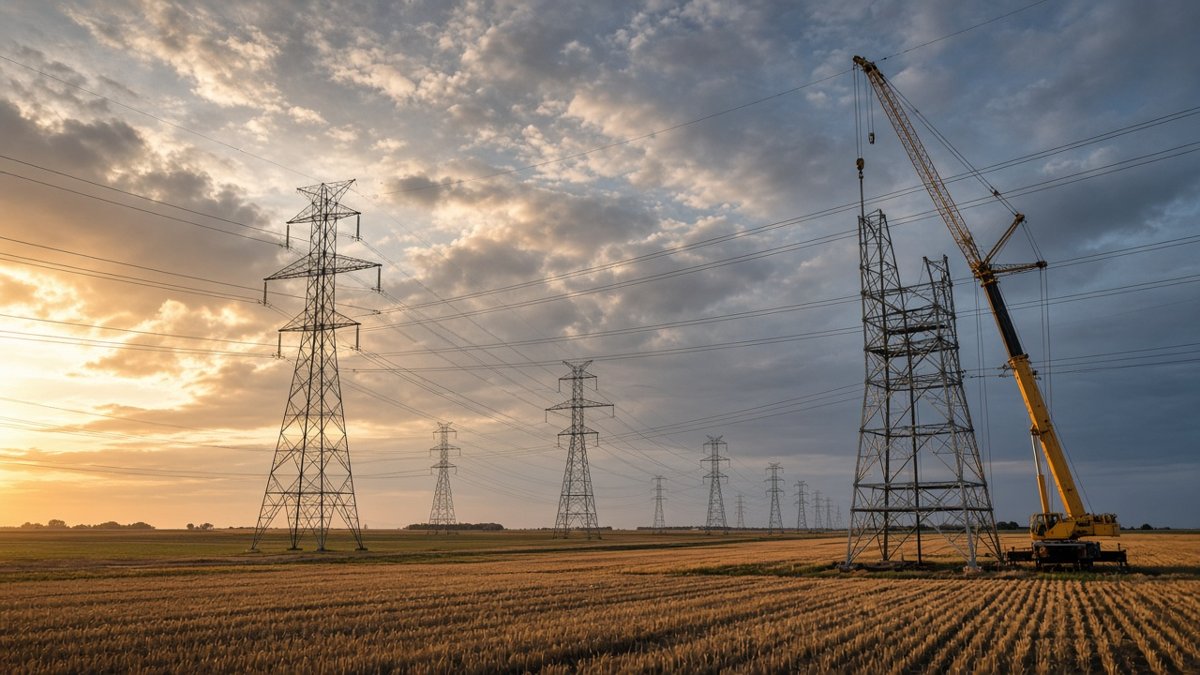
America used to build things fast. We built the interstate highways, the great dams, and the power grid that carried a farm country into the modern age. Today, however, supporters of reform warn that a major transmission line can take a decade or more to approve. A new permitting reform bill in the Senate aims to change that, and conservatives should want it to pass.
The bill is called the Bipartisan American Affordability and Jobs Act, or BAAJA. Four senators introduced it on September 30. Now it faces a key Senate vote on November 9, and the lobbying fight around it is heating up fast.
What the Permitting Reform Bill Actually Does
Republican Sens. Shelley Moore Capito of West Virginia and Mike Lee of Utah wrote the bill with Democratic Sens. Sheldon Whitehouse of Rhode Island and Martin Heinrich of New Mexico. According to Roll Call, the 417-page measure would change how projects are permitted under the National Environmental Policy Act, the Endangered Species Act, and the Clean Water Act.
The details matter. A breakdown by attorneys at Inside Energy & Environment lays out the biggest changes:
- Agencies would generally have 60 days to decide if an application is complete, then another 60 days to pick the level of review.
- A record of decision would be due within 45 days of a final environmental impact statement.
- Many lawsuits would face a 150-day filing window, and NEPA challenges would go straight to the federal appeals courts.
- Agencies could only revoke or suspend covered permits on five listed grounds, with a clear-and-convincing burden on the government.
- Data centers that use 20 megawatts or more would have to cover their own transmission costs instead of passing them to other customers.
In short, the permitting reform bill puts deadlines on Washington. It also makes it much harder for a future administration to tear up a permit after a project is already underway.
Why Conservatives Should Back This Permitting Reform
Conservatives believe government should get out of the way of people who want to work and build. Our permitting system does the opposite. It lets a project die by delay, even when no agency ever says no.
The groups backing the bill say the cost is real. According to a statement collected by the Senate Environment and Public Works Committee, the National Association of Manufacturers says permitting delays cost manufacturers $8 billion a year. The National Mining Association adds that America has “the second longest timeline in the world to bring a mine online.”
That is not a problem for Wall Street alone. It is a problem for the welder, the lineman, and the pipefitter. It is also a problem for every family paying a higher power bill because new power plants and power lines stay stuck on paper.
Workers and Builders Are on the Same Side
Notably, the support crosses party lines. The Laborers’ International Union, the plumbers and pipefitters union, and the Operating Engineers all back the bill. At the same time, Americans for Prosperity, the Club for Growth, and Pacific Legal Foundation support it too.
Club for Growth President David McIntosh put it plainly. “Excessive regulation has constrained production and contributed to higher costs for American consumers,” he said. Meanwhile, the U.S. Oil & Gas Association offered the shortest review of all: “Pass the frickin’ bill so we can start building things again.”

Permit Certainty Is the Heart of the Bill
For investors, one provision of the permitting reform bill may matter most. It limits when agencies can revoke, suspend, or change permits that have already been issued. In other words, a permit would mean something again.
Adam Tomlinson, staff director for Sen. Capito, made the economic case at a renewable energy conference on Thursday. “Capital will come off the sidelines because you know your permits are going to be valid no matter what the political lens might happen to be at a given time,” he said, according to Roll Call.
That principle should sound familiar to conservatives. It is the rule of law. When the government can flip a permit on and off with each election, nobody will risk billions on a pipeline, a mine, or a power plant. As a result, the projects never get built, and the jobs never show up.
A Fair Word on the Trade-Offs
To be fair, this permitting reform bill is a compromise, and not every piece is a conservative wish list. The bill would strengthen federal power to site large interstate transmission lines. That raises honest questions about state authority and property rights, and they deserve debate on the Senate floor.
Likewise, Democrats are pressing the Trump administration to lift its pause on wind and solar permitting as part of any deal. Inside Energy & Environment notes that issue is not directly addressed in the bill text. Conservatives can disagree about wind and solar policy. Even so, a technology-neutral system with clear deadlines is better than one that lets every administration pick winners by delay.
Who Is Fighting the Permitting Reform Bill
The opposition is loud. Roll Call reports that environmental groups oppose the changes to bedrock laws and the limits on lawsuits. Some tribes have raised concerns about historic preservation changes. In addition, some electric utilities worry about provisions that could make it easier to move renewable power across the grid.
Then there is the politics. House Natural Resources ranking member Jared Huffman, a California Democrat, called the administration’s assurances “cheap window dressing.” According to Roll Call, he has urged fellow Democrats to wait for the next Congress. He is counting on Democratic wins in the midterms.
That tells you everything. For some on the left, the goal is not a better permitting system. Instead, the goal is more leverage after the election. Meanwhile, Axios reports that the deal has drawn a lobbying blitz from oil and gas, mining, renewables, and environmental groups alike.
What Happens Next
The Senate has scheduled a cloture vote on the motion to proceed for November 9. That vote needs at least 60 senators, so the bill cannot move without both parties. The four sponsors also plan a manager’s amendment to fold in feedback before the vote.
Even if the Senate acts, the House is another hurdle. Roll Call reports that Senate Republicans may need to win over their House GOP colleagues, too. And if the bill becomes law, agencies would still need to write rules to carry it out.
The bottom line is simple. America cannot lower energy costs, bring factories home, or keep up with soaring power demand if it takes longer to approve a project than to build it. For more conservative commentary on energy, the economy, and your wallet, visit the World of Payne homepage.
Key Takeaways
- The permitting reform bill, S. 5653, is the Bipartisan American Affordability and Jobs Act, introduced on September 30, 2026.
- It sets deadlines for environmental reviews, shortens lawsuit windows, and limits when agencies can revoke issued permits.
- Unions, manufacturers, energy producers, and free-market groups support it, while many environmental groups oppose it.
- A Senate cloture vote on the motion to proceed is set for November 9 and needs at least 60 votes.
- Data centers using 20 megawatts or more would have to pay their own transmission costs.
Frequently Asked Questions
What is the permitting reform bill in the Senate?
It is S. 5653, the Bipartisan American Affordability and Jobs Act. Sens. Capito, Lee, Whitehouse, and Heinrich introduced it to speed up federal reviews for energy and infrastructure projects.
When will the Senate vote on permitting reform?
Senate leaders have scheduled a cloture vote on the motion to proceed for November 9, 2026. The bill needs at least 60 votes to move to floor debate and amendments.
How would the bill affect energy prices?
Supporters say faster approvals for power plants, pipelines, and transmission lines would add supply and lower costs. The bill also requires large data centers to cover their own transmission costs instead of shifting them to families.
Follow the Conversation on World of Payne
A country that can’t build can’t grow, and this permitting reform bill is a real chance to change that. On the World of Payne show, we cover the policy fights that hit your paycheck, your power bill, and your freedom. Follow World of Payne so you never miss an episode, and share this post with someone who is tired of watching America wait in line for permission.