

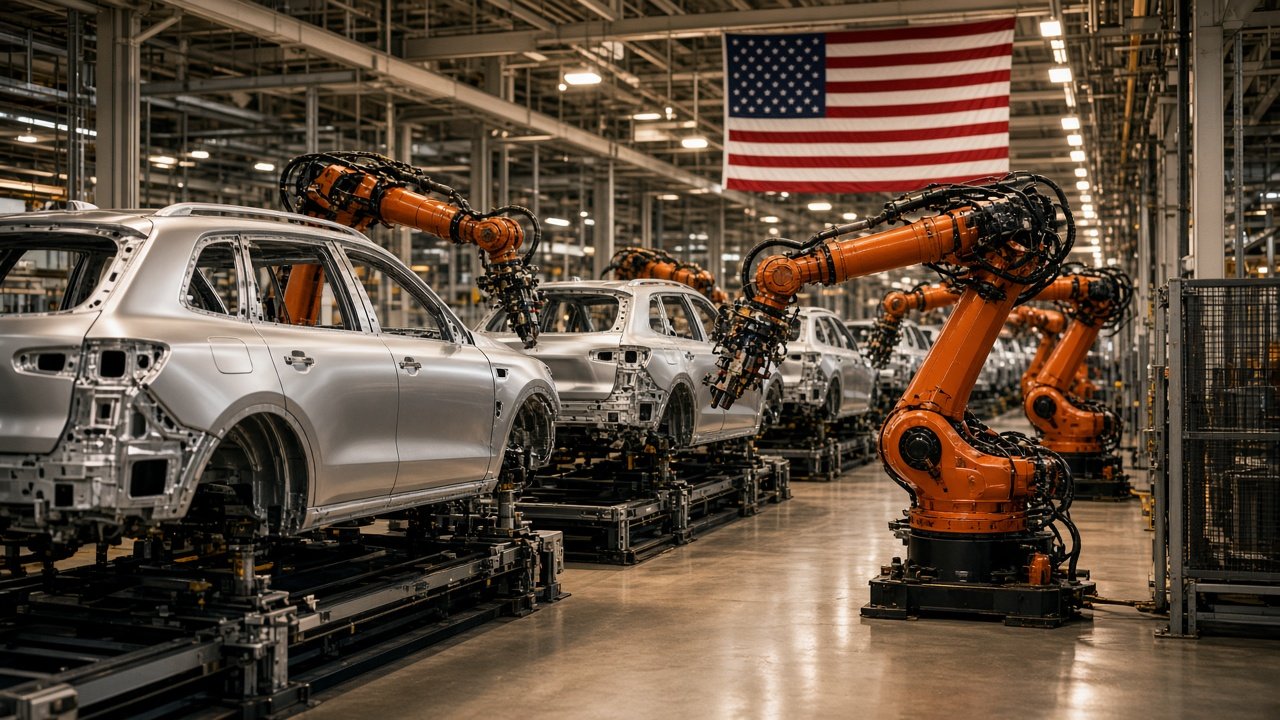
Audi has never had a factory in America. That is about to change. The new Audi Georgia plant will rise near Macon, and President Trump announced it Saturday at a rally in Perry, Georgia.
The German luxury brand plans to invest about $4 billion and hire roughly 4,500 people, according to Gov. Brian Kemp’s office. Audi is the only big German luxury brand, apart from its sister company Porsche, that still builds none of its cars in the United States, as the Wall Street Journal noted. Mercedes-Benz builds in Alabama and BMW in South Carolina. Now Audi is coming to the Middle Georgia Megasite.
This is a real win for middle Georgia, and the way it happened says a lot about trade policy. It also comes with fine print that taxpayers should read before anyone pops the champagne.
What We Know About the Audi Georgia Plant
The plant will build large SUVs designed for American buyers. A U.S. official told Reuters it is expected to assemble the Q7, Q8 and Q9, CNBC reported. Audi CEO Gernot Döllner put it plainly at the rally: “This is a long-term investment because we believe in the American market.”
The scale is significant. Kemp’s office says the facility will have an annual capacity of 200,000 vehicles. Georgia Quick Start will design a dedicated training facility and work with the Technical College System of Georgia to start teaching workers before the plant opens.
However, this will not happen overnight. Kemp’s office says grading should start in 2027 and construction in 2028, with full production in 2031. Audi’s own release says it wants North America to become a third major pillar of its production network, alongside Europe and China.
Why Georgia Won the Site
Georgia did its homework. The state bought and improved the megasite for exactly this kind of project, Kemp said. It sits in Peach County, developed with Houston and Macon-Bibb counties through a joint development authority. Industrial utilities are next to the site, Norfolk Southern rail runs to it, and the ports of Savannah and Brunswick are both less than five hours away by rail.
In choosing Georgia, Audi cited speed to market, the workforce, access to customers and an established automotive supply chain. Georgia has been here before with other megasites, and the state’s pitch is now a proven one: have the land ready, have the training ready, and move fast.
That pitch has landed big projects before. Hyundai chose a megasite near Savannah in 2022 for an electric vehicle plant it valued at about $5.5 billion, and Rivian picked a site east of Atlanta for a $5 billion plant in 2021. The lesson from those deals is that the announcement is the easy part. Hiring, building and keeping promises over a decade is the hard part, and that is where Georgians should keep score.

Why Tariffs Helped Land the Audi Georgia Plant
Here is the part critics will hate. Audi imports every car it sells in the U.S. from Europe or Mexico. Last year, tariffs cost the company about 1.2 billion euros, or $1.4 billion, according to CNBC. Its U.S. sales are down 16% this year, and its sales worldwide fell 7% in the first half of 2026.
So Audi did the math. Building here now looks cheaper than paying the toll at the border. Ohio Sen. Bernie Moreno said the plant “would never have happened without tariffs, without common sense regulations” and without ending California’s ability to regulate fuel economy standards.
That is the conservative case in one deal. When Washington stops punishing companies for making things here, and makes it costly to make them elsewhere for this market, they come. Audi is not alone. In July, Toyota said it would spend $3.6 billion to build a truck assembly line at its San Antonio campus and shift some truck production from Mexico to the U.S., creating 2,000 jobs, CNBC reported.
There is a wider Volkswagen story here too. CNBC noted that Audi’s Neckarsulm plant in Germany is one of four German Volkswagen plants that could close after 2030. The same official who briefed Reuters said Audi also plans to build 25,000 vehicles a year at the Scout Motors plant Volkswagen is building in South Carolina. Investment is moving toward the American market, and policy helped push it.
What It Means for Working Families
Thousands of jobs that do not need a corner office are good news for middle Georgia. Training through Quick Start and local technical colleges fits a theme we keep returning to: skilled trades deserve real support, not a lecture about four-year degrees.
The ripple effect matters as well. A plant this size pulls in suppliers, trucking, construction and service businesses. Lt. Gov. Burt Jones said projects like this help small businesses, school systems and local governments. If Audi delivers, families across Peach, Houston and Macon-Bibb counties will feel it for decades.
The Honest Caveats
Still, fiscal conservatives should keep their eyes open.
The timing is political. This was announced at a campaign rally ten days before the Nov. 3 midterms, in a state with competitive races for Senate and governor. A press release is a promise, not a paycheck.
Tariffs are a tax, and someone pays it. Critics told CNBC that auto tariffs have pushed up vehicle prices and that trade uncertainty has delayed some automaker investments. U.S. employment in vehicle and parts manufacturing has fallen since Trump took office last year, CNBC noted. Honda has warned it may not build a new U.S. plant unless the U.S.-Mexico-Canada Agreement is extended. One plant does not erase those trade-offs.
Taxpayers deserve the full incentive package. Georgia invested in this site, and voters should know the total cost per job before they cheer. Good deals survive daylight.
A 2031 start date shows how slowly America builds. Nearly seven years from announcement to full production is a long time. Faster permitting reform would get plants like this running years sooner.
What to Watch Next
- The incentive documents. How much Georgia and local governments are giving up in tax breaks, grants and road work, and what Audi must deliver in return.
- Clawbacks. Whether the deal requires Audi to repay incentives if it falls short on jobs or investment.
- Tariff terms. Whether Washington offered Audi anything on import duties in exchange for the plant.
- Wages. What the average job at the plant will actually pay.
If those answers hold up, the Audi Georgia plant will be one of the best economic stories of the year for the Southeast.
Update (November 2026)
Added November 2026. Several of those answers have come in. Draft agreements released by the local development authority put phase-one incentives at a minimum of $958.4 million, the Atlanta Journal-Constitution reported. That includes more than $450 million in property tax breaks over 20 years, a $94 million state site grant, a $30 million EDGE Fund grant, an estimated $224.5 million in road work and a $73.5 million training center. Audi would pay about $295 million in payments in lieu of taxes over 20 years, and the average salary is set at more than $63,000. Audi must create at least 3,600 jobs and invest $3.2 billion by the end of 2033 under clawback terms, WRDW reported. The documents also describe an optional second phase of $3 billion and 3,000 more jobs, Reuters reported. Separately, the administration promised Audi tariff relief, with Audi pushing to cut its 15% tariff on EU-built cars to 7.5% and the Commerce Department expected to settle near 10%, Reuters reported. At $958 million for 4,500 jobs, the floor is roughly $213,000 per job before job tax credits.
Sources
- Office of Gov. Brian Kemp: Audi AG selects Georgia to invest $4 billion
- Audi: Audi to establish first U.S. production site in Georgia
- CNBC: Trump announces Audi will build $4 billion U.S. factory in Georgia
- The Wall Street Journal: Trump announces Audi’s first-ever U.S. factory in Georgia
- CNBC: Audi says tariffs, growth ambitions led to new $4 billion plant
- Reuters: US promises tariff relief in talks with Audi on Georgia plant
- Atlanta Journal-Constitution: Audi could expand future Georgia plant to $7B, docs show
- WRDW: How a second phase could make the Audi project even bigger
- Reuters: Audi may boost size of new US auto plant by $3 billion
- Office of Gov. Brian Kemp (2022): Hyundai Motor Group to invest $5.54 billion in Georgia
- Office of Gov. Brian Kemp (2021): Rivian selects Georgia


