

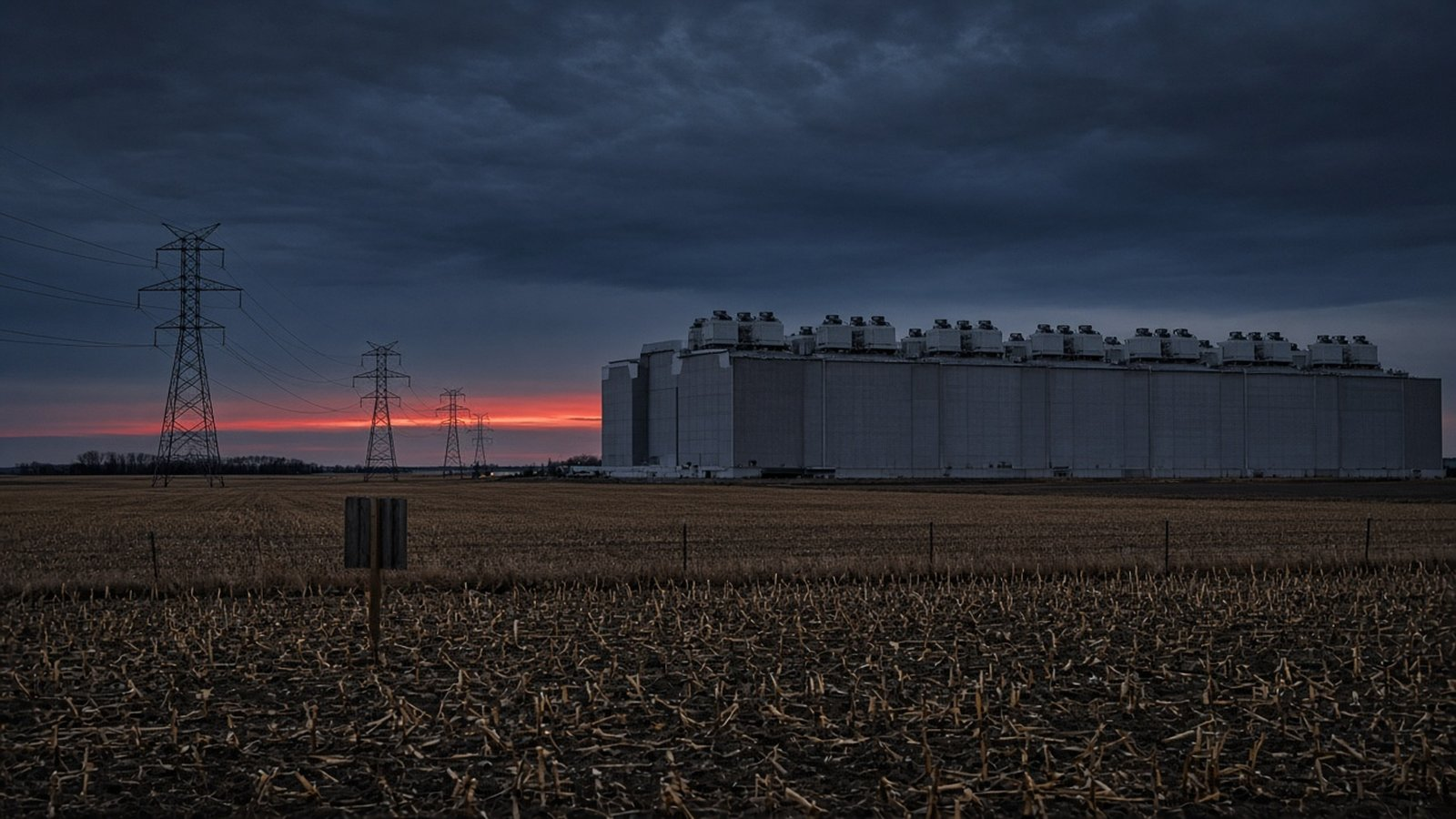
Republicans had a bad Tuesday. The AI industry had a worse one. Local data center ballot measures were on the ballot 41 times in 10 states, and according to Ballotpedia and CNBC, voters went against data center development in every one of them except a single small city in North Dakota.
By Thursday, Wall Street had caught up. The S&P 500 was down more than 3% by late morning and on track for its worst day since the April 2025 tariff shock, as stocks tied to the AI buildout sold off again. Conservatives should not cheer that, and we should not dismiss the voters either. Both of those things can be true at once, and the way out runs through a principle the right already owns: make the people who profit pay the full bill.
What Voters Actually Decided
These data center ballot measures were not one big statewide question. They were dozens of small, local votes: moratoriums, outright bans, size caps and advisory questions asking officials whether to approve new projects. Ballotpedia counts at least 50 data center ballot measures in 13 states this year. As of Nov. 4, voters had decided 47, and in 46 of them the majority sided with tighter limits.
The margins were not close. A few results from Ballotpedia’s tally:
- Alhambra, California voted 82% to 18% to prohibit data centers in the city.
- Joliet, Illinois voted 79% to 21% against advising the city to approve AI data centers.
- Wells, Maine approved a 180-day moratorium with 82% of the vote.
- Emporia, Kansas, the closest of the group, still banned “high impact” data centers 60% to 40%.

The lone exception was Harwood, North Dakota, where voters rejected extra review of industrial projects by about three to one. As Scientific American notes, a $3 billion data center is already under construction near that city. In other words, the one community that said yes is the one already seeing the jobs and the tax base.
It Didn’t Stop at the Local Ballot
The same anger showed up in the big races. CNBC reports that Ohio alone had 21 local data center ballot measures, and Sherrod Brown beat Sen. Jon Husted after branding him “the face of data centers.” Governor-elect Amy Acton backs a “conditional moratorium” until projects cover 100% of their utility costs and build “exclusively” with union labor. In Texas, Gina Hinojosa unseated Gov. Greg Abbott after blaming him for the rapid buildout there.
A CNBC voter poll found 56% of voters called data centers a crucial or major factor in their vote. That is a striking number for an issue most people had never heard of three years ago. We covered the wider reasons Republicans lost in our midterm breakdown, but this one deserves its own look because it lands right on the economy.

Why Data Center Ballot Measures Kept Winning
Start with the bill in the mailbox. Federal data shows home power prices climbing faster than people can shrug off, and voters connect that to the giant buildings going up down the road.
According to the Energy Information Administration, the average U.S. residential price was 18.16 cents per kilowatt-hour in August 2026, up from 17.57 cents a year earlier. In Illinois it rose from 18.03 to 19.32 cents, about 7%. In Maine it jumped from 28.14 to 32.11 cents, about 14%. Those are two of the states where towns just voted for bans and moratoriums.
Rising rates have many causes, from fuel costs to transmission spending. Still, voters are not wrong to ask who pays when a utility builds new lines and plants to serve one huge customer. We made that case back in October in Big Tech Wants the Power. Your Family Shouldn’t Get the Bill. The answer at too many utilities has been everyone, through higher base rates.
Then add the sweetheart deals that data center ballot measures were really reacting to. Many projects arrive with property tax abatements, sales tax breaks on servers and promises of jobs that look modest once construction crews leave. When a town feels it is being asked to give up farmland, water and grid capacity for a building that employs relatively few people, a “no” vote is not irrational. It is a reasonable reaction to a bad trade.
The Conservative Case: Fix the Deal, Don’t Ban the Building
Here is where the right has to be clear. Local control is a conservative value, and communities have every right to zone. But a blanket ban on a lawful industry is a blunt tool, and the people cheering it in Washington have a much bigger agenda than one cornfield in Kansas.
Watch what the new majority is already saying. Within hours of the polls closing, Rep. Greg Casar called for AI executives to testify under oath, and Rep. Robert Garcia, expected to chair House Oversight, offered two words: “Lawyer up.” Acton’s plan ties approval to union-only construction, which has nothing to do with anyone’s power bill. That is not consumer protection. It is using a real grievance to hand out political favors.
A better deal has three parts, and none of them requires a moratorium:
- Make the customer pay its own way. Large-load tariffs should require a data center to cover the full cost of the lines, substations and generation built for it, with long-term contracts so ratepayers aren’t stuck if a project leaves.
- End the special tax breaks. Stop the abatements and sales tax carve-outs that make other taxpayers subsidize trillion-dollar companies. Low, broad rates for everyone beat a custom deal for the biggest player in town.
- Let them bring their own power. Clear the permitting path for projects that build on-site generation, including natural gas and nuclear, so new demand comes with new supply.
That is the opposite of a new federal tax or a federal pause. We pushed back on that idea when Sen. Ron Wyden floated it in a data center tax with the rate left blank. Washington doesn’t need a new revenue stream. Towns need a fair contract.
What Is at Stake for the Economy
This is not a niche fight. As we showed in our look at September construction spending, data centers have been carrying a big share of building activity while other categories shrink. If that pipeline stalls, the hit lands on electricians, steelworkers and equipment suppliers, not just on tech stocks.
Markets are pricing that risk in real time. The Associated Press reported Thursday that the latest AI stock wipeout more than erased Wednesday’s post-election rally, and the Dow was down more than 1,100 points by 11 a.m. Eastern. Some of that is about interest rates and heavy spending by the big tech firms. Some of it is plainly political.
America also competes with China on AI, and computing capacity is part of that race. A country that cannot build power plants or server farms will eventually lose ground to one that can. That makes it more important, not less, to get the terms right so communities stop saying no.
The Real Lesson of the Data Center Ballot Measures
The industry spent heavily on this election and lost badly. Its problem was never a lack of money. It was a lack of consent. Tech companies treated small towns as sites to be acquired, and voters answered the only way they could.
Republicans can learn from that or keep losing on it. The winning position isn’t to side with the hyperscalers or with the moratorium crowd. It is to side with the ratepayer: no subsidies, no hidden costs on family bills, and a fast yes for any project willing to pay its own freight. Give towns a deal worth taking, and a lot of these data center ballot measures never get written.
Sources: Ballotpedia; CNBC; Scientific American; U.S. Energy Information Administration, Electric Power Monthly Table 5.6.A; Associated Press.


