

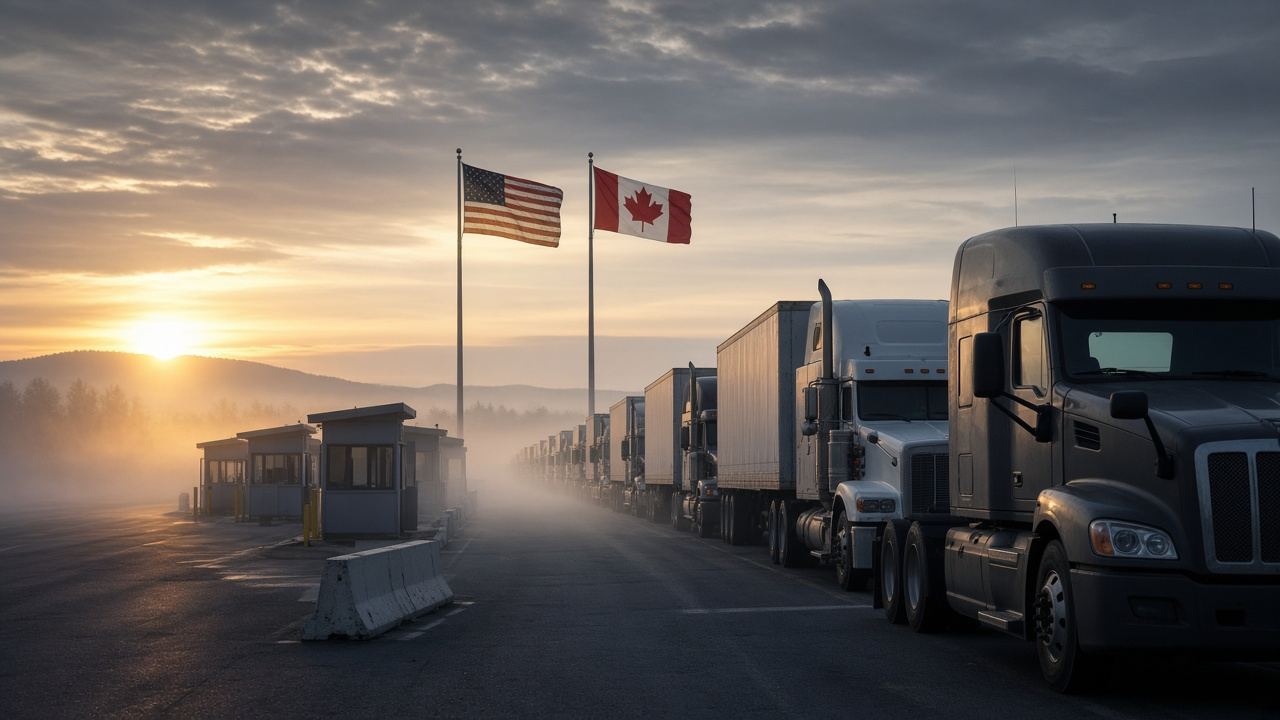
A Canada trade deal is suddenly back on the table, and the timing is no accident. Over the weekend, President Trump and Prime Minister Mark Carney spoke by phone. By Sunday, Trump was telling reporters in Dubuque, Iowa, that the two countries have “the concept of a deal.” Carney said negotiators would work “in the coming weeks” to finish it.
That is good news. However, a concept is not a contract. Today is Election Day, and voters in border states have felt this trade war in their wallets. So here is the test: if the deal is real, it gets finished after the votes are counted. If it quietly dies on Wednesday, Americans will know it was a campaign prop.
Key Takeaways
- Trump and Carney spoke on Saturday, Oct. 31. On Sunday, Nov. 1, Trump said the two sides have “the concept of a deal” that will be “great for our farmers.”
- Trump said the deal would include the Keystone XL pipeline, with Canada building it and paying for it. Biden revoked a key permit for the project in 2021.
- No tariff rates, product lists or start dates have been announced. Steel, aluminum, autos and lumber remain the hardest issues.
- Talks collapsed in August. After that, each side put tariffs on billions of dollars of the other’s goods.
- The real test comes after the midterms, when campaign pressure is gone.
What We Know About the Canada Trade Deal
The facts are thin, so let’s stick to them. According to Reuters, Trump told reporters, “I spoke to him again yesterday, and we have the concept of a deal that’s going to be great for our farmers, great for our country.”
Carney’s version was more careful. On X, he wrote that the call “builds on recent constructive discussions on the outlines of a mutually beneficial trade deal.” He added, “Our teams will now be working in the coming weeks to deliver that outcome.” He also said any deal must create jobs, improve affordability and respect Canada’s sovereignty.
Meanwhile, the White House is keeping the details close. An official told Semafor that the administration “welcomes continued engagement with Canada as we work toward finalizing the details of a deal that will deliver meaningful results for the American people.”
How We Got Here
This is the third round of talks in just over a year. The Globe and Mail reports that negotiators looked close to a deal in August, until Carney pulled out at the last minute. An earlier round collapsed in October 2025, when Trump walked away over an Ontario anti-tariff ad that featured Ronald Reagan.
After August, things got worse. Washington’s tariffs on about $28 billion of Canadian goods took effect, according to the Globe. A few weeks later, Ottawa hit back with countertariffs on a similar amount of American products.

Tariffs Are a Tax. Somebody Pays It.
Conservatives should be honest about this part. A tariff is a tax collected at the border. Sometimes it is a useful tool to force a bad trading partner to the table. But every day it stays in place, someone in the supply chain pays it. Usually, that someone is a business owner, a farmer or a family at the checkout line.
Canada’s own manufacturers say the pain runs both ways. Dennis Darby, CEO of Canadian Manufacturers & Exporters, told CTV News that the tariffs have been “really devastating” for small and mid-sized Canadian firms. He also said they are “extremely unpopular” in U.S. states that trade with Canada, where people have seen higher prices and trouble getting parts.
A Canadian trade group has its own interests, of course. Still, the economics hold: tariffs between close allies raise costs on both sides. Leverage only pays off if it ends in a signed deal.
Farmers Need Certainty, Not Headlines
Trump pitched this Canada trade deal as a win for farmers, and he picked Iowa to say it. That matters. Farm country has carried a heavy share of trade-war risk for years.
But farmers are not cheering yet. Shaun Haney, host of RealAg Radio, told RFD-TV he is skeptical that a deal will wipe out all farm tariffs, as Trump suggested. Instead, he said most of agriculture simply wants trade to flow predictably. The constant back-and-forth, he noted, makes it hard for producers and processors to plan.
Anyone who works around agriculture knows why a Canada trade deal matters. A farmer deciding on seed, fertilizer or a new piece of equipment is making a bet months in advance. When tariff rules change by the week, that bet gets riskier. As a result, smart people sit on their cash. Uncertainty acts like a hidden tax, and a signed agreement is the only way to repeal it.
Keystone XL Is the Best Part of the Canada Trade Deal
If one piece of this proposal deserves full support, it is the pipeline. “They’re going to build the Keystone Pipeline,” Trump said. “They’re going to pay for it. … We’re going to give them the route, and it’s largely been determined.”
Reuters notes that Keystone XL was planned to carry 830,000 barrels of oil a day from Alberta to Cushing, Oklahoma, and then on to Gulf Coast refineries. Biden revoked a key permit in 2021, and the project died.
Here is the conservative case in one sentence: oil from a friendly neighbor, moved by pipe, is safer, cleaner and cheaper than oil shipped past hostile navies. With the Strait of Hormuz still a flashpoint, that argument has never been stronger. Still, it is not yet clear how the project would actually be revived. Carney’s office did not immediately comment on the pipeline, so Americans should wait for it in writing.
The Election Day Question
Nobody should pretend the timing is random. Tariffs and cost of living are major issues in key Senate races, especially in border states like Michigan and Maine. Blake Harden of Washington Council Ernst & Young told Semafor that Trump’s talk of a near deal “matters for a couple of key states.” He added that it is “hard to know if it’s the midterms that are motivating that.”
Harden also laid out both paths for the Canada trade deal. After the election, the two sides may have “more room to make a deal.” On the other hand, they “could actually get more dug in” once there is no deadline forcing action. Likewise, Haney told RFD-TV the next real signal will come from what both governments say in the days after the vote.
What a Good Deal Looks Like
A real agreement should do four things. First, it should put actual tariff numbers in writing, line by line. Second, it should cut the taxes on farm goods, parts and building materials that hit working families hardest. Third, it should lock in the pipeline with real permits, not promises. Finally, it should include a firm timeline, so businesses can plan past the next news cycle.
Get that in a Canada trade deal, and Trump can rightly claim he used leverage to win a better deal. Fail to get it, and the trade war just keeps taxing both countries.
FAQ
Is there a signed Canada trade deal?
No. As of Nov. 3, 2026, Trump says the two countries have “the concept of a deal,” and Carney says teams will work on it in the coming weeks. No tariff rates, product lists or start dates have been released.
Is Keystone XL part of the Canada trade deal?
Trump says yes, with Canada building and paying for it. Canada has not publicly confirmed that, and it is not yet clear how the project would be revived.
Why do the midterms matter for the talks?
Tariffs are a campaign issue in border states such as Michigan and Maine. Analysts say the talks could speed up after the election, or stall once that pressure is gone.
The Bottom Line
A Canada trade deal is only worth something if you cash it in. Trump has pressure on Canada, and Canada clearly wants out of this fight. Now finish the job: real numbers, real permits, real relief for farmers and families. Then the trade war can end with a win instead of a headline.
For more straight talk on the economy, trade and the news that hits your wallet, visit World of Payne. And follow the World of Payne show on X, Facebook and Instagram so you never miss an episode.