

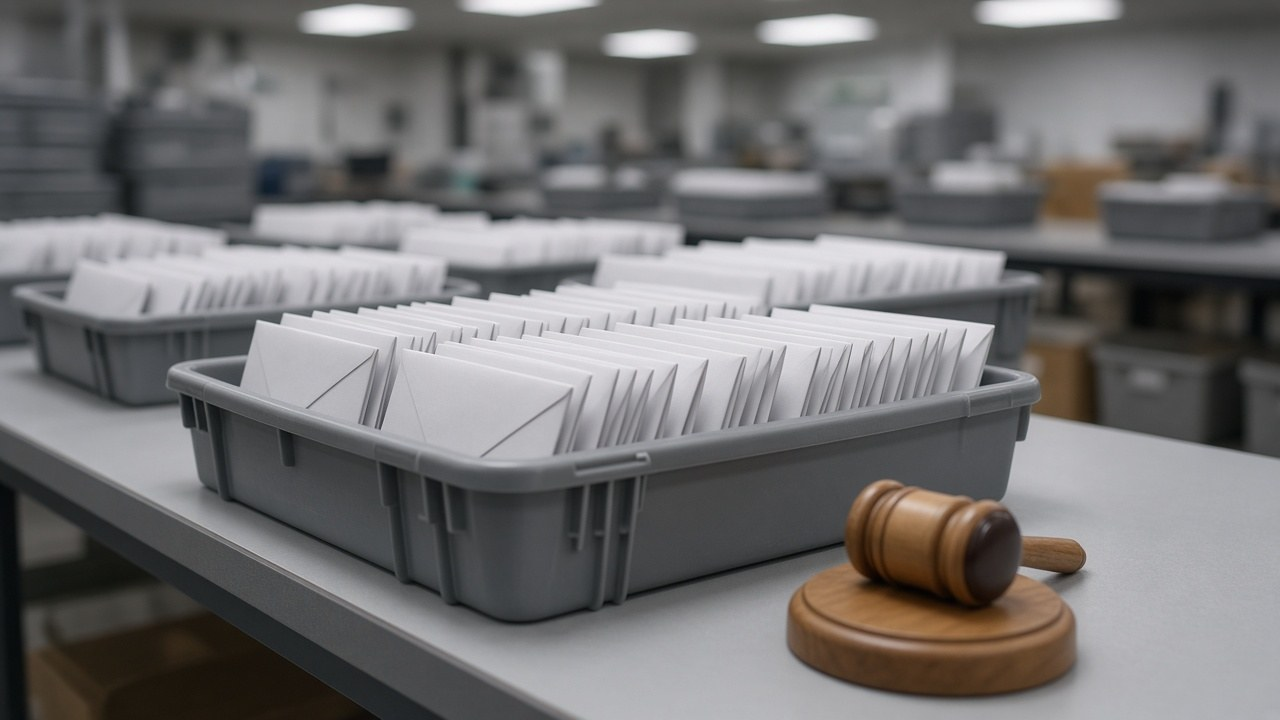
Two courts told the Justice Department no on Friday, and one order reaches far beyond California. Late Friday, U.S. District Judge Trina Thompson barred DOJ and the Department of Homeland Security from demanding ballot segregation by election officials in any state, CNN reports. Hours earlier, a federal appeals court refused to make California set aside mail ballots from about 20,000 people DOJ calls likely noncitizens.
Election Day is Tuesday. So here is our take: noncitizen voting is a real crime worth fighting, but the government has to win with evidence, not threats. Also, one district judge should not set the rules for 50 states four days out. The Supreme Court should settle this fast.
Key Takeaways
- Judge Trina Thompson, a Biden appointee in San Francisco, issued an emergency order Friday evening.
- DOJ and DHS cannot demand that officials in any state segregate ballots, purge voters or halt ballot processing.
- The temporary restraining order also blocks threats of criminal prosecution against election officials. It expires Nov. 16, and a hearing is set for Nov. 13.
- Earlier Friday, a 9th Circuit panel voted 2-1 to deny DOJ’s emergency request on roughly 20,000 California ballots.
- DOJ lawyers have said they will go to the Supreme Court. No filing had surfaced as of late Friday.
What the Order on Ballot Segregation Says
Thompson found the federal government likely violated the Voting Rights Act’s ban on attempts to “intimidate, threaten or coerce” people who help others vote, CBS News reports. She also said federal officials acted outside their legal and constitutional authority.
“Although Defendants claim that their actions are designed to halt unlawful voting by noncitizens, their actions are likely to have the effect of interfering with election administration and disenfranchising lawful voters,” she wrote. In addition, she said workers who count ballots under the law “do not violate federal criminal law” even if the administration says a voter is ineligible.
DOJ must also tell the court about pending search warrant applications, grand jury subpoenas or other demands tied to its lists of allegedly ineligible voters. The suit came from labor unions and civil rights groups, including the NAACP and LULAC, according to CNN.
The 9th Circuit Turns Down Ballot Segregation, Again
Earlier Friday, a 9th Circuit panel ruled 2-1 against DOJ’s request to make California set aside the disputed ballots, the Associated Press reports. Judges Mark Bennett, a Trump appointee, and Gabriel Sanchez, a Biden appointee, formed the majority. They wrote that “there is no feasible way to identify and segregate the ballots of specific individuals without potentially catastrophic effects on the entire system.”
It was the second time in a week the panel turned DOJ away, NBC News reports. Judge Patrick Bumatay, also a Trump appointee, dissented. “California decided long ago that aliens can’t vote in its elections,” he wrote. “Today, the federal government merely seeks to safeguard that decision. We should have let them try.”
That is a fair point. Still, the evidence matters. On Wednesday, U.S. District Judge David Carter questioned how DOJ built its list. He noted that a similar federal claim in Nevada shrank from 15,903 suspected noncitizen voters to 185, NBC reports. He wrote that Nevada officials later confirmed all 185 were citizens. We flagged the same weakness when DOJ took California voter rolls to a grand jury.

DOJ Has a Case to Make. Now It Has to Make It.
DOJ is not backing down. “Every ballot cast by an ineligible voter cancels out the vote of an American citizen,” spokesperson Kiersten Pels told AP. “The Department makes no apology for protecting those votes.”
She is right about the math, and conservatives should never shrug that off. However, a list that sweeps in citizens protects no one. From California to Alaska, DOJ has pushed ballot segregation as a safe precaution. Yet threatening county workers for following state law looks like pressure, not proof.
Los Angeles U.S. Attorney Bill Essayli has warned that officials who knowingly process a noncitizen’s ballot open themselves to legal jeopardy. True. So bring the evidence and charge real cases, one at a time.
Ballot Segregation Rules Should Not Come From One Judge
Conservatives should push back on this ruling, too. Thompson’s order covers election officials in every state, not just California. She also issued it without DOJ weighing in, AP reports. CNN calls her court one “known to lean left.”
Her reason was speed. “Election Day is around the corner,” she wrote. “Given the consequences of inaction, the Court sees no reason to delay its ruling.” Even so, a nationwide emergency order from one judge is a blunt tool. It came before the government was heard. In 2025, the Supreme Court curbed universal injunctions over that kind of reach. Federal pressure deserves scrutiny, and so does one courtroom setting terms for 50 states.
The Bottom Line
Both sides ran out of runway. DOJ waited until ballots were in the mail, and the 9th Circuit already called its emergency partly self-constructed, as we noted when the court first turned DOJ away. Meanwhile, one judge’s nationwide order invites doubts of its own. So the Supreme Court should rule quickly. Protect lawful votes, prove the illegal ones, and clean up the rolls long before the next election.
Should the Supreme Court step in before Election Day? Tell us what you think, and follow World of Payne on X, Facebook and Instagram.