

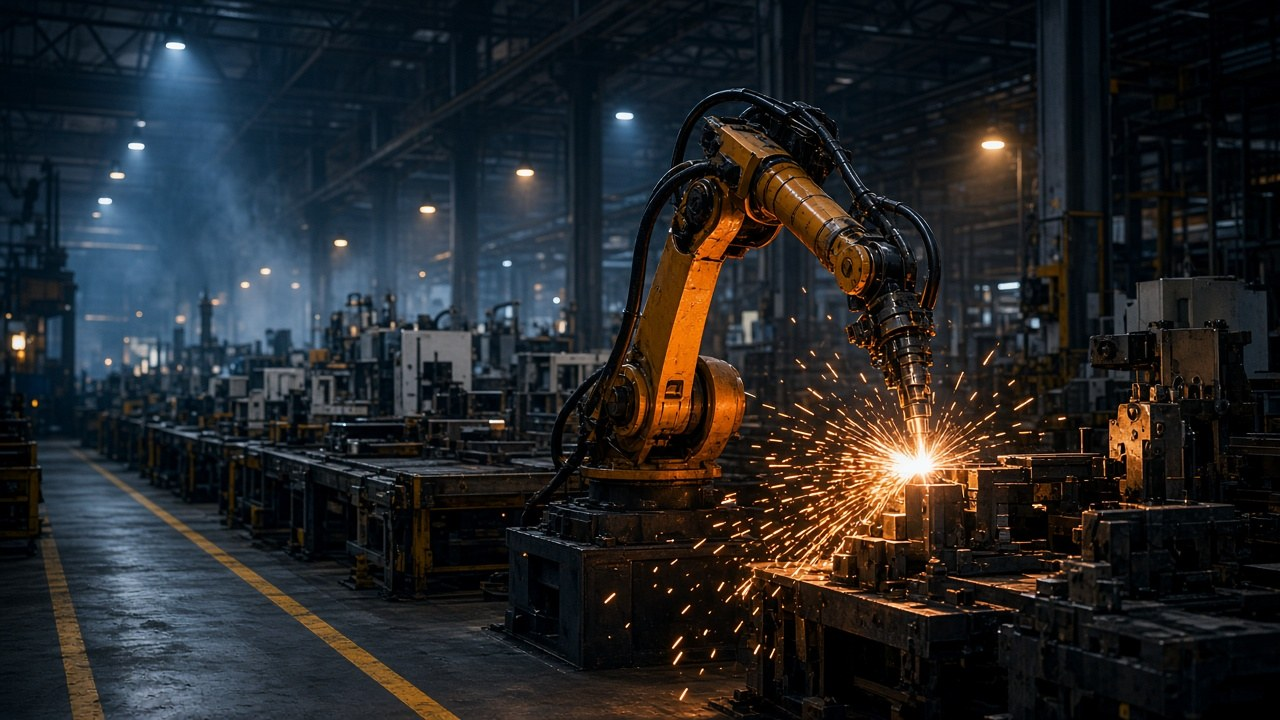
The October manufacturing PMI came in hot on Monday, and that is mostly good news. American factories grew for the 10th month in a row. Output rose at its fastest pace since November 2021. Even so, the same report carried a warning that every family should hear: prices are still climbing.
In other words, the factory floor is busy, but the bill keeps rising. Both halves of that story matter, especially one day before the midterms. Here is what the numbers say, and what Washington should do about them.
Key Takeaways
- The ISM manufacturing PMI rose to 55.5% in October, up from 54.5% in September. Economists polled by Reuters expected no change.
- Production jumped to 59%, the highest reading since November 2021, and 12 industries reported growth.
- The Prices Index eased to 75.2% but still signals rising costs for a 25th straight month.
- Two out of three survey comments were negative, citing price swings, long lead times, tariffs and the Iran war.
- Aluminum, copper, electronic parts and memory chips remain in short supply, and diesel prices are still rising.
What the October Manufacturing PMI Shows
First, the basics. The Institute for Supply Management surveys purchasing managers at factories across the country every month. A reading above 50% means the sector is growing. According to the ISM October report, the index hit 55.5%, a full point above September.
Notably, all five parts of the index grew at the same time. New orders rose to 55.5%. Employment held in growth territory at 52.4%. Inventories returned to expansion. Production, meanwhile, climbed to 59%.
That beat expectations. As Reuters reported, economists had forecast the index would stay flat at 54.5. Twelve industries grew, including machinery, transportation equipment, primary metals and computer products. Only three shrank: paper products, printing and nonmetallic mineral products.
This fits a larger pattern. Last week, we covered how the economy grew 3.4% last quarter while paychecks felt lighter. According to Reuters, domestic demand grew at its fastest pace in more than five years. Consumer spending and business investment in artificial intelligence are doing a lot of the lifting.
The Catch: Prices Are Still Running Hot
Now for the part that hits your wallet. The Prices Index dipped to 75.2% from 77.9%. That sounds like relief, but it is not. Any reading above 50% means costs are still going up. ISM chair Susan Spence said prices are now in their 25th straight month of increase.
Moreover, the shortages are real. Reuters listed aluminum, copper, electronic components and memory chips as still in short supply. Prices also kept rising for diesel fuel. One chemical maker told ISM its costs are up “more than 6 percent” this year, against a usual plan of 2 to 3 percent.
Another respondent, in the semiconductor business, described the squeeze in plain terms. Lead times that once ran four weeks now run 50 weeks, the respondent said, and a $2,000 item from six months ago now costs $4,000. “We are hand-to-mouth,” that respondent told ISM, according to Manufacturing Dive.
Of course, factories do not eat those costs forever. Eventually, they pass them on. That is why a strong manufacturing PMI can still mean higher prices at the store, the dealership and the gas pump.

Why Factory Bosses Are Still Gloomy
Here is the strange part. Output is booming, yet sentiment got worse for a third month in a row. Spence said 66% of the comments were negative. Price swings led the list, followed by longer lead times, tariffs and the war with Iran.
Some of the frustration points straight at Washington. One fabricated metals maker said “economic policies coming out of Washington continue to weigh on business conditions.” The same respondent said customers will only commit to the shortest terms because of “the vast uncertainty.” The firm added that Canadian tariffs are hurting small U.S. businesses that sell into that market.
Conservatives should take that seriously. A tariff can be a useful tool against a bad actor. Still, a business cannot plan around rules that change every few weeks. Uncertainty works like a hidden tax. It freezes hiring, delays equipment orders and keeps capital on the sidelines.
Spence also pointed to the war. “I can only wonder if we had the war over or resolved or super close to resolution, I feel like the floodgates would open,” she said on Monday’s call. Simply put, peace and predictability would do more for factories than any new subsidy.
What Washington Should Learn From the Manufacturing PMI
So what is the lesson? The manufacturing PMI shows that American workers and businesses can build when demand is there. Washington does not need to run the factory floor. Instead, it needs to stop adding to the cost of running one.
Start with energy and materials. Diesel, copper and aluminum all show up on the shortage and price lists. Faster permits for mines, pipelines and power plants would ease that pressure over time. That is why we covered the Senate permitting reform bill in October. Supply is the cure for scarcity, and red tape only delays it.
Next, keep inflation from becoming permanent. The Federal Reserve held rates at 3.75% to 4% last week, and we noted then that two Fed officials wanted a hike. Reuters reports economists now expect the Fed to raise rates in December. BMO economist Priscilla Thiagamoorthy summed it up: “The combination of firmer factory activity and still-hot prices is not a good mix for the Fed.”
Finally, Congress should do its part on the budget. Higher rates can cool prices, but they also raise borrowing costs for every factory that wants to expand. Federal borrowing competes for that same capital. A government that spends less leaves more room for private investment.
Frequently Asked Questions
What is the manufacturing PMI?
It is a monthly index from the Institute for Supply Management based on surveys of factory purchasing managers. A reading above 50% means manufacturing is growing, and below 50% means it is shrinking.
What did the October 2026 manufacturing PMI show?
The index rose to 55.5%, the 10th straight month of growth. Production hit 59%, its highest level since November 2021. The Prices Index stayed high at 75.2%.
Why does the manufacturing PMI matter for inflation?
The Prices Index tracks what factories pay for materials and parts. When it stays well above 50%, those costs often reach consumers later. That can keep inflation above the Fed’s 2% target and push interest rates higher.
What do you think? Is uncertainty from Washington holding back America’s factories, or is the war the bigger problem? Tell us in the comments.
Follow World of Payne for More
For more conservative commentary on the economy, prices and the issues shaping your wallet, visit the World of Payne homepage. Then follow the World of Payne show on X, Facebook and Instagram for new episodes and daily takes.