


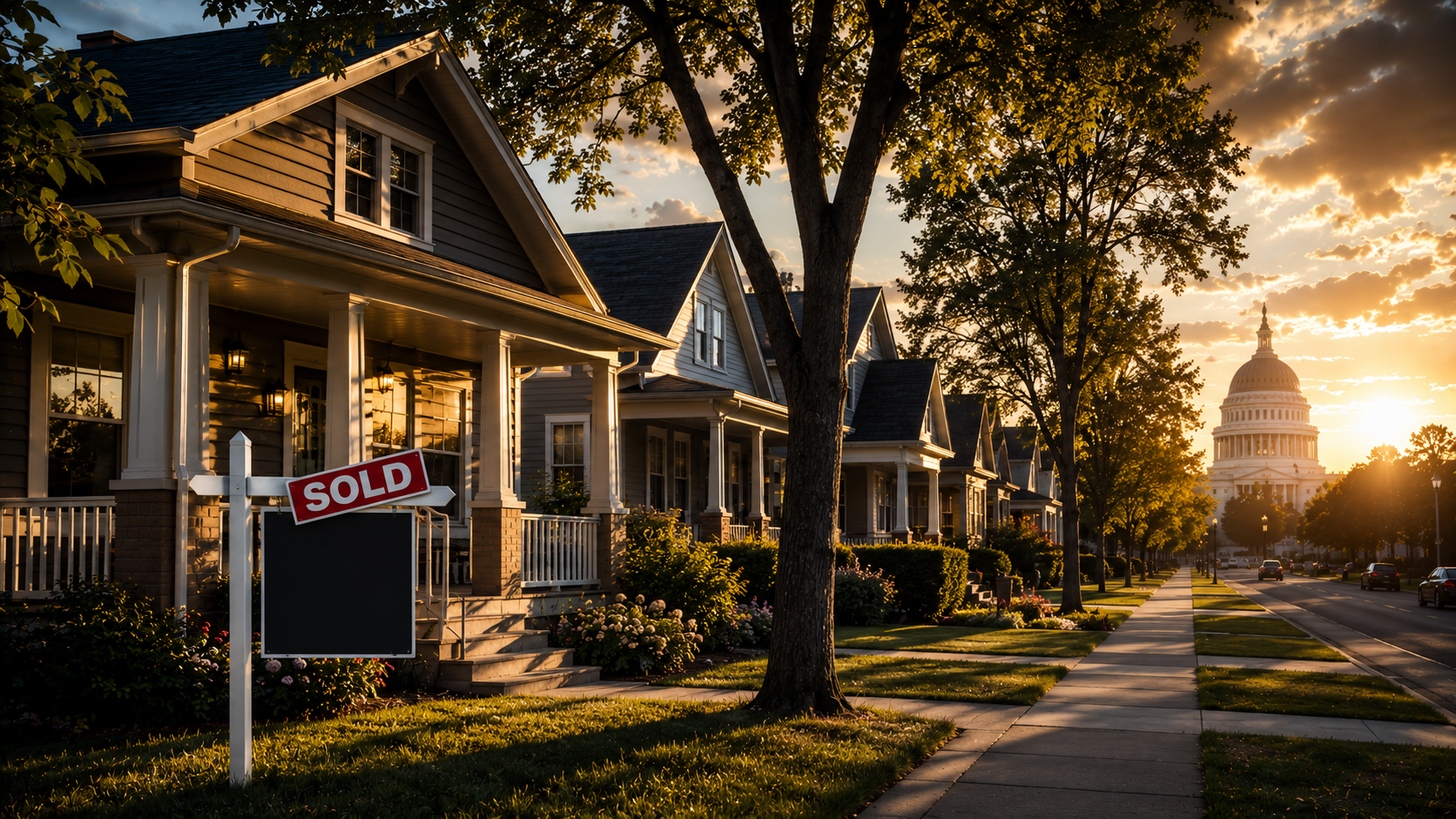
Trump called it ‘a yawn’ and refused to sign it. Congress passed it 85-5 and 358-32 anyway. Here’s what’s actually in the 21st Century ROAD to Housing Act.
The 21st Century ROAD to Housing Act — the broadest federal housing bill in three decades — is now law. Congress passed it 85-5 in the Senate and 358-32 in the House. President Trump still wouldn’t sign it.
Those aren’t close votes. They’re the kind of veto-proof, overwhelming bipartisan margins Washington almost never produces anymore, on almost any subject. So how does a housing bill become law without the president’s signature? A quirk in the Constitution, and a standoff over a completely unrelated voter ID bill.
How the ROAD to Housing Act Became Law Without Trump’s Signature
The 21st Century ROAD to Housing Act is law now, as of this weekend — not because Trump put his name on it, but because the Constitution has a fallback: if the president neither signs nor vetoes a bill within ten days while Congress is in session, it becomes law anyway. That clock ran out Friday. Trump’s stated reason, straight off Truth Social: he’s withholding his signature ‘in PROTEST’ because the Senate hasn’t passed the SAVE America Act, his preferred voter ID and citizenship-verification bill.
What’s Actually in the 21st Century ROAD to Housing Act
Set the politics aside for a second and look at what’s actually in this thing, because it’s a genuinely solid piece of legislation. It cuts federal red tape around home construction. It nudges local governments toward loosening restrictive zoning. It expands pilot programs for smaller mortgages that are actually accessible to regular people. It speeds up permitting. And — this is the part that should sting a little given Trump’s own reaction to it — it caps how many single-family homes big institutional investors can buy, barring anyone who already owns 350-plus houses from buying more. That’s an idea Trump himself has pushed before. White House economists put the national housing shortage at roughly 10 million homes. This is a real swing at that number, not a symbolic one.
Why Trump Used the Housing Bill as Leverage
So why torpedo the signing ceremony on a bill you helped build? Leverage, plain and simple. Hold housing hostage, force the Senate’s hand on voter ID. Now, I’m sympathetic to wanting stronger voter ID laws — that’s a legitimate policy goal on its own two feet. But using a housing bill that families desperately need as the hostage is a strange call, especially in an economy where a household pulling in $75,000 a year can afford to buy less than a quarter of the listings currently on the market.
Mike Lawler — again, a Republican — said the president should’ve just signed it and taken the win. He’s not wrong. When you get a policy result conservatives have wanted for years, capping corporate landlords while cutting regulatory drag for builders, you take the credit. Refusing to sign a wildly popular bipartisan bill to leverage an unrelated fight doesn’t read as strength. Going into a midterm cycle that’s going to be decided heavily on affordability, it reads like picking a fight nobody asked for.
Reaction to the Housing Bill Standoff
Democrats jumped on it, obviously. Elizabeth Warren said Trump cares ‘so little’ about housing costs he wouldn’t sign the biggest bill in 30 years. Tammy Duckworth called it the worst hill she could imagine dying on. Their outrage is convenient — plenty of this bill has Republican fingerprints on it — but the underlying point, that the delay served nobody but political theater, is hard to argue against.
What matters now: the law’s on the books, corporate landlord caps and all, without the fanfare the White House initially wanted when Karoline Leavitt called it ‘one of the most significant pieces of housing legislation in American history.’ Good policy still won out. The politics around it were messier than they had to be. Conservatives who actually care about outcomes for families ought to be able to hold both of those thoughts at once.