

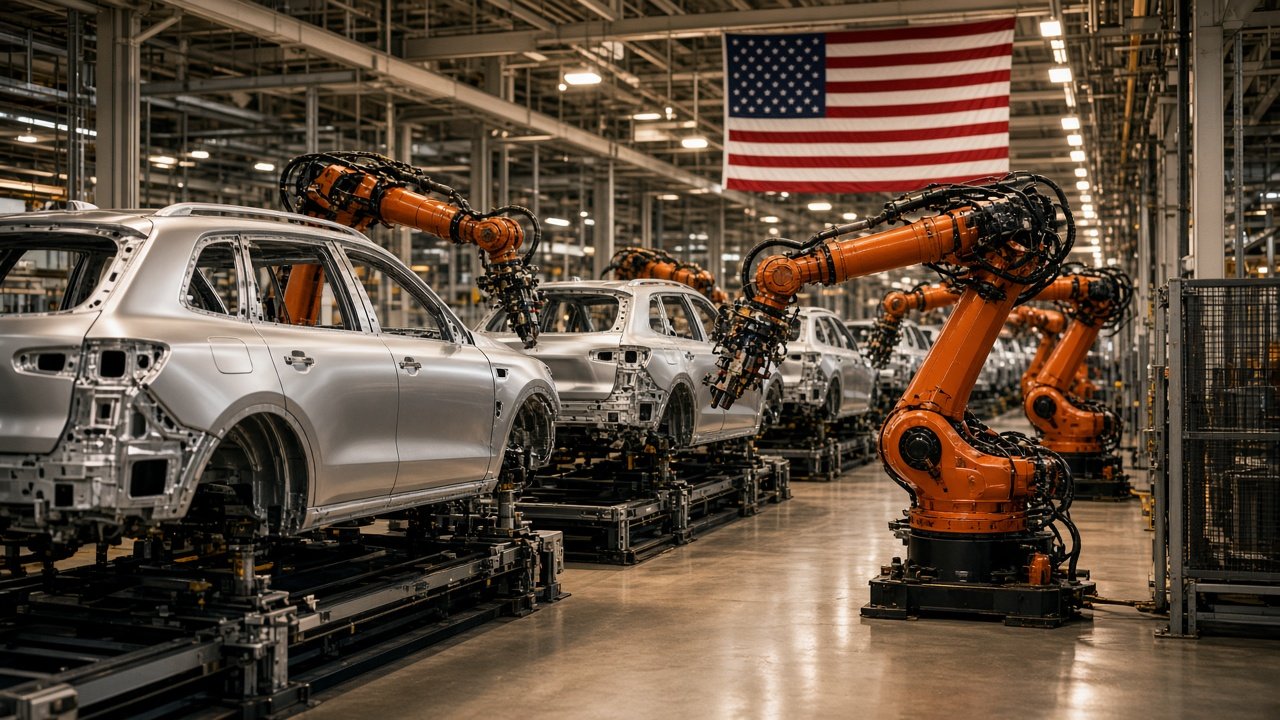
Audi has never had a factory in America. That is about to change. The new Audi Georgia plant will rise near Macon. President Trump announced it Saturday at a rally in Perry, Georgia.
The German luxury brand plans to invest about $4 billion and hire roughly 4,500 people, according to Gov. Brian Kemp’s office. Audi is the only German auto brand without a U.S. factory, the Wall Street Journal noted. Now it is coming to the Middle Georgia Megasite.
Key Takeaways
- Audi plans to invest about $4 billion in its first U.S. manufacturing plant.
- The site is expected to employ about 4,500 people.
- It is designed to build up to 200,000 premium SUVs a year.
- Full production is not expected until the early 2030s.
What We Know About the Audi Georgia Plant
The plant will build large SUVs designed for American buyers. A U.S. official told Reuters it is expected to assemble the Q7, Q8, and Q9, CNBC reported. Audi CEO Gernot Döllner put it plainly at the rally: “This is a long-term investment because we believe in the American market.”
However, this will not happen overnight. Kemp’s office says grading should start in 2027 and construction in 2028. Full production is expected in 2031. In addition, Audi’s own release says the company wants North America to become a third pillar of its production network, alongside Europe and China.
Georgia also did its homework. The state bought and improved the megasite for exactly this kind of project. As a result, it offers rail access, nearby utilities, and a straight shot to the Port of Savannah.

Why Tariffs Helped Land the Audi Georgia Plant
Here is the part critics will hate. Audi imports every car it sells in the U.S. from Europe or Mexico. Last year, tariffs cost the company about $1.4 billion, according to CNBC. Meanwhile, its U.S. sales are down 16% this year.
So Audi did the math. Building here now looks cheaper than paying the toll at the border. Ohio Sen. Bernie Moreno said the plant “would never have happened without tariffs, without common sense regulations” and without ending California’s power to set fuel economy rules.
That is the conservative case in one deal. When Washington stops punishing companies for making things here, they come. In fact, Toyota said in July it will spend $3.6 billion to expand truck production in Texas and move some of it from Mexico.
What It Means for Working Families
Thousands of jobs that do not need a corner office are good news for middle Georgia. Moreover, Georgia’s Quick Start program will train workers with local technical colleges. That fits a theme we keep returning to: skilled trades deserve real support, not a lecture about four-year degrees.
The Honest Caveats
Still, fiscal conservatives should keep their eyes open. First, this was announced at a campaign rally ten days before the Nov. 3 midterms. A press release is a promise, not a paycheck.
Second, tariffs are a tax, and someone pays it. Critics told CNBC that auto tariffs have pushed up vehicle prices. Also, U.S. employment in vehicle and parts manufacturing has fallen since Trump took office last year. One plant does not erase that.
Third, taxpayers deserve to see the full incentive package. Georgia invested in this site, and voters should know the cost per job. Good deals survive daylight.
Finally, a 2031 start date shows how slowly America still builds. Faster permitting reform would get plants like this running years sooner.
So what do you think? Is the Audi Georgia plant proof that tariffs work, or is it a costly way to win a headline?
Follow World of Payne for More
For more conservative commentary on jobs, trade, and the economy, visit the World of Payne homepage. Then follow the show on X, Facebook, and Instagram.