

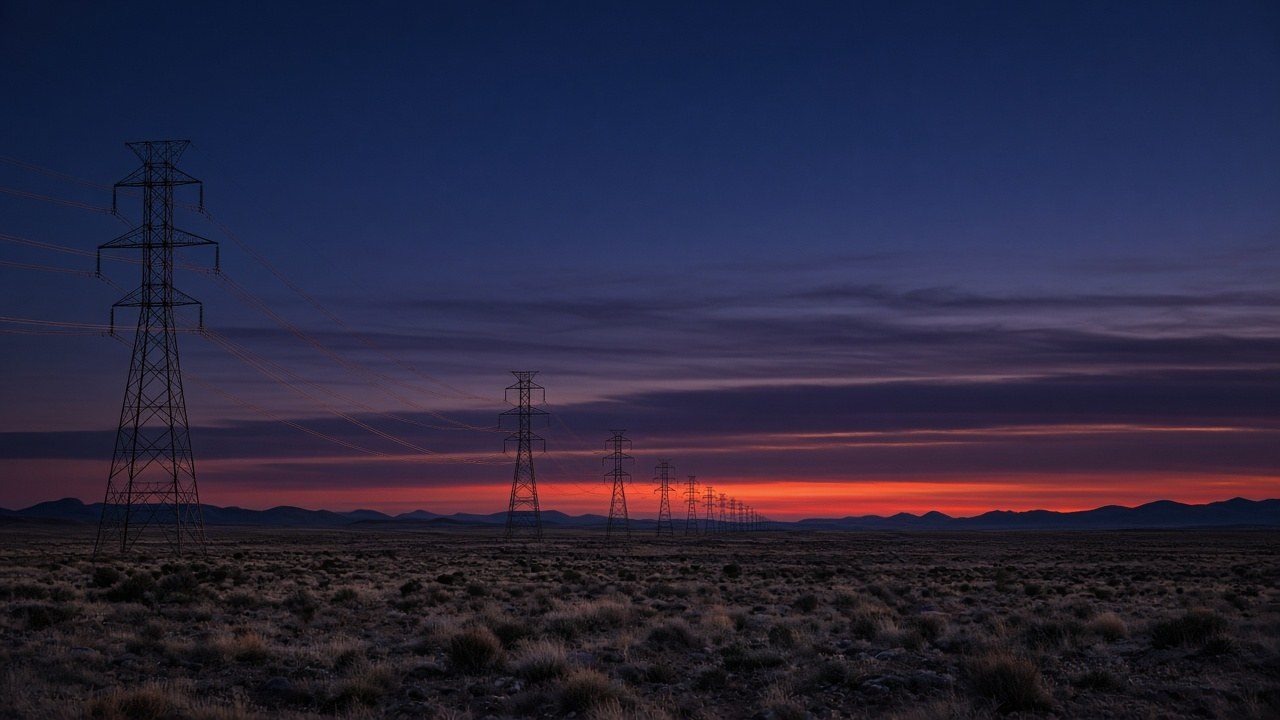
It took 18 years to get one power line built in America. The construction took about two years. The rest was waiting on permission. That is why America can’t build, and it is the big story on the first episode of World of Payne, my brand-new show. On Nov. 18, the Senate cleared the last 60-vote hurdle on a bipartisan bill that would change that, 65 to 31. In this episode, I cover six stories from the weeks after the midterms through an America First lens, from inflation and Iran to permitting reform.
Listen now: Episode 1: Why America Can’t Build: Prices, Iran & Permitting is streaming on Spreaker. You can also play it right here in the player above.
Why America Can’t Build: 18 Years for One Power Line
The power line is called SunZia. It runs about 550 miles across New Mexico and into Arizona, and it carries wind power. According to Sen. Martin Heinrich of New Mexico, it can deliver up to 3,650 megawatts. When it came fully online, he called it “a milestone more than eighteen years in the making.” Then he added, “It should not take eighteen years to build critical energy infrastructure in America.”
He’s right. Notably, Heinrich is a Democrat, and conservatives have been saying the same thing for 30 years.
So why can’t America build? Almost anything big that touches federal land, federal money or a federal permit runs into the National Environmental Policy Act, or NEPA, signed in 1970. The idea was reasonable. However, over 50 years of regulations and lawsuits, it grew into something else.
In 2020, the White House Council on Environmental Quality studied every full environmental impact statement finished between 2010 and 2018. On average, one took 4.5 years to complete. The average final document ran 661 pages. And that’s before the lawsuits start.
The cost is real. Chairman Shelley Moore Capito cited National Association of Manufacturers data showing permitting delays cost manufacturers $12.1 billion a year. She also cited a McKinsey estimate that $1.8 trillion of investment is locked up in the federal permitting system. Those are the advocates’ numbers. Still, nobody serious disputes the basic point.
What the Senate Did on Nov. 18
The bill is the Bipartisan American Affordability and Jobs Act, or BAAJA. Four senators negotiated it: Republicans Capito and Mike Lee, and Democrats Sheldon Whitehouse and Heinrich.
Here’s the timeline. On Nov. 9, the Senate voted 73 to 25 to advance it. Next, it voted 62 to 21 on the motion to proceed on Nov. 10. Then, on Nov. 16, it voted 70 to 27 to cut off debate on the revised Capito substitute.
Nov. 18 was the big test. According to the Senate Daily Press Gallery, the Senate voted 70 to 26 to waive Sen. Jeff Merkley’s budget point of order. After that, it adopted the Capito substitute 69 to 27. Finally, it invoked cloture on the bill, H.R. 2347, 65 to 31.
That was the last 60-vote hurdle. Even so, cloture is not final passage. According to The Hill, Josh Hawley and Mike Rounds were the only Republicans voting no. Support is also slipping, from 73 votes to 65. When I recorded, a final Senate vote was expected Friday, Nov. 20. Then the House still has to approve the same text.
I first wrote about this fight in October in America Can’t Build Anything. This Senate Bill Wants to Change That. The bill has moved a long way since then, and so has the case for fixing why America can’t build.
What’s in the Permitting Bill
These highlights come from the Congressional Research Service section-by-section summary, the nonpartisan research arm of Congress.
- Deadlines for NEPA reviews. The bill tightens which agency leads a review and creates consequences for missed deadlines. Smaller projects would get a decision within one year.
- A clock on lawsuits. Challengers would have 150 days after a decision to sue. They would generally need to raise concerns during public comment first. Cases would go to a federal appeals court, and a paperwork violation alone generally couldn’t halt a project.
- Permit certainty. A future administration couldn’t yank finished permits for political reasons. There are exceptions for court orders, fraud, safety and lawbreaking.
- Faster related reviews. It narrows how states can use the Clean Water Act against interstate projects. It also shortens formal Endangered Species Act consultations from 90 days to 60.
- Ratepayer protection. Big data centers would pay their own way for the power plants and lines built to serve them, instead of passing those costs to your monthly bill.
Heinrich summed up the lawsuit clock: “You can still litigate, but you can’t wait six years to do it.” Here in Iowa, with big data centers going up around Des Moines and Council Bluffs, the power bill piece isn’t abstract. I covered that in Big Tech Wants the Power. Your Family Shouldn’t Get the Bill.

Why America Can’t Build Is an America First Problem
The President backs it. He said, “We’re behind it 100 percent.” The AFL-CIO and the nation’s largest building trades unions endorsed it. The House Freedom Caucus also listed permitting reform as a lame-duck priority.
In my opinion, this is the most America First bill in the lame duck, and it’s not close. America First means American energy, American manufacturing and American jobs. We can’t have any of those if permission takes longer than construction. China isn’t waiting 4.5 years for a 600-page study. China is building.
Second, this is the conservative answer to high prices. Instead of telling producers what they can charge, let them build more. Third, if a trillion-dollar tech company wants a data center, it should pay for its own power, not the retired farmer down the road.
I have honest cautions, too. Heinrich himself told Heatmap the bill is “not some magic wand.” A major interregional power line that takes two decades now would still take five years. Five beats 20, but it’s still five.
Also, I read the fine print on permit certainty. If a future administration illegally revokes a permit, a company could recover part of its project costs from the Judgment Fund. That’s taxpayer money, and I’d want limits on it. Finally, conservation is in the name. Clean water and healthy land matter to farmers and ranchers. But a law that takes 18 years to approve a power line isn’t protecting the environment. It’s protecting lawyers. That, more than anything, is why America can’t build.
Will the House Let It Die?
Opponents include progressive groups and some environmental and tribal organizations, who argue it guts protections. Bernie Sanders, Cory Booker and Merkley have been among the no votes.
The biggest obstacle is the incoming Speaker. On Nov. 18, House Democrats nominated Hakeem Jeffries for Speaker, 251 to 11. Earlier this month, Jeffries said through a spokesman that he “will not rubber-stamp legislation without more constructive involvement with our Caucus,” Punchbowl News reported. Meanwhile, Jared Huffman of California wants to write his own bill next year. Analysts at TD Cowen cut their odds of it becoming law from about 40% to about 25% after the election.
Republicans control the House until Jan. 3, so Jeffries can’t block a vote right now. But if the bill isn’t done before the new Congress, it dies, and everyone starts over.
To the incoming Democratic majority, I’d say this. You won on affordability. This bill is about the cost of electricity, and why America can’t build the power plants and lines to bring it down. Your own senators wrote half of it, and your own unions endorsed it. To Republicans, I’d say don’t load it up. Pass it.
The Other Five Stories in Episode 1
Before story six, the episode covers five more stories.
- Inflation heats up. October consumer prices rose 0.4%, with core up 0.3% for a third straight month. Wholesale prices are up 6.5% from a year ago. The Fed minutes released Nov. 18 say further rate hikes would “likely be appropriate.” AAA had gas at $3.75 that day. I also cover rate freezes, the wrong fix, and Sen. Rand Paul’s warning. For more, see my October CPI breakdown.
- The Iran war goes “status quo.” On Nov. 18, President Trump said a new strike is not imminent and pointed to “after January 1,” Axios reported. House Armed Services Chairman Mike Rogers said the $350 billion Pentagon package, as written, is “not going to happen.”
- Both parties pick leaders. Jim Jordan beat Steve Scalise 106 to 73, and John Thune survived a 31-15 revolt. Mississippi elected its first Democratic senator since 1982, and Mary Peltola flipped Alaska.
- A stock trading ban. About 50 incoming House Democrats, led by Iowa’s Sarah Trone Garriott, asked House leaders to ban member stock trading in the rules on day one. Three Iowans are among them. The Freedom Caucus wants a ban for all three branches.
- Fraud. Prosecutors charged a $51 million Jacksonville HIV-drug scheme that used free government phones as bait. I also cover a $42 million Medicare fraud plea and a yacht called “The Rogue Shark.” GAO estimates fraud costs $233 billion to $521 billion a year. The President says ending fraud could balance the budget. The math says it’s a big start, not the whole answer.
Sponsor: ValorBuilt Apparel
This episode is brought to you by ValorBuilt Apparel, an apparel and gear brand with first responder and military roots. If you appreciate the people who run toward danger, take a look.
Listen and Join the Conversation
America First isn’t a team jersey. It’s a set of priorities. World of Payne is part of the Valor Collective network, and every number in the episode is sourced below. Should the House pass the permitting bill before Jan. 3, or start over next year? Listen to Episode 1 on Spreaker, then tell me what you think.
Sources
- World of Payne, Episode 1: Why America Can’t Build: Prices, Iran & Permitting (Spreaker, Nov. 21, 2026)
- U.S. Senate Daily Press Gallery: Wednesday, Nov. 18, 2026 (70-26, 69-27 and 65-31 votes on H.R. 2347)
- The Hill: Senate advances major permitting reform bill to boost energy, infrastructure (Nov. 18, 2026)
- The Hill: Senate advances permitting reform package to speed energy and mining (Nov. 16, 2026)
- Sen. Martin Heinrich: SunZia transmission project is going fully online
- Congressional Research Service R49506: BAAJA of 2026, Summary of All Sections
- White House Council on Environmental Quality: Environmental Impact Statement Timelines (2010-2018)
- White House Council on Environmental Quality: Length of Environmental Impact Statements (2010-2018)
- Senate Environment and Public Works Committee: Capito floor remarks (Nov. 9, 2026)
- Heatmap: Martin Heinrich on What’s Next for Permitting Reform (Nov. 2026)
- Senate Energy and Natural Resources Committee: AFL-CIO and building trades endorse BAAJA
- Punchbowl News: Jeffries statement on the Senate permitting bill
- Utility Dive: Permitting bill advances in Senate, but its future is uncertain (Nov. 2026)
- Axios: House Democrats nominate Jeffries for Speaker, 251-11 (Nov. 18, 2026)
- CNBC: Consumer prices rose 0.4% in October (Nov. 10, 2026)
- CNBC: Fed officials expect more rate hikes, minutes show (Nov. 18, 2026)
- AAA Gas Prices (national average, Nov. 18, 2026)
- Axios: Trump weighs strikes on Iran as Israel warns of chemical weapons (Nov. 18-19, 2026)
- Breaking Defense: $350 billion reconciliation bill “not going to happen,” HASC chair says (Nov. 18, 2026)
- Alaska’s News Source / AP: Peltola is going back to D.C. (Nov. 18, 2026)
- CBS 2 Iowa: Trone Garriott leads push to ban stock trading by members of Congress (Nov. 13, 2026)
- U.S. Department of Justice: Florida man pleads guilty to $42M Medicare fraud (Nov. 13, 2026)
- U.S. Government Accountability Office GAO-24-105833: Federal fraud estimate


