

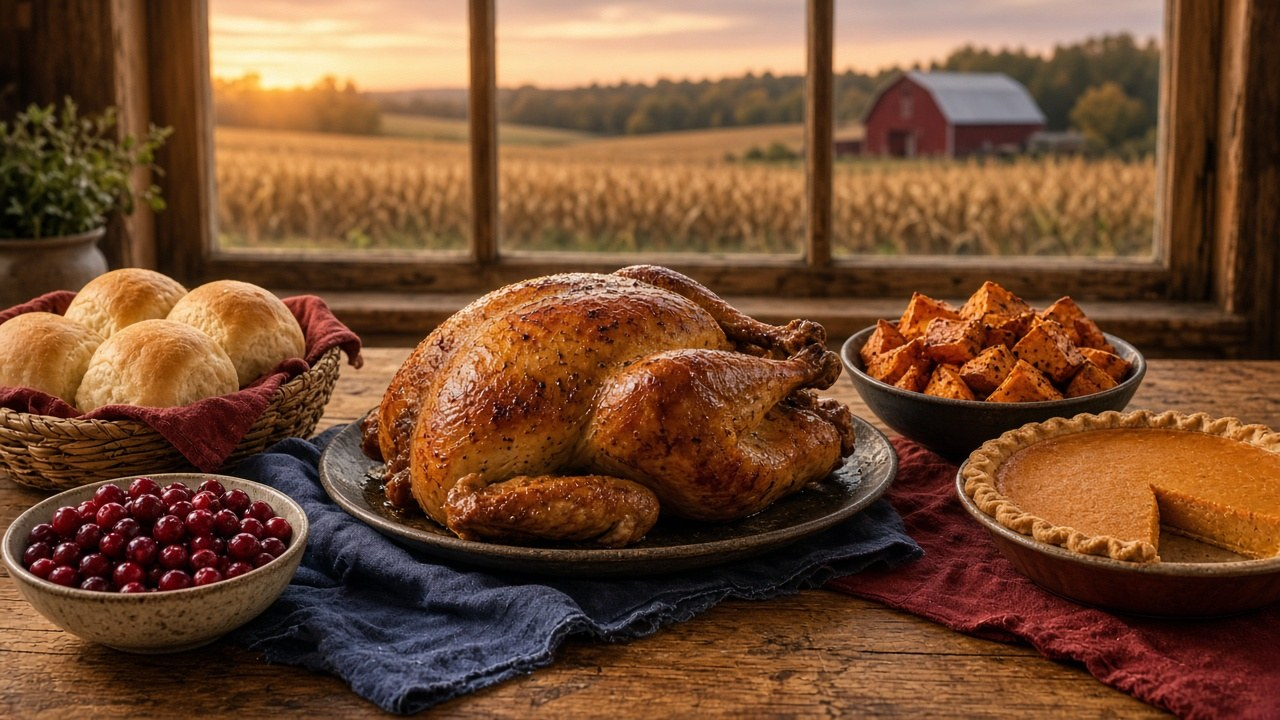
The Thanksgiving dinner cost for a classic meal for 10 is $58.63 this year, according to the American Farm Bureau Federation’s 41st annual survey. That works out to about $5.86 a person. It is up more than 6% from last year, and it is the first increase since the record of $64.05 in 2022.
My take is simple. The turkey is a supply story, and the market is already fixing it. The sides are the real problem, because they carry the costs that Washington actually controls: fuel, labor and the price of doing business. If Congress wants a cheaper table next November, it should stop hunting for villains in the grocery aisle and start with diesel.
What the Thanksgiving Dinner Cost Survey Found
First, the receipt. Farm Bureau volunteer shoppers checked prices in all 50 states and Puerto Rico during the first week of November. The classic menu has not changed since 1986, so it gives a fair year-to-year comparison.
Here is what moved:
- A 16-pound frozen turkey: $23.68, or $1.48 a pound, up 10.1%
- A gallon of whole milk: $4.05, up 8.6%
- A 12-ounce bag of fresh cranberries: $2.48, up 8.8%
- A dozen dinner rolls: $3.81, up 7%
- Three pounds of sweet potatoes: $4.20, up 5%
- Cubed stuffing mix: $3.91, up 5.4%
Not everything rose. A third of the items fell, including the veggie tray, pie crusts, frozen peas and whipping cream. Low wheat prices helped some of the flour items.
Geography matters, too. The classic meal costs $54.33 in the South and $56.89 here in the Midwest. It runs $58.74 in the West and $61.57 in the Northeast. Add ham, potatoes and green beans for the expanded menu, and the national bill climbs to $81.72.
The Number Behind the Number
Now compare it with 2019, the last normal Thanksgiving before the pandemic. That year the same meal cost $48.91. So this year’s dinner costs about 20% more than it did seven years ago.
However, the two halves of the meal did not move together. The turkey costs about 14% more than in 2019. The sides, meaning everything except the bird, cost about 24% more. At $34.95, the sides are only 14 cents below their 2022 record.

Why the Turkey Is Not the Thanksgiving Dinner Cost Problem
The bird got the headlines, so let’s start there. Turkey drove most of this year’s increase. Even so, the trend underneath it points in the right direction.
Supply Is Already Growing
The USDA Economic Research Service’s November outlook projects 5.18 billion pounds of turkey production in 2026. That is about 7% more than in 2025. Growers are rebuilding flocks after years of bird flu losses. In addition, September production ran 6.8% above a year earlier.
Bird flu has not gone away. USDA counted nine cases in commercial turkey flocks in October, which hit about 359,400 birds. Still, farmers are adding supply faster than the virus is taking it away.
Prices Are Expected to Ease
Wholesale frozen hens averaged 181 cents a pound in early November, according to USDA. That price is high. Yet USDA projects the 2027 average at 150 cents, about 15% below this year’s expected 177 cents.
Grocers are also doing their part. According to the Farm Bureau, the latest USDA market data showed feature prices for whole frozen turkeys fell in the second week of November. Some volunteer shoppers found birds for as little as 69 cents a pound. The survey’s price checks came before many of those deals.
In other words, high prices told farmers to raise more birds, and they did. That is how a market should work. I don’t need a federal task force to tell me that.
The Sides Carry Washington’s Costs
The sides are a different story. Milk, rolls, cranberries and stuffing do not depend on one flock. Instead, they depend on fuel to harvest, process, package and haul them. That is the part of the Thanksgiving dinner cost that keeps climbing.
The Farm Bureau said so directly. Its deputy chief economist, Faith Parum, said, “High diesel prices and a shortage of farm labor have taken a toll on the farm level of the food supply chain.” The group’s market analysis also pointed to record diesel costs, high fertilizer prices, rising labor expenses and bigger bills for rent and electricity.
Diesel Is the Hidden Ingredient
The numbers back that up. The Energy Information Administration put the national average for on-highway diesel at $5.94 a gallon on Nov. 16. A year earlier it was about $3.87. That is a jump of more than 50% in one year.
Diesel moves most of the food in this country. It runs the combine, the grain truck, the milk tanker and the semi that stocks the store. As I wrote when diesel stayed above $6 while gas fell under $4, a fuel shock does not stay at the pump. It works its way into everything we buy.
Groceries show it. In the October CPI report, food at home rose 0.4% in a single month, with beef up 0.9%.
Labor Is the Other Half
Then there is labor. The Farm Bureau listed a farm worker shortage as a top concern. Its president, Zippy Duvall, asked Congress to pass the farm bill and labor reform. Fewer hands on farms and in processing plants means higher costs for every crate that gets picked, packed and shipped.

The Wrong Fix for the Thanksgiving Dinner Cost
So who gets the blame? Expect to hear that grocers and food companies are gouging families. That story is easy to tell during a holiday week, and Democrats just won control of both chambers of Congress. The pressure to “do something” will be strong.
The data do not fit that story well, however. Grocers often feature whole turkeys at low prices to bring shoppers through the door. And the Farm Bureau, citing USDA, notes that less than 6 cents of every food dollar goes back to the farm. Most of the money pays for processing, transport, packaging, labor and retail. Those are exactly the costs that diesel and labor shortages push up.
Price controls or “gouging” laws would not touch any of those costs. At best, they shift the shortage from the price tag to an empty shelf. At worst, they tell producers to grow less, which is the opposite of what we need.
To be fair, the Farm Bureau’s case for a farm bill has merit. Farmers need certainty about the rules they will plant under. But a farm bill is not automatically good just because it has “farm” in the title. Congress should pass one that is lean, paid for and focused on risk tools that keep farmers in business. It should not become a holiday spending spree.
What Washington Should Do Instead
As a fiscal conservative, I’d rather fix costs than subsidize them. Here is where I would start.
- Cheaper diesel through more supply. Washington should get out of the way of refining, pipelines and domestic production. The fastest relief for a food bill is a lower fuel bill.
- A guest worker program that works. Farms need legal, seasonal labor that is predictable and affordable. Fixing the program beats watching crops and processing lines go short-handed.
- A lean farm bill, on time. Give farmers stable rules without loading the bill with spending that adds to the deficit.
- Hands off the price tag. Let turkey prices fall the way they are already starting to fall.
This is the same lesson I drew from beef prices. Short-term fixes from Washington rarely beat more supply. Cattle take years to rebuild. Turkeys take months. Either way, the cure is production, not a press release.
What I’m Watching Before Thursday
First, the next EIA fuel update on Nov. 24. Diesel has fallen for two straight weeks. If it keeps sliding, the sides should follow over time.
Second, store feature prices for turkey this week. The survey caught prices early. Shoppers who wait for those deals may beat the survey’s $1.48 a pound.
Third, USDA’s next livestock and poultry outlook on Dec. 16. Another upward revision to turkey supply would support the cheaper 2027 forecast.
Finally, watch what the new Congress says about food prices in January. If the plan is diesel, labor and a lean farm bill, families win. If the plan is blaming the grocer, they will pay for it next Thanksgiving.
The Real Thanksgiving Dinner Cost Isn’t the Bird
The turkey on your table this week costs more. Even so, it is the part of the meal most likely to get cheaper on its own. The sides are the warning sign. They sit 24% above 2019 levels, and they ride on diesel and labor, the two costs Washington policy touches most. That is where the Thanksgiving dinner cost will be won or lost.
So give thanks for the farmers who keep feeding us through all of it. Then ask your representatives one question: what are you doing about the cost of diesel?
Sources
- American Farm Bureau Federation: Cost of Thanksgiving Dinner Increases, Remains Below 2022 Record High (Nov. 2026)
- American Farm Bureau Federation, Market Intel: Thanksgiving Dinner Cost Ticks Upward in 2026
- USDA Economic Research Service: Livestock, Dairy, and Poultry Outlook, November 2026 (LDP-M-389, Nov. 17, 2026)
- U.S. Energy Information Administration: Gasoline and Diesel Fuel Update (Nov. 17, 2026 release)


