

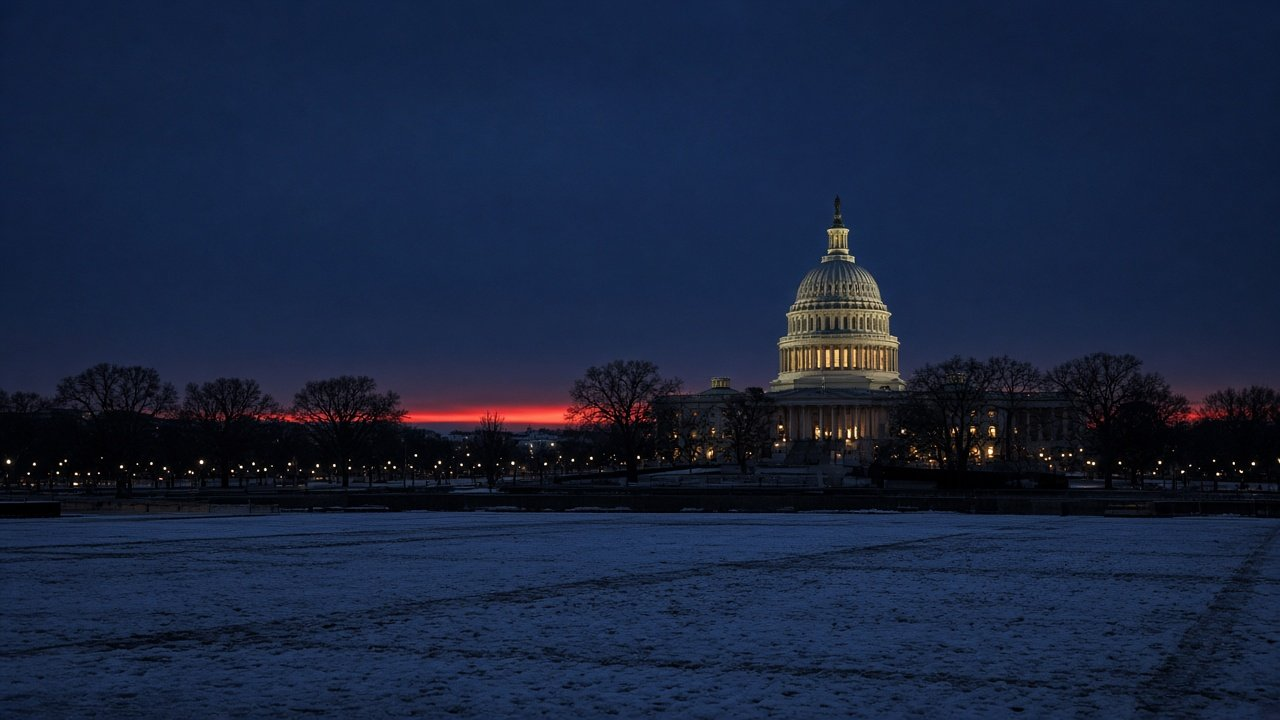
Another government shutdown is now a real possibility, and this one could start two weeks before Christmas. Federal funding runs out after Friday, Dec. 11. A bloc of Senate Democrats now says it will not vote for a stopgap unless it cuts off money for the Iran war.
I think that is the wrong fight in the wrong place. Congress should vote on this war, and it should do so in the open. However, a shutdown is not a war vote. It is a way to avoid one while federal workers miss paychecks. The numbers from the past year show why Washington cannot afford another round.
The Record Behind This Government Shutdown Threat
Start with the history, because it is worse than most people realize. The Congressional Research Service tracks every lapse in appropriations since the fiscal year moved to October in 1977. According to its latest funding-gap report, there have been 23 of them.
Twenty of those gaps came between fiscal 1977 and fiscal 2019. Added together, they lasted 161 full days. Then came fiscal 2026. That one year produced three gaps:
- 42 full days for the whole government, ending Nov. 12, 2025.
- 3 days for agencies covered by six spending bills, starting Jan. 31, 2026.
- 75 days for the Department of Homeland Security alone, ending April 30.
That adds up to 120 days of lapsed funding in a single budget year. In other words, one year produced about three-quarters as many gap days as the previous 43 years combined. To be fair, the DHS lapse covered one department, not the whole government. Even so, no business would call that a rough patch. It would call it a broken process.

The deeper problem is older. CRS notes that Congress has passed every regular spending bill on time in only four years since 1977: fiscal 1977, 1989, 1995 and 1997. Stopgaps are now the default, and deadlines like Dec. 11 are simply the next cliff.
Who Wants What Before Dec. 11
This fight has three sides, not two.
Democrats Want an Iran Rider
On Thursday, Sens. Michael Bennet, Chris Van Hollen, Tammy Duckworth and Bernie Sanders said they would oppose any deal without “language that restricts the Trump Administration from using appropriated funds to continue his war against Iran.” Their statement, reported by Roll Call, added: “When we vote on appropriations, we intend to fund the government and stop funds for this war.” Meanwhile, Sen. Tim Kaine says he is drafting that language himself.
Van Hollen went further. He said on television that Democrats should shut the government down if needed to end the war, according to Punchbowl News. He is also challenging Chuck Schumer for leader, so party politics are in play too.
Not every Democrat agrees. Sen. Patty Murray, the top Democrat on Senate Appropriations, prefers a short stopgap into next year. Sen. Raphael Warnock put it plainly: “The last thing they need is a shutdown.”
Republicans Say Wait Until January
House Appropriations Chairman Tom Cole drew the GOP line. “A Republican Congress is not going to send bills to a Republican president that he’s going to veto,” he said. As Reuters reported, he added, “we’ll just wait until next year.” Sen. John Kennedy was blunter. If Democrats make the bill “contingent upon us cutting and running in Iran, yeah, we’ll have a shutdown,” he said.
The White House Wants More Money
At the same time, the administration wants more, not less. Trump has asked Congress to lift defense spending from about $950 billion to $1.5 trillion, plus $67 billion for the war, Reuters reported. On Thursday, he also pushed Senate Republicans to pass a $350 billion party-line defense package before Democrats take over.
Congress Has Cut Off a War Before
Democrats pushing the rider point to 1973. That summer, Congress attached a rider to a spending bill that would have halted all U.S. bombing in Cambodia at once. On June 27, 1973, President Nixon vetoed the bill and warned that the “Cambodia rider” would wreck peace talks. Even so, he called the rest of the bill’s funding “essential to the continuity of governmental operations.”
What happened next matters. Congress and Nixon struck a deal within days. The stopgap he signed on July 1 cut off funds for combat in Indochina, but on a set date, Aug. 15. In short, the cutoff passed as a clear, recorded policy with a deadline. It did not pass by closing the government until a president gave in.
That is the right lesson for today. If Congress wants to end the Iran war, or to authorize it, the honest route is a recorded vote on that question alone. Members should have to own their answer. A shutdown lets everyone blame the other side instead.

My Take: Fund the Government, Then Vote on the War
I have argued that Congress owns this war, not a Cabinet secretary. I still believe that. I have also argued for keeping the pressure on Tehran. Those two views fit together. A war worth fighting is worth a vote, and a war not worth fighting deserves a vote to end it.
Pass a Short, Clean Stopgap
First, Congress should pass a clean continuing resolution that runs into early 2027. That means current spending levels, no new war money and no war rider. Roll Call reports the administration is already weighing a stopgap through March. That is close enough. It gives the new Congress time to write real spending bills instead of inheriting a shutdown on day one.
Hold a Standalone Vote on the War
Next, the war question deserves its own floor vote, either an authorization or a funding cutoff. Democrats will say a clean bill keeps paying for the war. That is true, and it is a fair objection. Still, Rep. Adam Smith, the incoming Armed Services chairman, concedes the White House would never accept it. Trump would veto it, and Reuters notes that an override takes two-thirds of both chambers. A rider that cannot pass is not a strategy. It is a press release with a shutdown attached.
Don’t Jam a $350 Billion Bill Through Without Paying for It
Republicans need discipline too. October alone ran a $409 billion federal deficit. A party-line defense bill in the final weeks of a majority should come with real offsets or a smaller top line. Otherwise, conservatives are just choosing which spending to borrow for.
What Another Government Shutdown Would Cost
Some conservatives treat shutdowns as a cheap way to cut spending. The record says otherwise.
The Congressional Budget Office studied last fall’s shutdown while it was still underway. In its six-week scenario, which matches the 42 days it actually lasted, CBO estimated $54 billion in federal spending would be delayed. However, CBO expected that money to go out once the government reopened. In other words, the shutdown would postpone spending, not cut it. CBO also estimated the economy would permanently lose about $11 billion in output.
Meanwhile, CRS notes the government’s usual practice is to give back pay to furloughed workers once funding returns. So taxpayers pay for days when much of the work stopped. As a result, a shutdown saves almost nothing and wastes a great deal. For a deeper look at where your tax dollars go, the real money is in programs that run on autopilot, which a shutdown barely touches.
There is a political cost too. A Reuters/Ipsos poll found 71% of Americans want Congress to pass legislation ending the Iran war, including 51% of Republicans. That is a reason for Republicans to welcome a clean vote, not dodge one. Voters will notice who ducks it.
The Real Test Comes in January
The practical outcome is not hard to see. Punchbowl reports Congress is almost certain to miss a full-year deal by Dec. 11. Also, the White House budget office has not sent Congress its list of needed funding changes for a stopgap, Roll Call reports. That leaves two paths: a short extension, or a Christmas shutdown that could run into the new Congress.
Democrats take control on Jan. 3. At that point, they will write the spending bills and set the floor schedule. If they want to end the war, they will have the gavel to force the vote. If Republicans want to keep it going, they should make that case on the record.
Either way, that debate deserves a vote with names attached. A government shutdown gives voters the opposite: weeks of finger-pointing and no decision. Congress has spent 120 days of the last budget year without full funding. It should not spend Christmas adding to that total just to avoid saying yes or no on a war.
Sources
- Roll Call: Democrats mulling Iran war funding cutoff strategy (Nov. 12, 2026)
- Punchbowl News: Iran war puts gov’t funding in jeopardy (Nov. 13, 2026)
- Reuters via Investing.com: Explainer: Can a new US Congress mean an end to the Iran war? (Nov. 12, 2026)
- Congressional Research Service: Federal Funding Gaps: A Brief Overview, RS20348 (updated May 26, 2026)
- Congressional Budget Office: A Quantitative Analysis of the Effects of the Government Shutdown on the Economy Under Three Scenarios (Oct. 29, 2025)
- The American Presidency Project: Richard Nixon, Veto of the Supplemental Appropriations Bill Containing a Restriction on U.S. Air Operations in Cambodia (June 27, 1973)


